Database
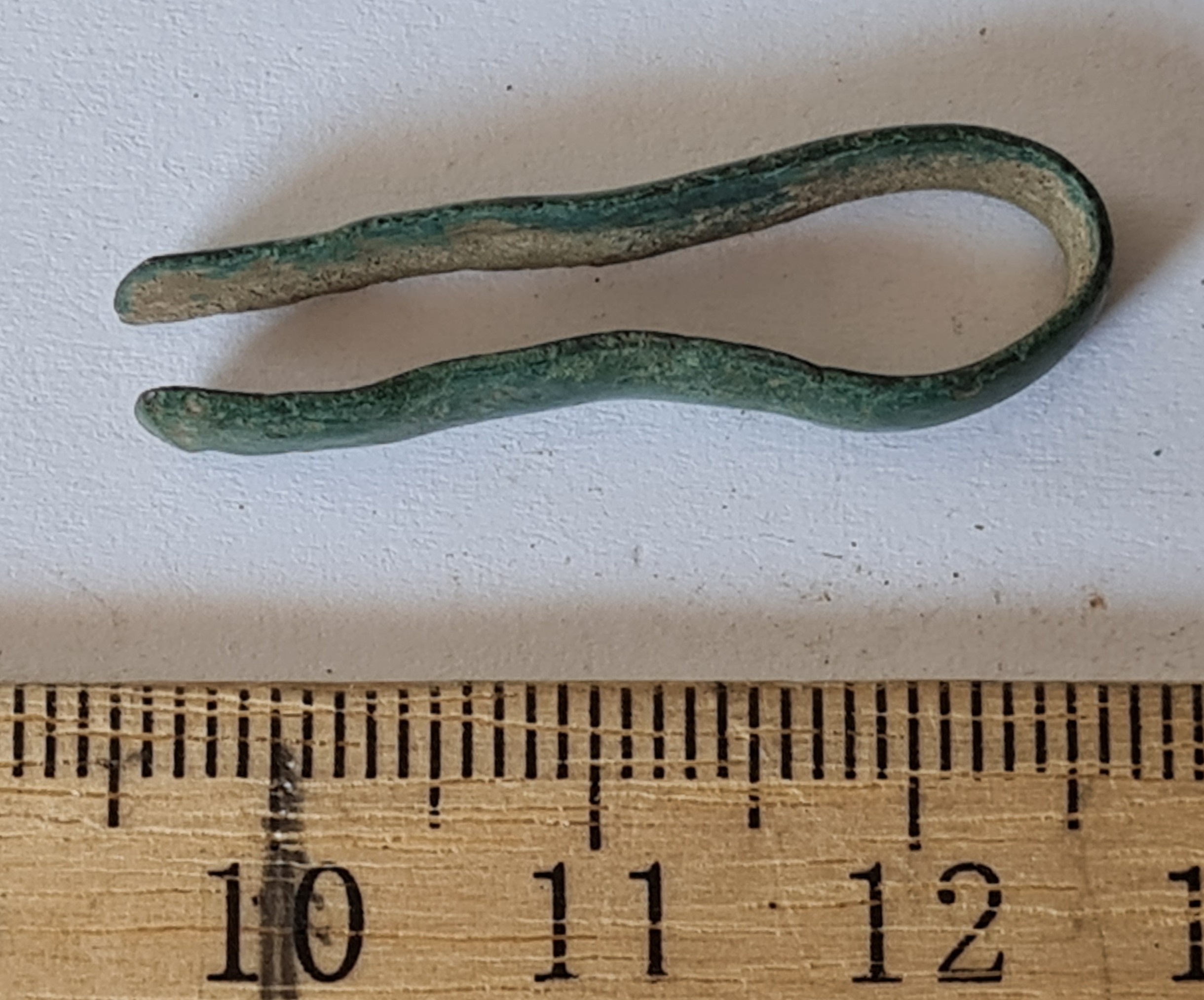
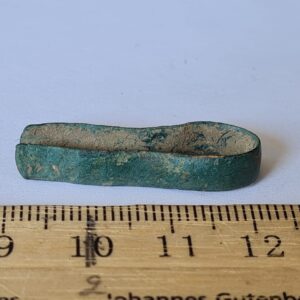
Tweezers, copper alloy. Medieval or Early Modern.
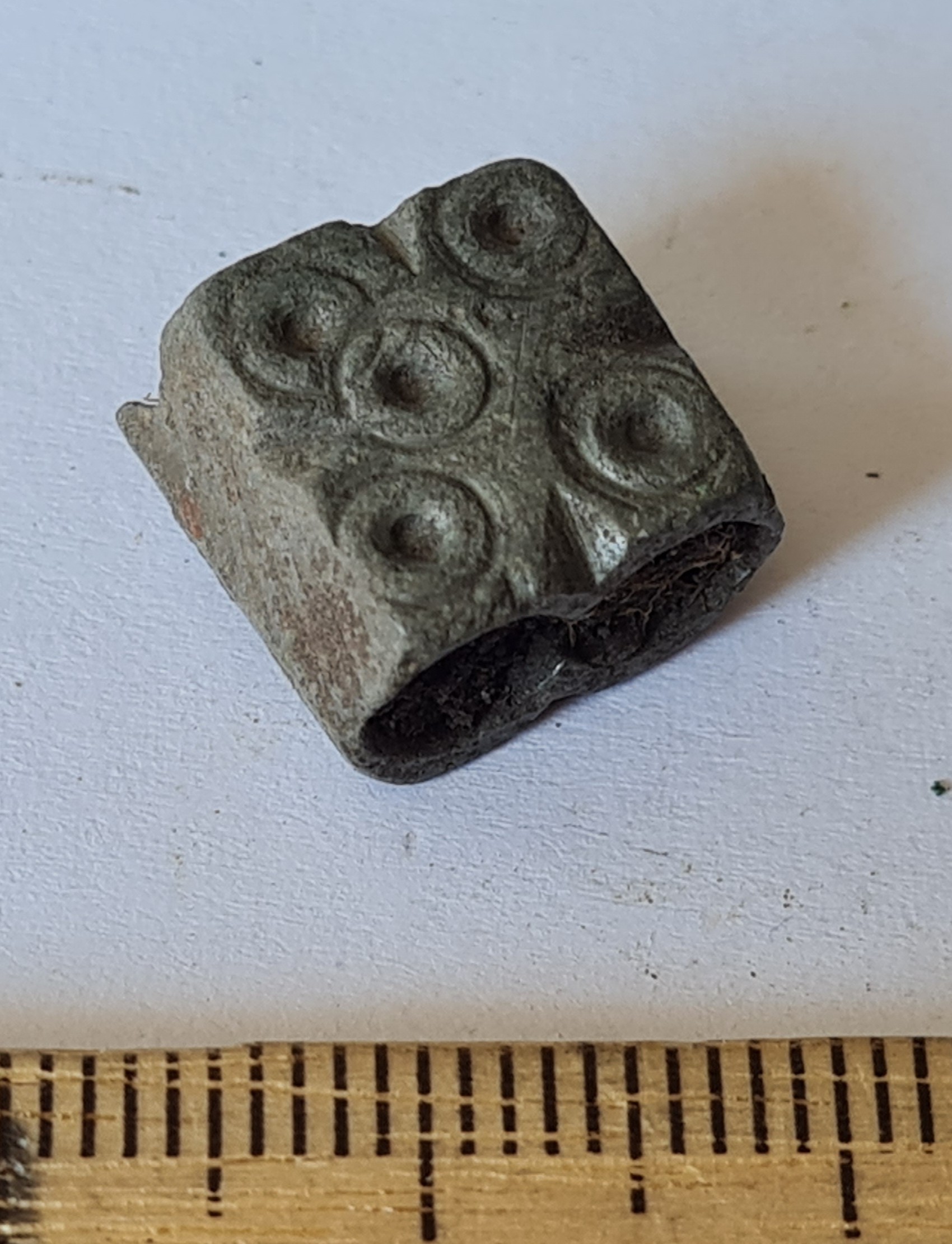
Cubic chain distributer, copper alloy. Chain distributors held together belts composed of metal rings, which have been found in several 13th-century inhumation burials, for example at Valjala (Mägi et al. 2019, 98–99). Such chain belts have been recovered mainly from women’s and children’s graves, and both the chains and the associated cubic chain distributers have been dated to the 12th–13th centuries (Kurisoo et al. 2023, 220–221).
Mägi, M., Malve, M. & Toome, T. 2019. Early Christian burials at Valjala churchyard, Saaremaa. – Archaeological Fieldwork in Estonia, 2018, 93–118.; Kurisoo, T., Posti, M.-L., Jegorov, S. & Kangert, N. 2023. New public discoveries in 2022 against a backdrop of concerns about reporting and processing finds. – Archaeological Fieldwork in Estonia 2022, 217–238.
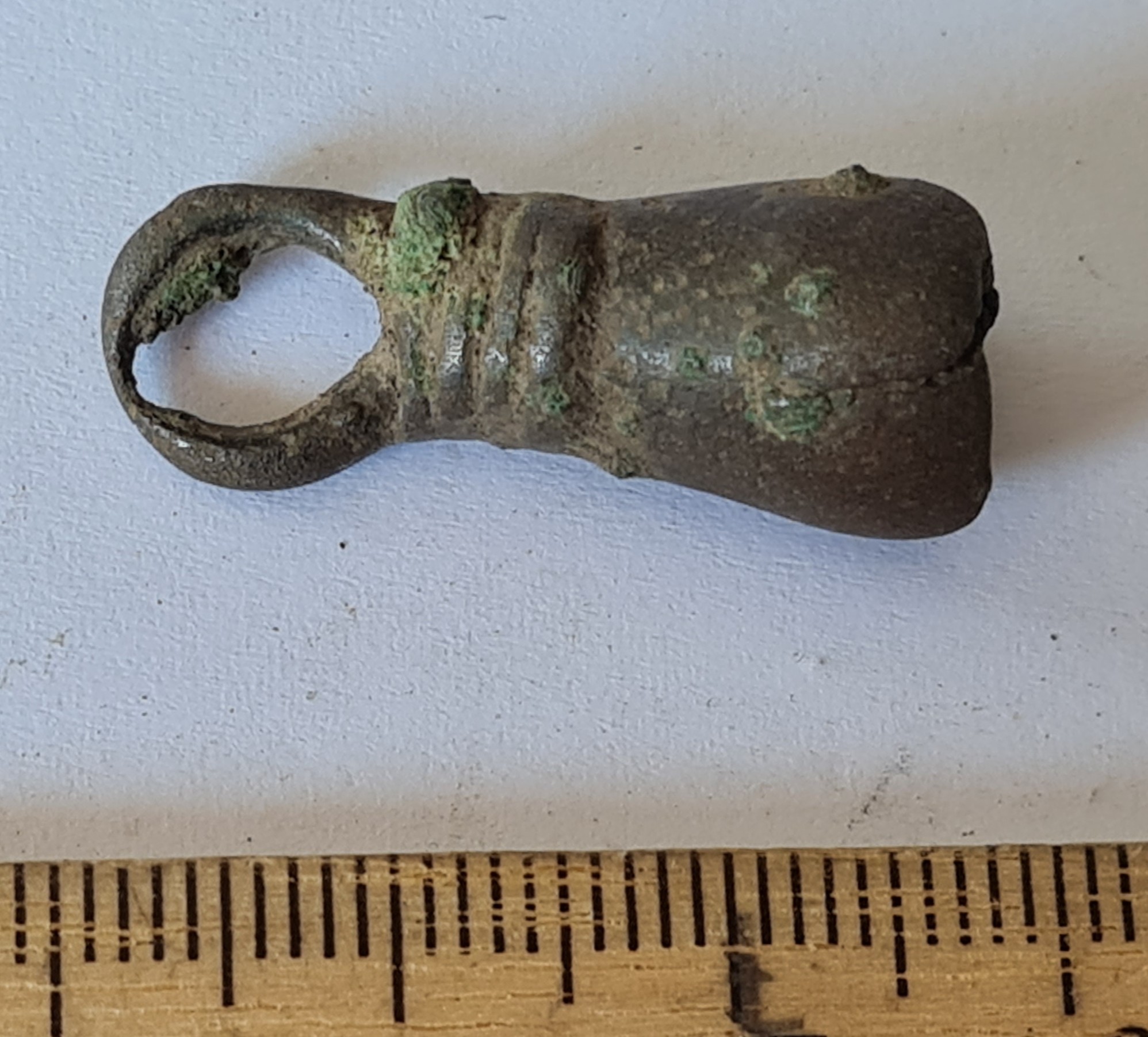
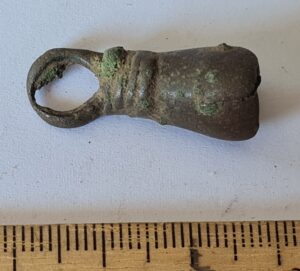
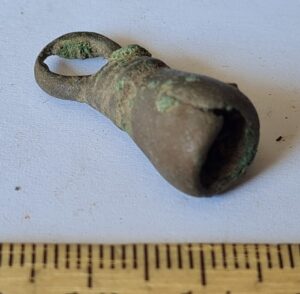
Bell-shaped pendant, copper alloy. At Siksälä, such examples occur in burial CCXLIV, which has been dated to the 14th century, primarily to the first half of the century (Valk et al. 2014, 258–261).
Valk, H., Ratas, J., Laul, S. 2014. Siksälä kalme II. Matuste ja leidude kataloog. Tartu Ülikool: Tartu.
Muhu
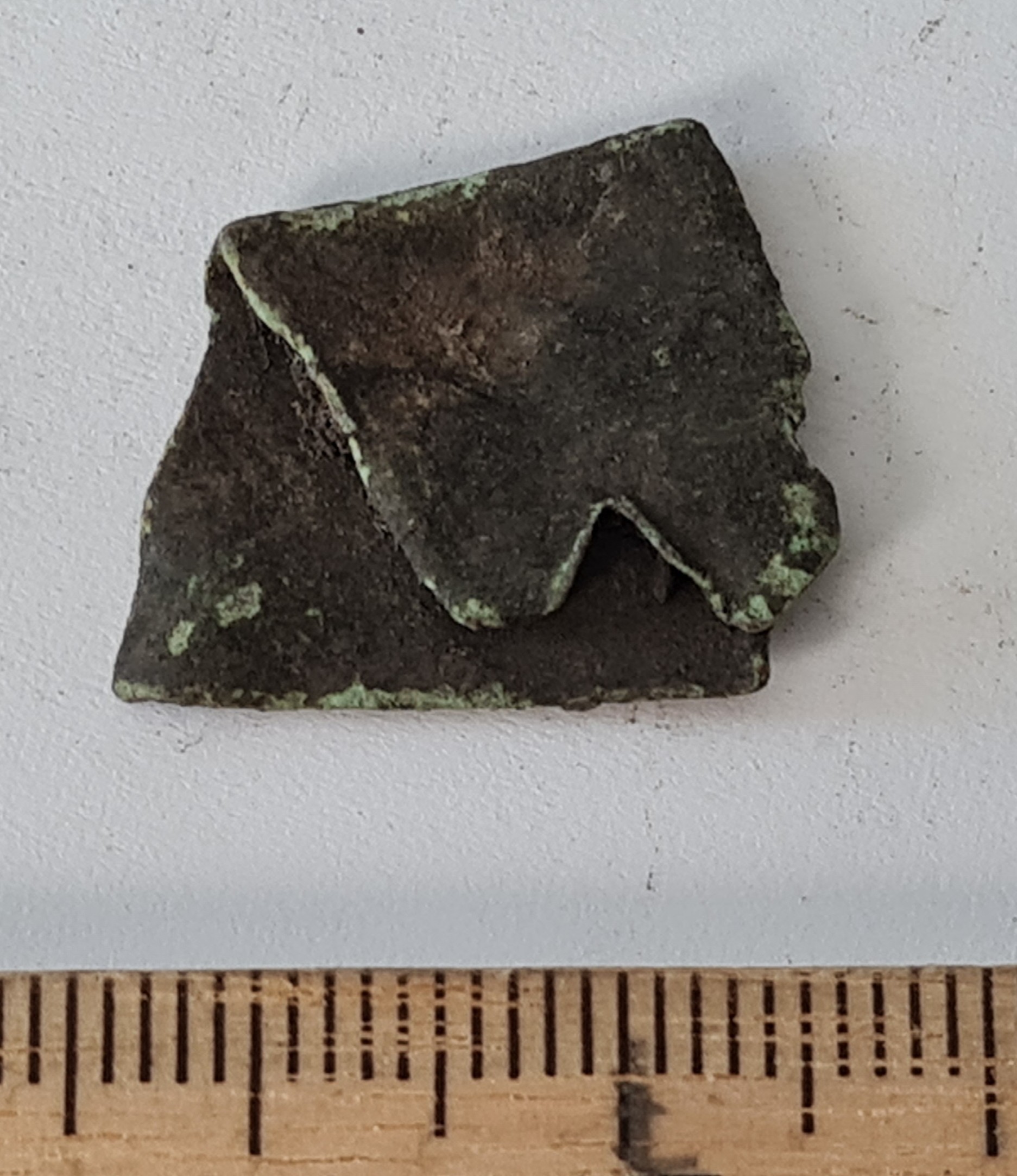
Mount, copper alloy. Bent double; one end is saw-edged, but it is not a typical saw-edged mount.
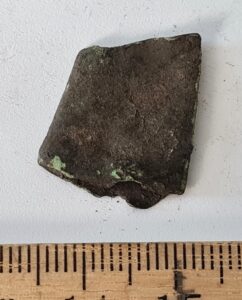
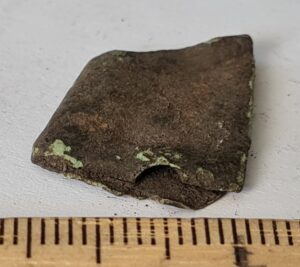 Mount, copper alloy. Bent double; one end is saw-edged, but it is not a typical saw-edged mount. More precisely undetermined.
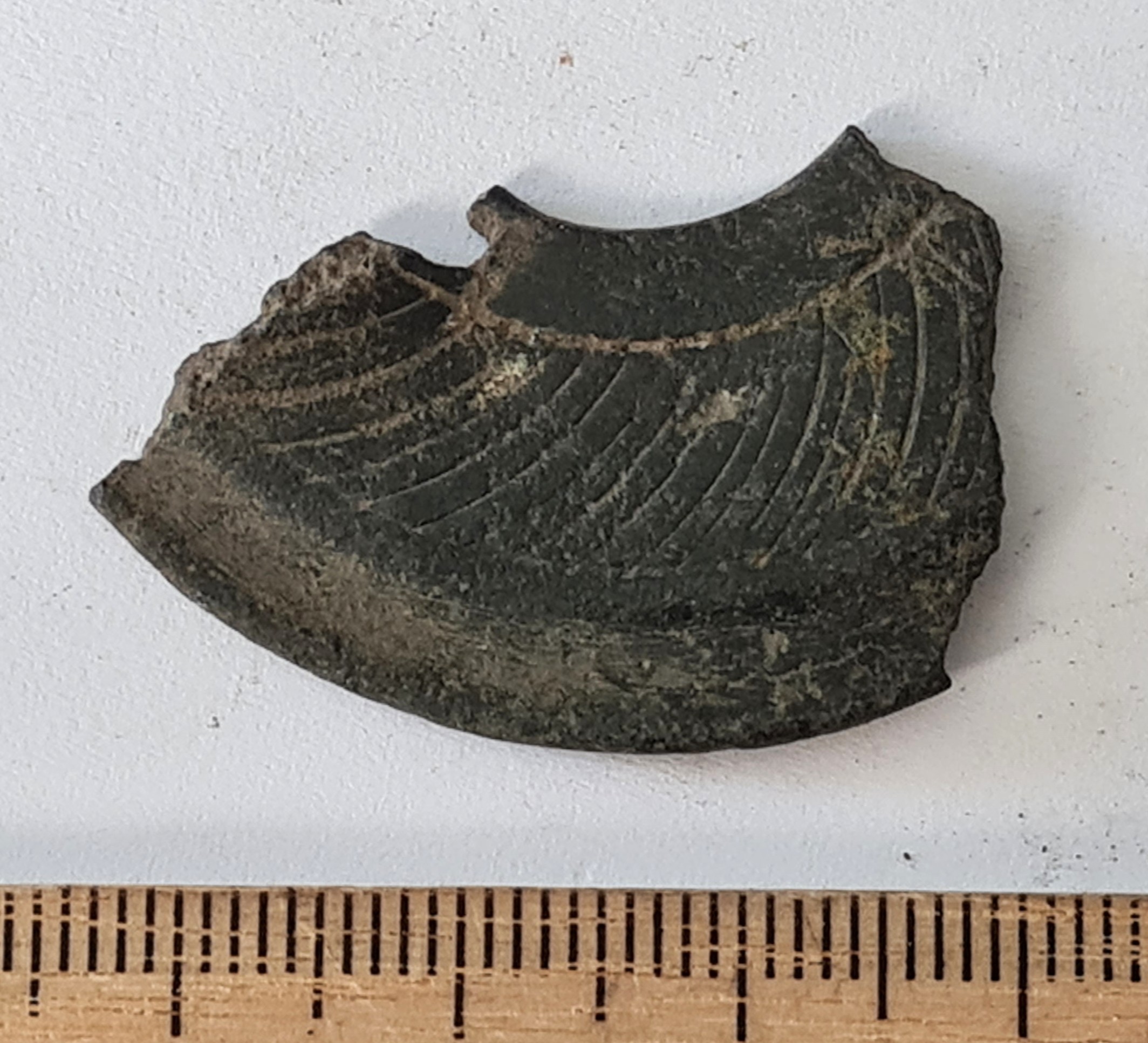
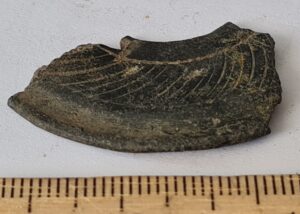
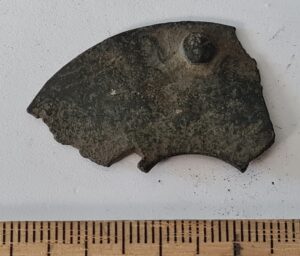
Fragment of brooch, copper alloy. Most likely from the 15th-17th century (Reidla 2012, 96-98).
Reidla, J. 2012. Eesti ehtekultuur muinasajast uusajani. Schenkenberg, Tallinn.
Muhu
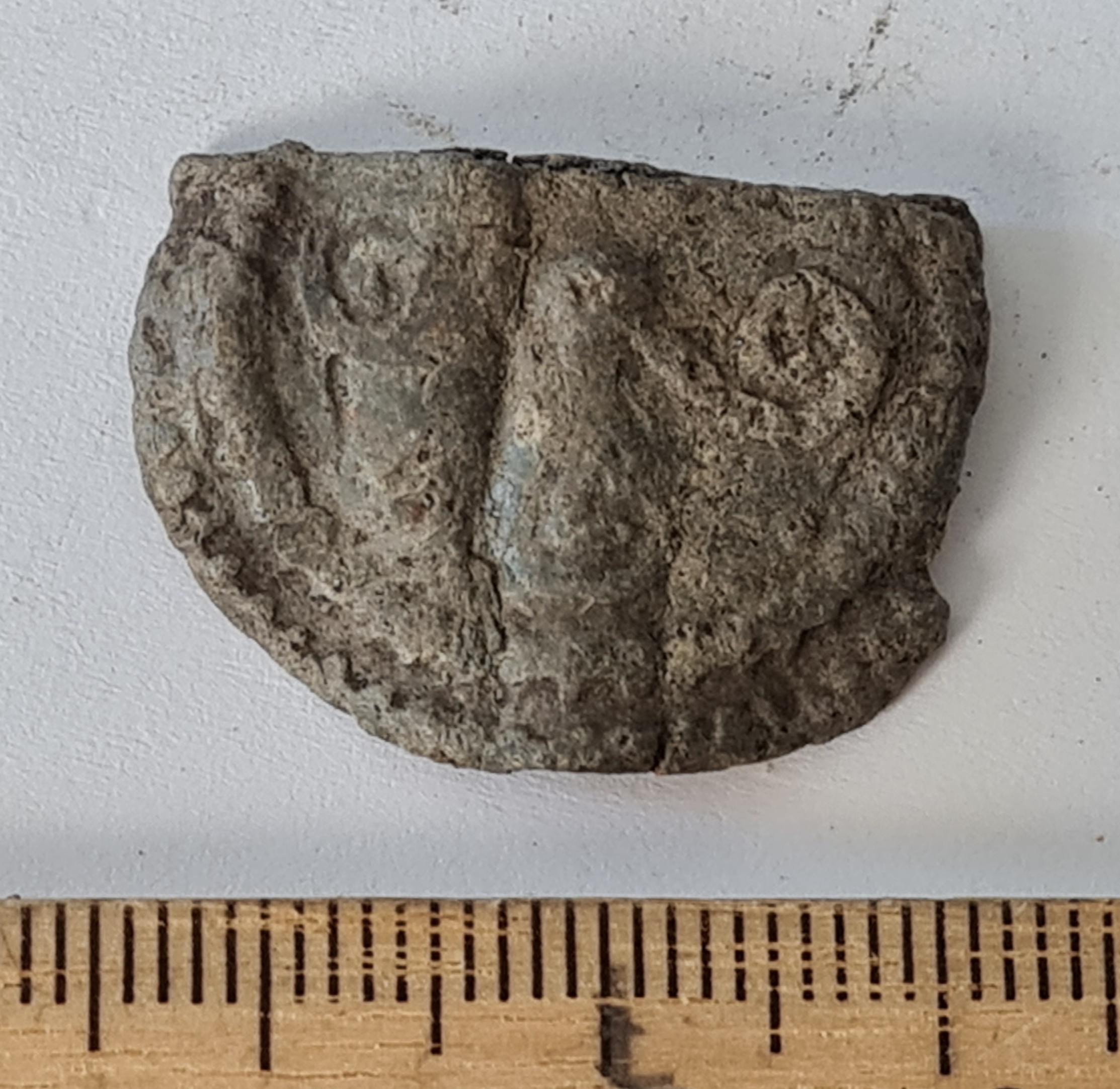
Round sheet pendant, tin (?). Circular, bent double.
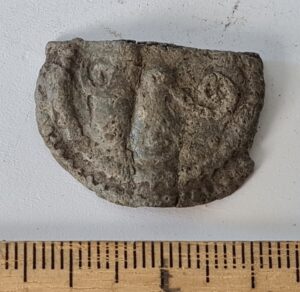
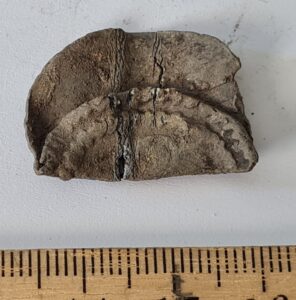
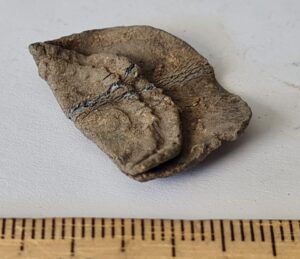
Round sheet pendant, tin (?). Circular, bent double. One side decorated with a four-armed spiral.
Muhu
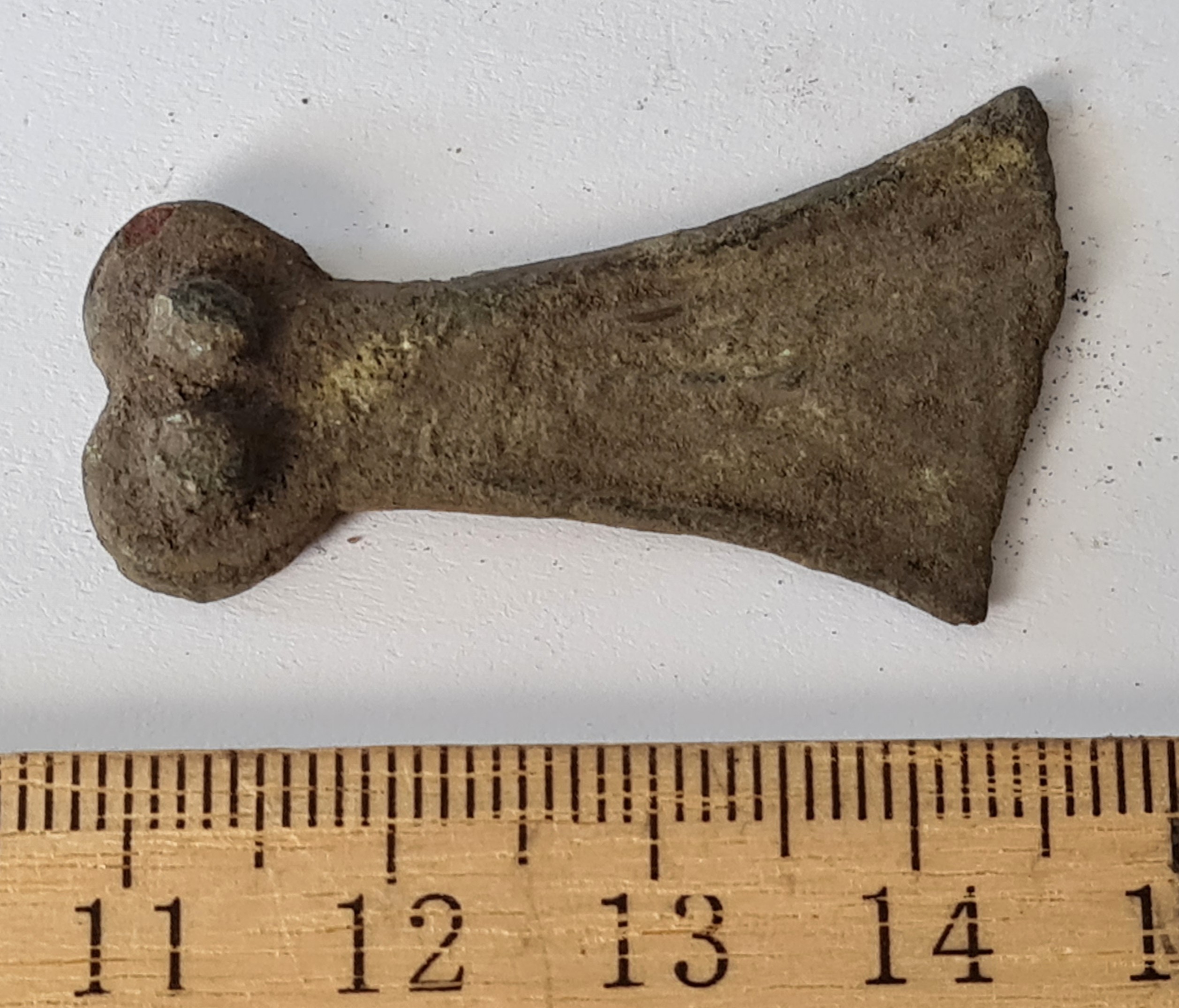
Fragment of pin, copper alloy. Saaremaa type flat triangular-headed pin.
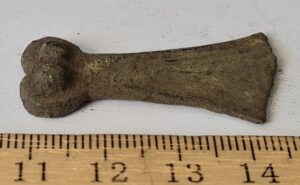
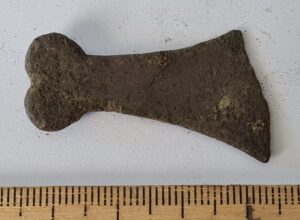
Fragment of pin, copper alloy. Saaremaa type flat triangular-headed pin. From the 11th-12th century. With flat, heart-shaped terminals and a characteristic punched-dot ornament. Most pins of this type have been found in stone graves with cremation burials in Saaremaa and, occasionally, in western Estonia (Mägi 2002, 104). They no longer occur in inhumation burials later than the early 13th century. Individual examples of such pins are also known from Livs territory in Latvia, probably from the burials of Saaremaa women there (e.g. Zariņa 2006, pl. 209: 2).
Mägi, M. 2002. At the crossroads of space and time: graves, changing society and ideology on Saaremaa (Ösel), 9th–13th centuries AD. Tallinn.; Zariņa, A. 2006. Salaspils Laukskolas kapulauks 10.–13. gadsimts. Rīga: Latvijas Vēstures Institūta Apgāds.
Muhu
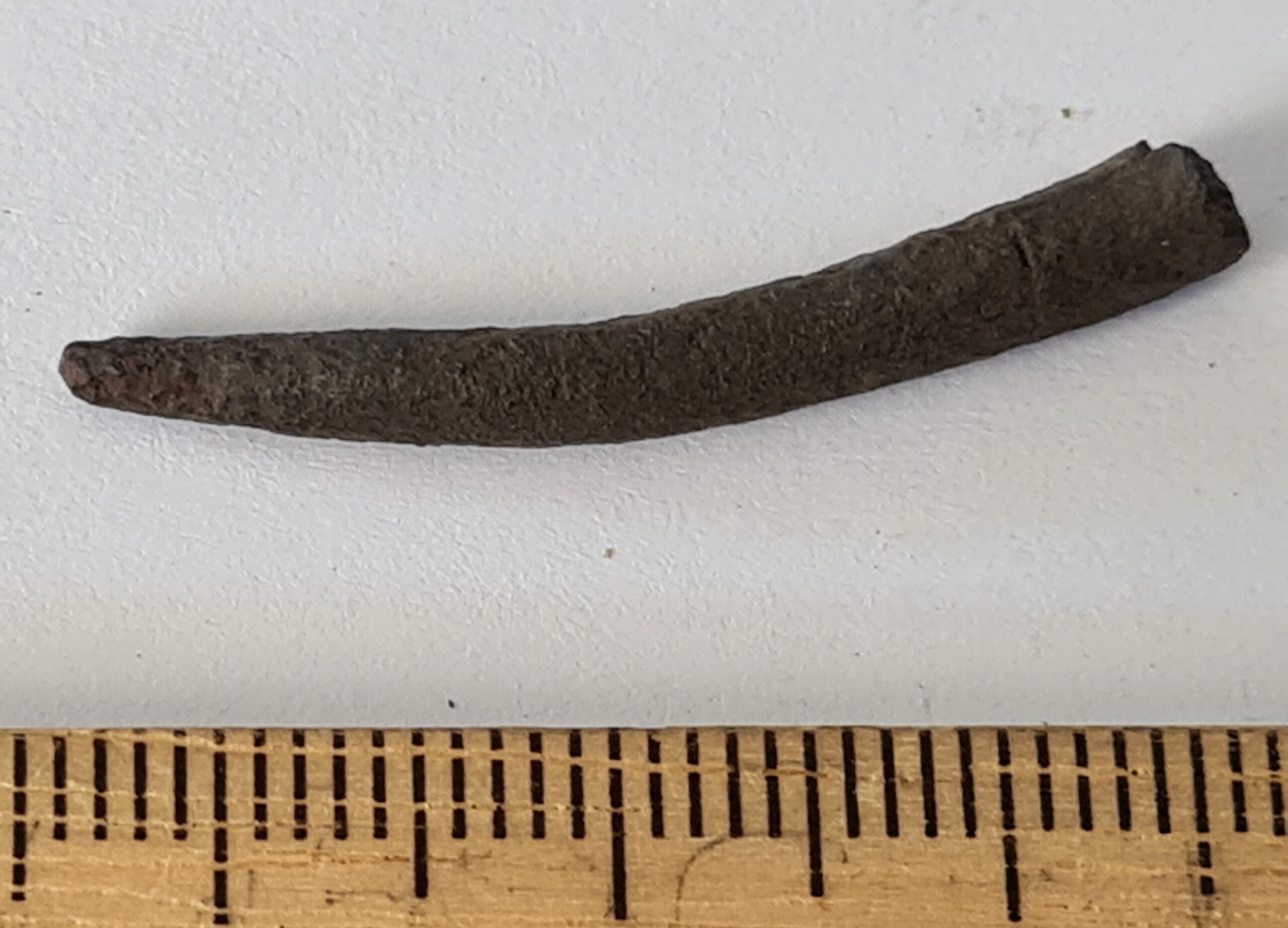
Pin, copper alloy. Given the context, probably from the 12th–13th centuries.
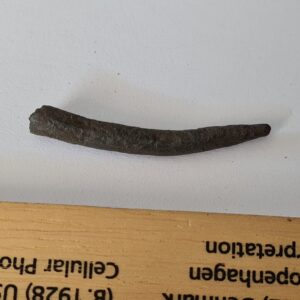
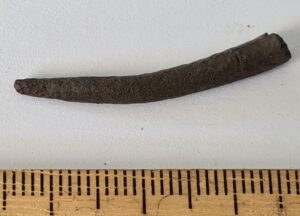
Pin, copper alloy. Given the context, probably from the 12th–13th centuries.
Muhu
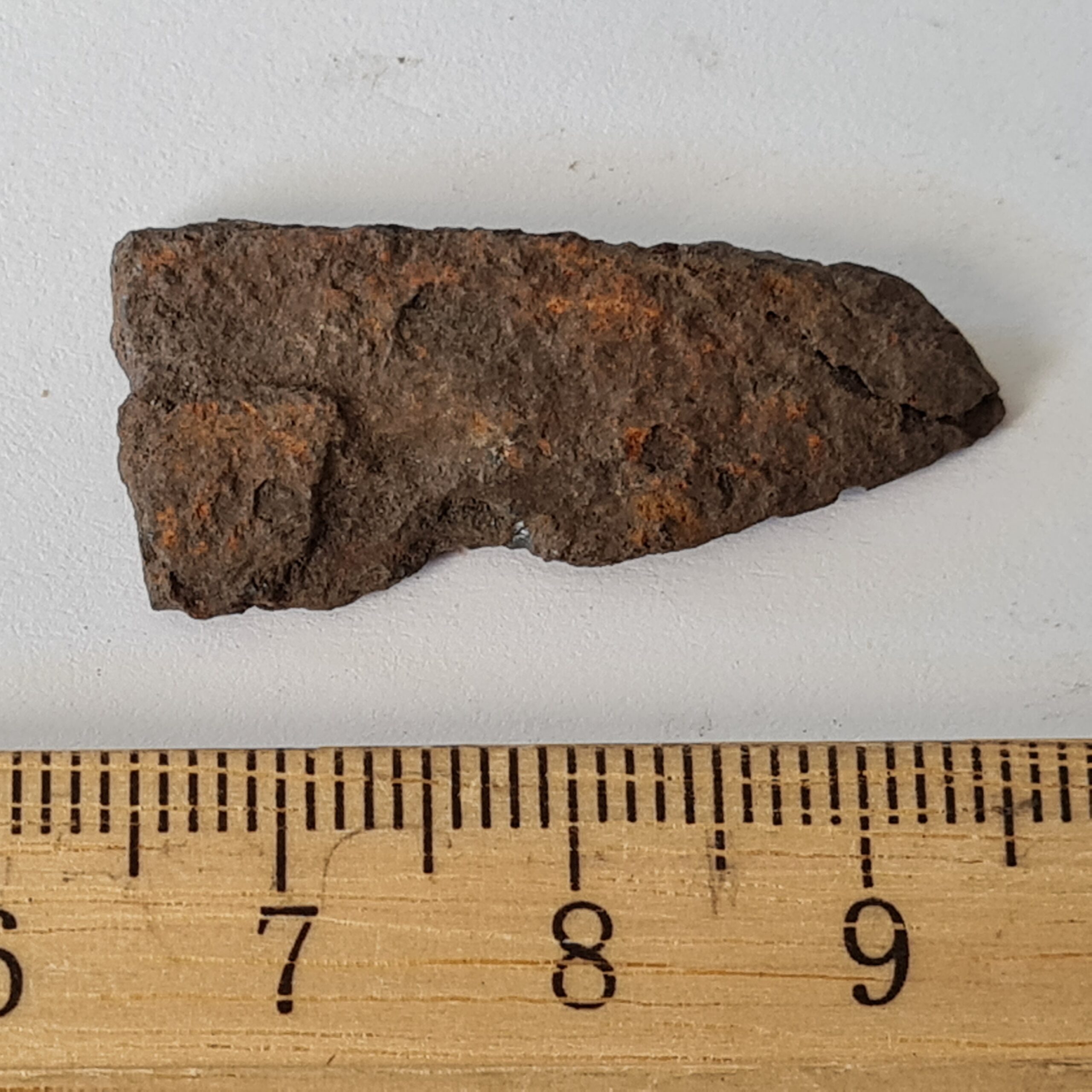
Tip of a knife blade, iron. More precisely undatable.
Tip of a knife blade, iron. More precisely undatable.

