
Database
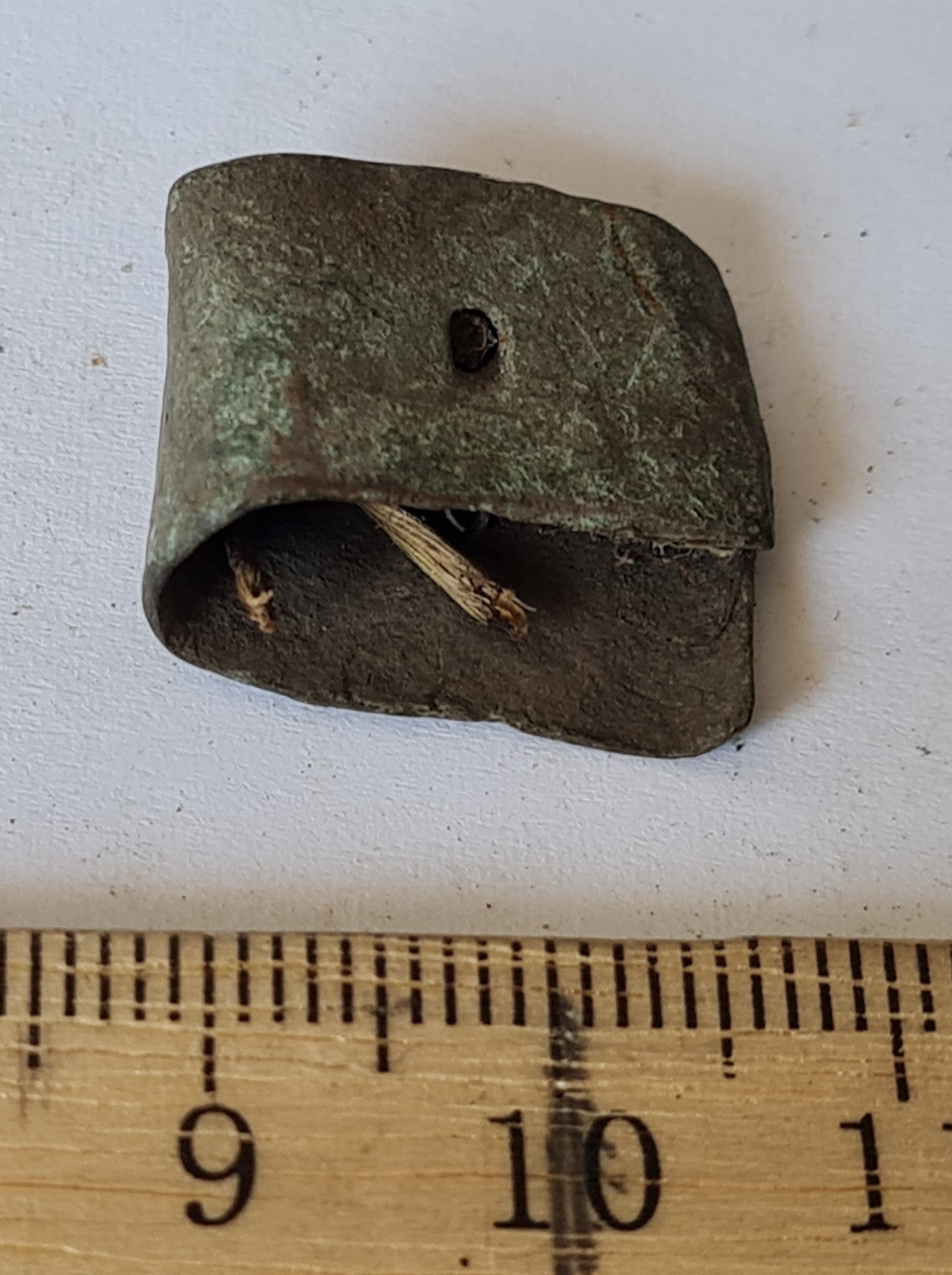
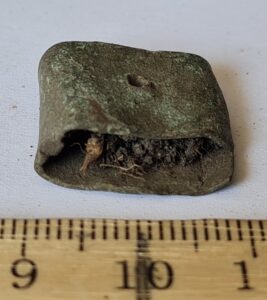
Decorative buckle, copper alloy. More precisely undetermined.
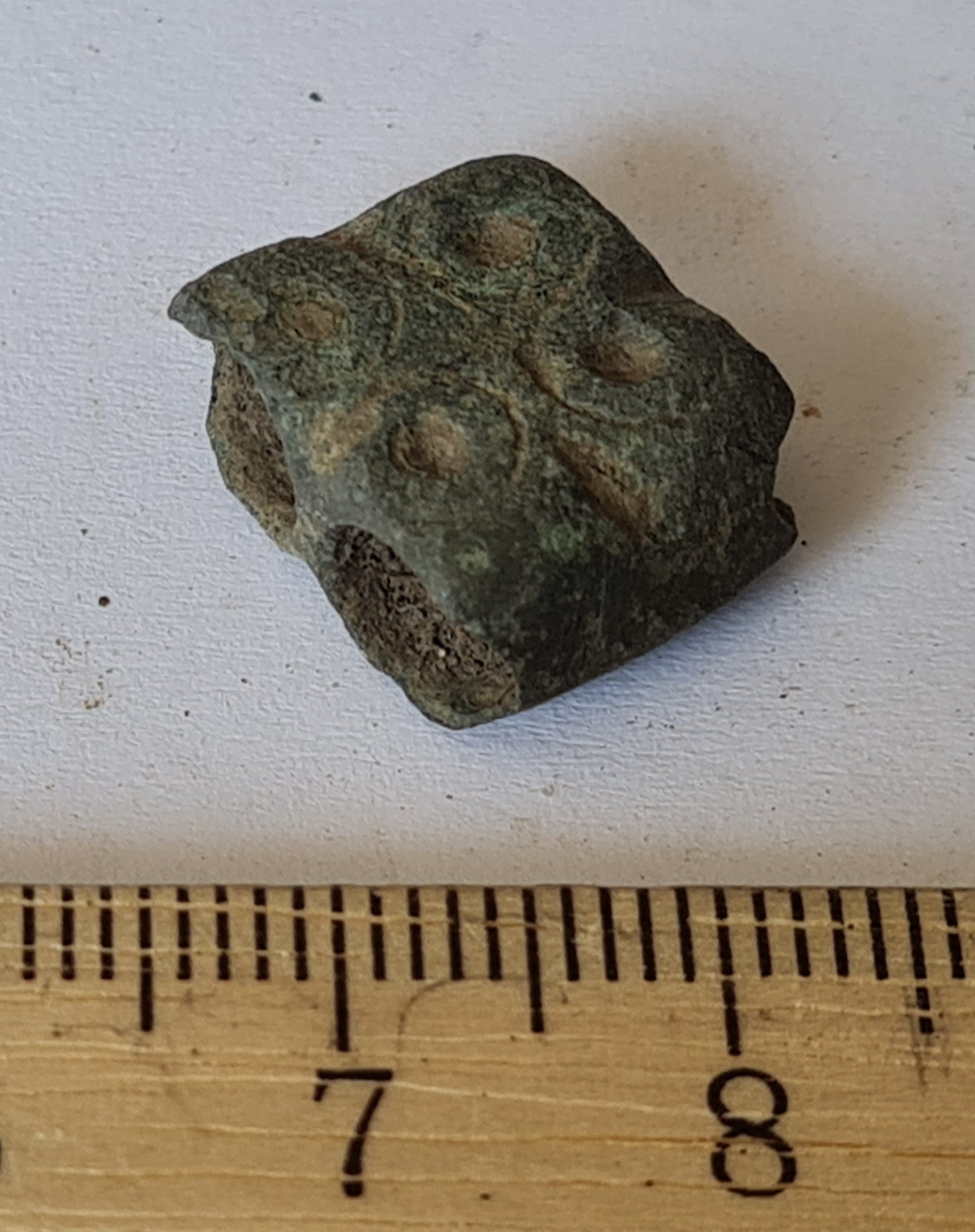
Cubic chain distributer, copper alloy. Chain distributors held together belts composed of metal rings, which have been found in several 13th-century inhumation burials, for example at Valjala (Mägi et al. 2019, 98–99). Such chain belts have been recovered mainly from women’s and children’s graves, and both the chains and the associated cubic chain distributers have been dated to the 12th–13th centuries (Kurisoo et al. 2023, 220–221).
Mägi, M., Malve, M. & Toome, T. 2019. Early Christian burials at Valjala churchyard, Saaremaa. – Archaeological Fieldwork in Estonia, 2018, 93–118.; Kurisoo, T., Posti, M.-L., Jegorov, S. & Kangert, N. 2023. New public discoveries in 2022 against a backdrop of concerns about reporting and processing finds. – Archaeological Fieldwork in Estonia 2022, 217–238.
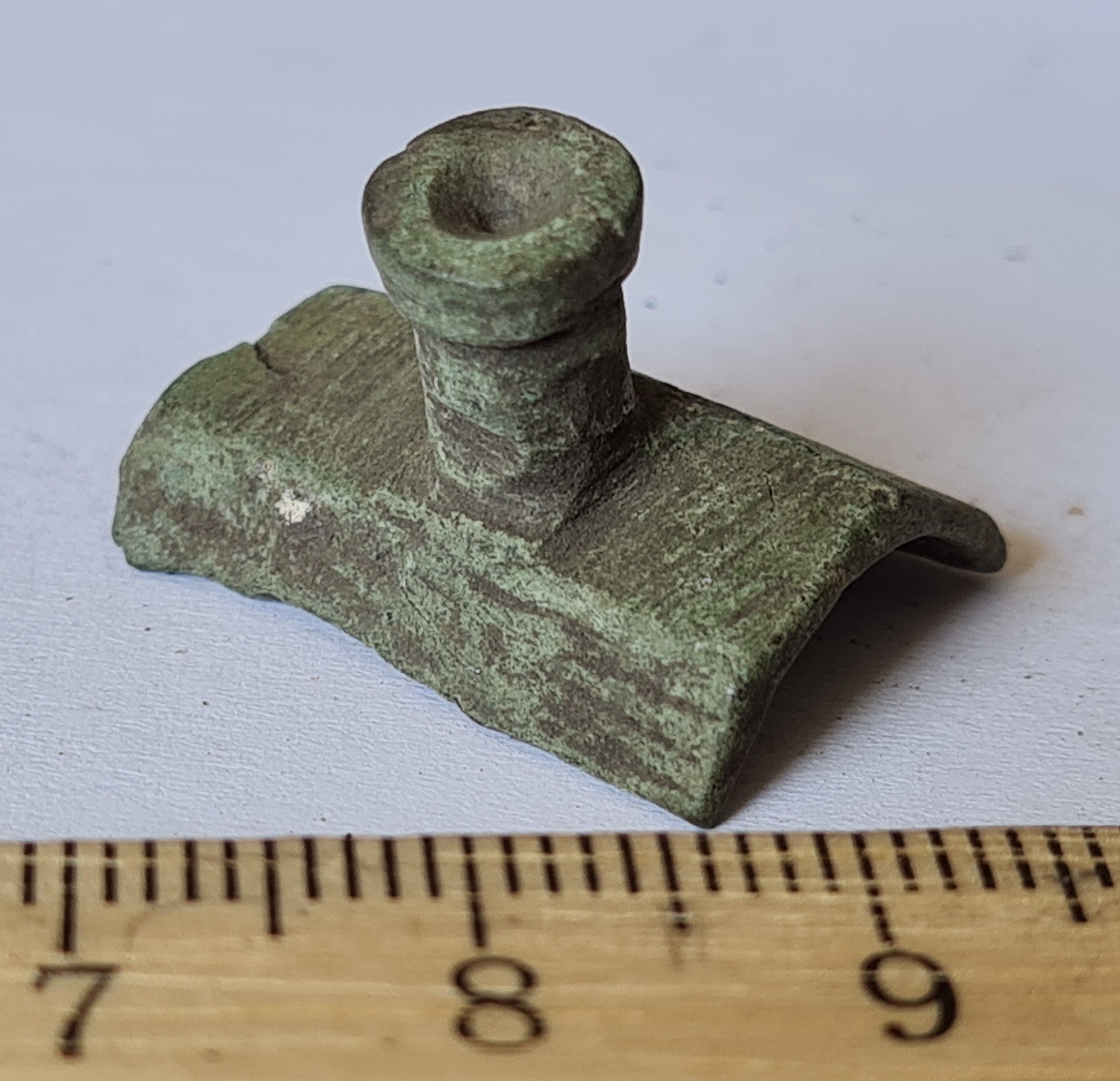
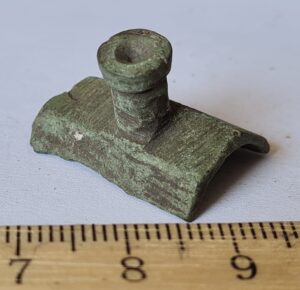
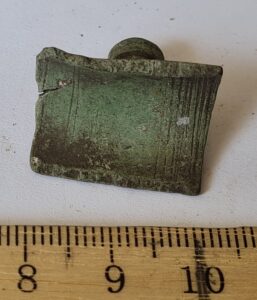
Fragment of artefact, copper alloy. From Early Modern period.
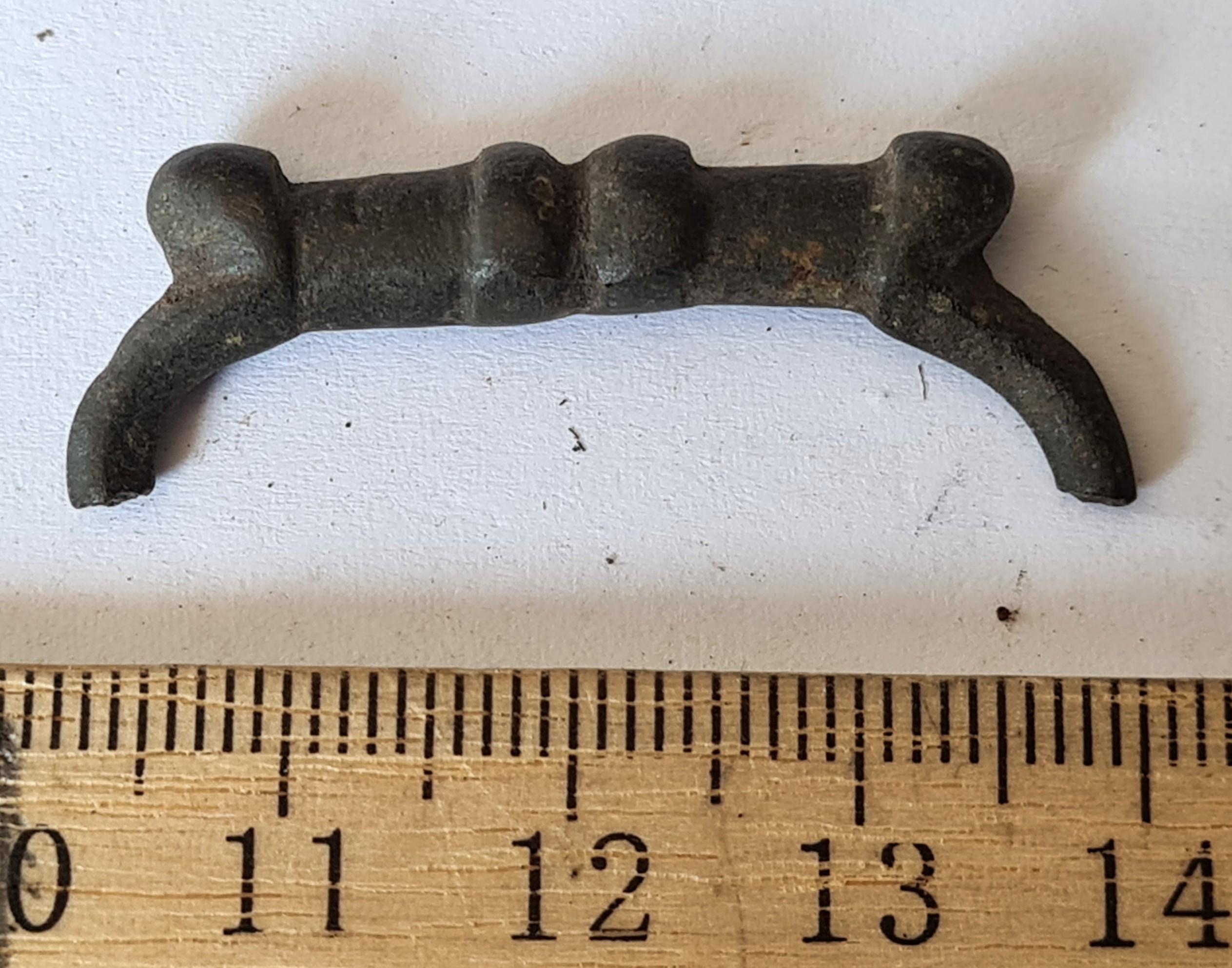
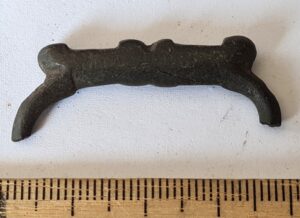
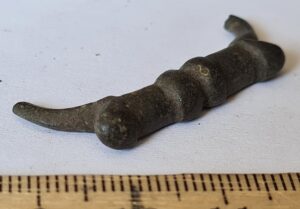
Buckle, copper alloy. Datable to 1200-1350 (Egan & Prichard 2002, 22).
Egan, G. & Pritchard, F. 2002. Dress accessories 1150-1450. Medieval finds from excavations in London. Boydell Press.
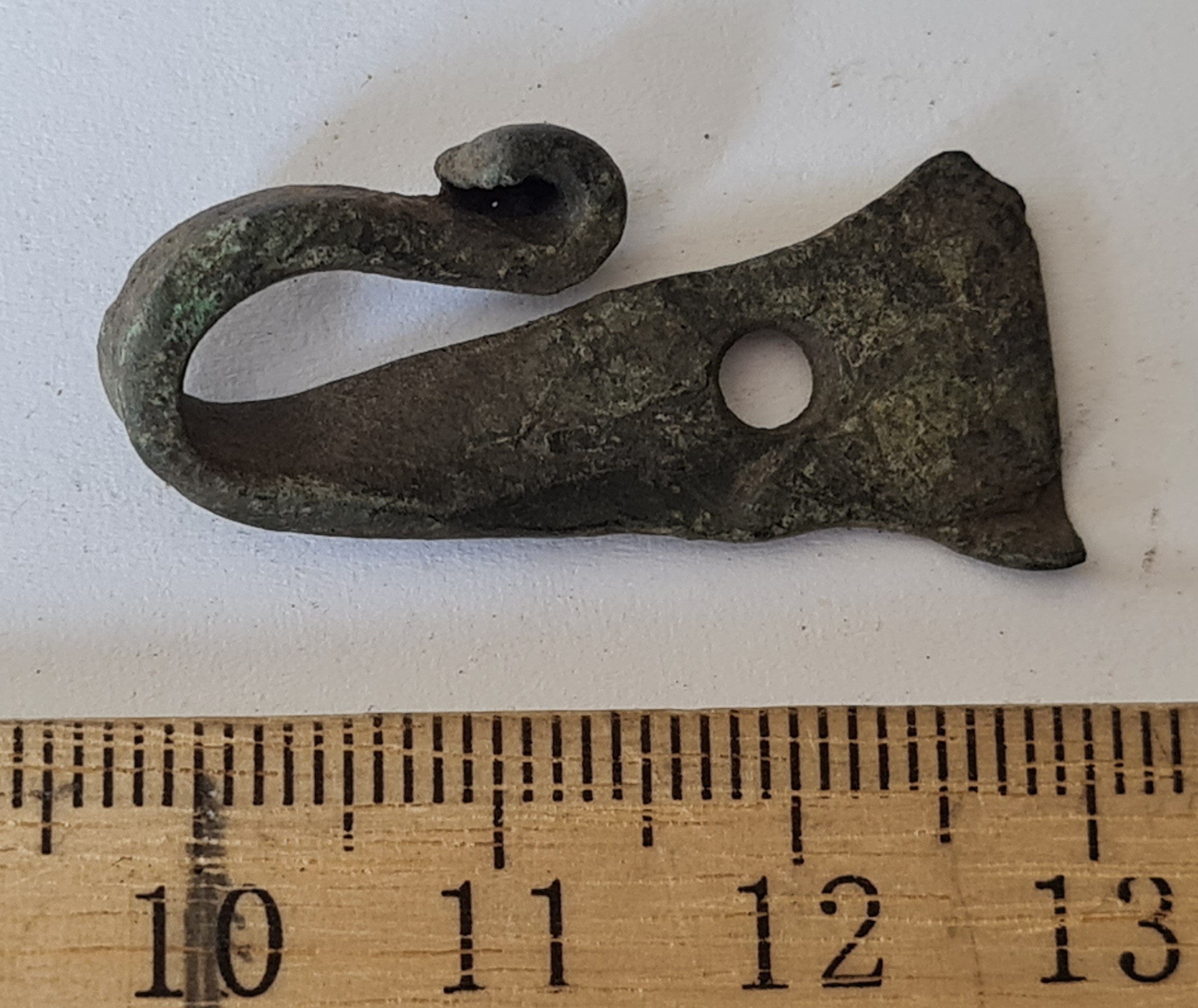
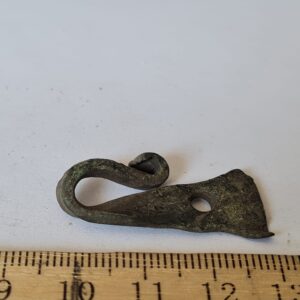
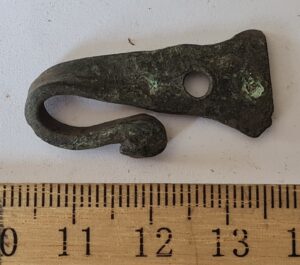
Fragment of razor knife(?), iron. A similar folding knife has been found at the Daugmale hillfort and dated to the 11th–12th centuries (Tilko 2021).
Tilko, S. 2021. Bārdan naži. – Andrejs Vasks & Gunita Zariņa (eds.). Latvijas arheoloģijas rokasgrāmata. Zinātne, Rīga, 524-525.
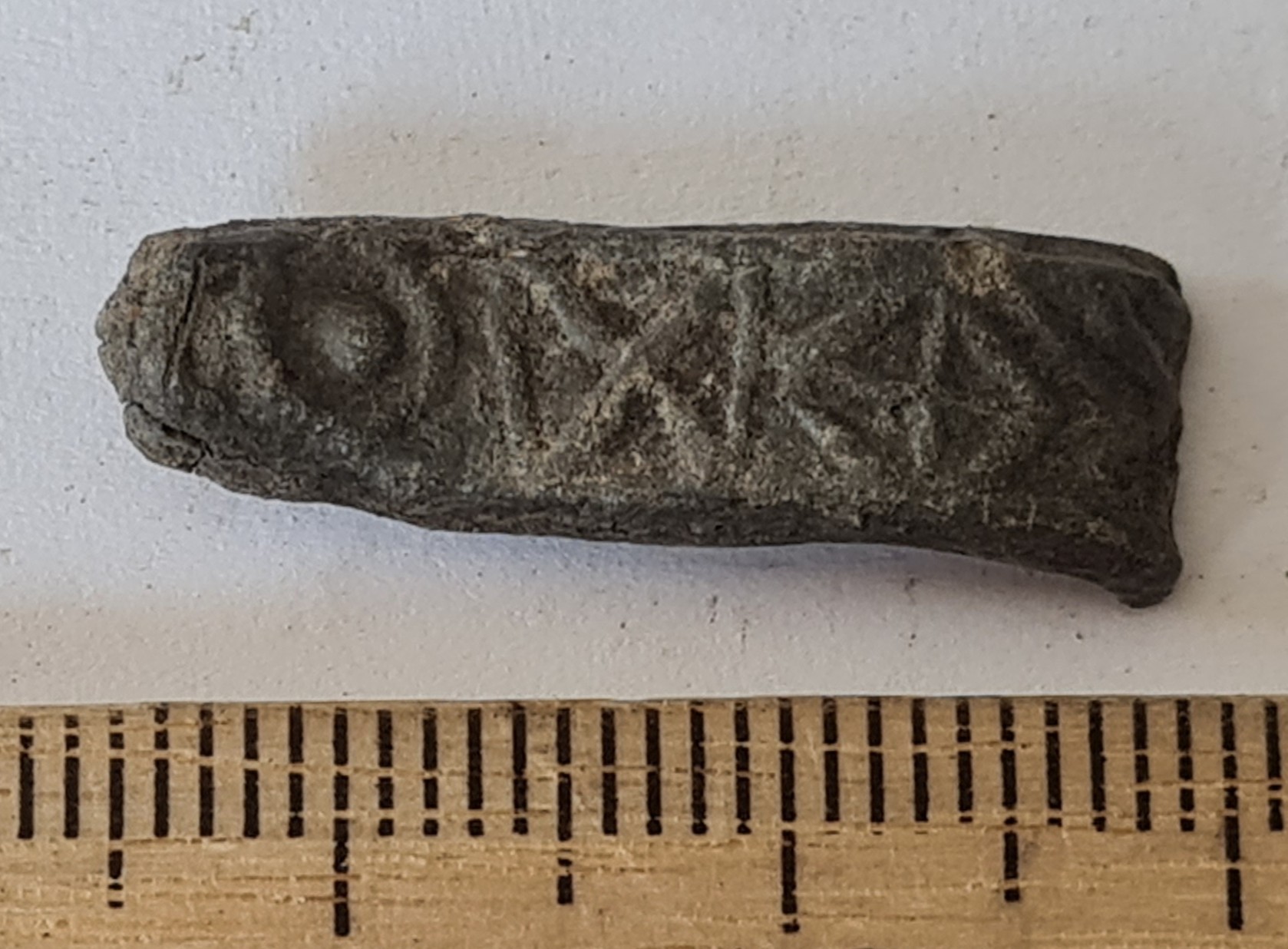
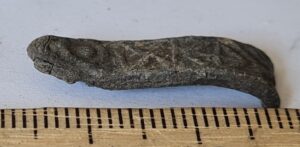
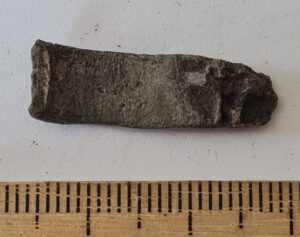
Garment decoration, copper alloy. End of an elongated strip, decorated with relief crosses and circles. On the reverse, loops for sewing it onto a garment.
Muhu
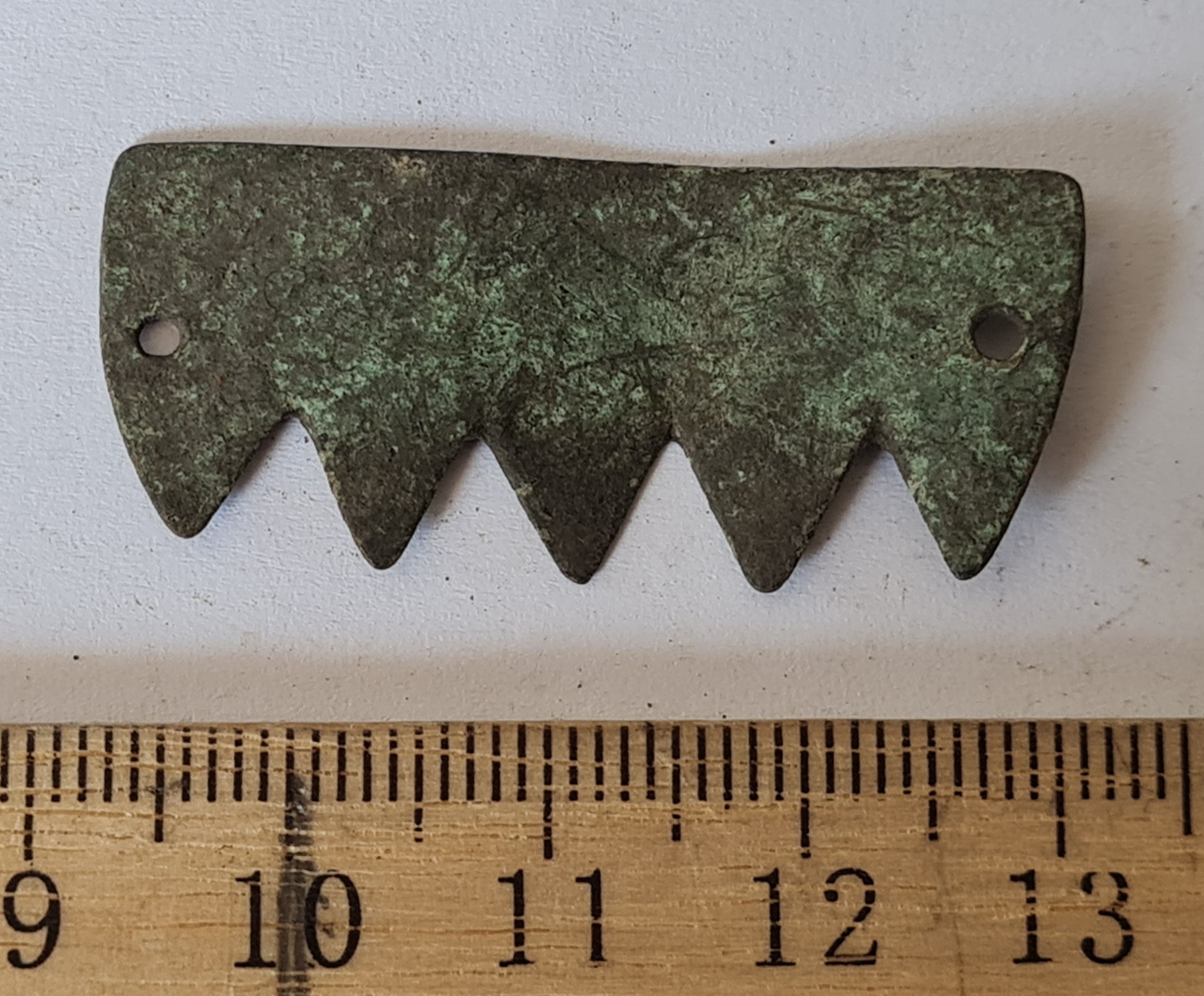
Belt mount, copper alloy. A type of saw-toothed belt mount common in Saaremaa, frequently found in stone graves.
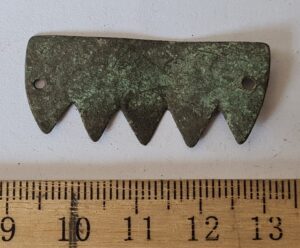
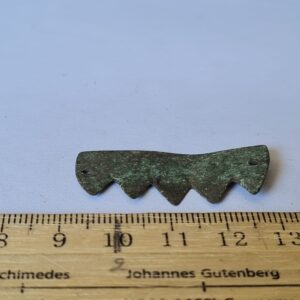
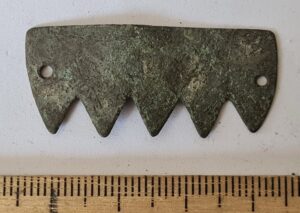
Belt mount, copper alloy. A type of saw-toothed belt mount common in Saaremaa, frequently found in stone graves. Most examples probably date to the 12th century, although they may also have remained in use into the early 13th century (Griciuvienė 2009, 349; Mugurēvičs 2008, 122; Mägi 2002, 98).
Griciuvienė, E. (prepared by) 2009. Kuršiai. Genties kultūra laidosenos duomenimis. Baltų archeologijos paroda. Katalogas. The Curonians. Tribe Culture According to the Burial Data. Baltic Archaeological Exhibition. Catalogue. Vilnius – Riga, Lietuvos nacionalis muziejus; Latvijas Nacionālais vēstures muzejs.; Mugurēvičs, Ē. 2008. Viduslaiku ciems un pils Salaspils novadā. Latvijas Vēstures Institūta Apgāds, Rīga.; Mägi, M. 2002. At the crossroads of space and time: graves, changing society and ideology on Saaremaa (Ösel), 9th–13th centuries AD. Tallinn.
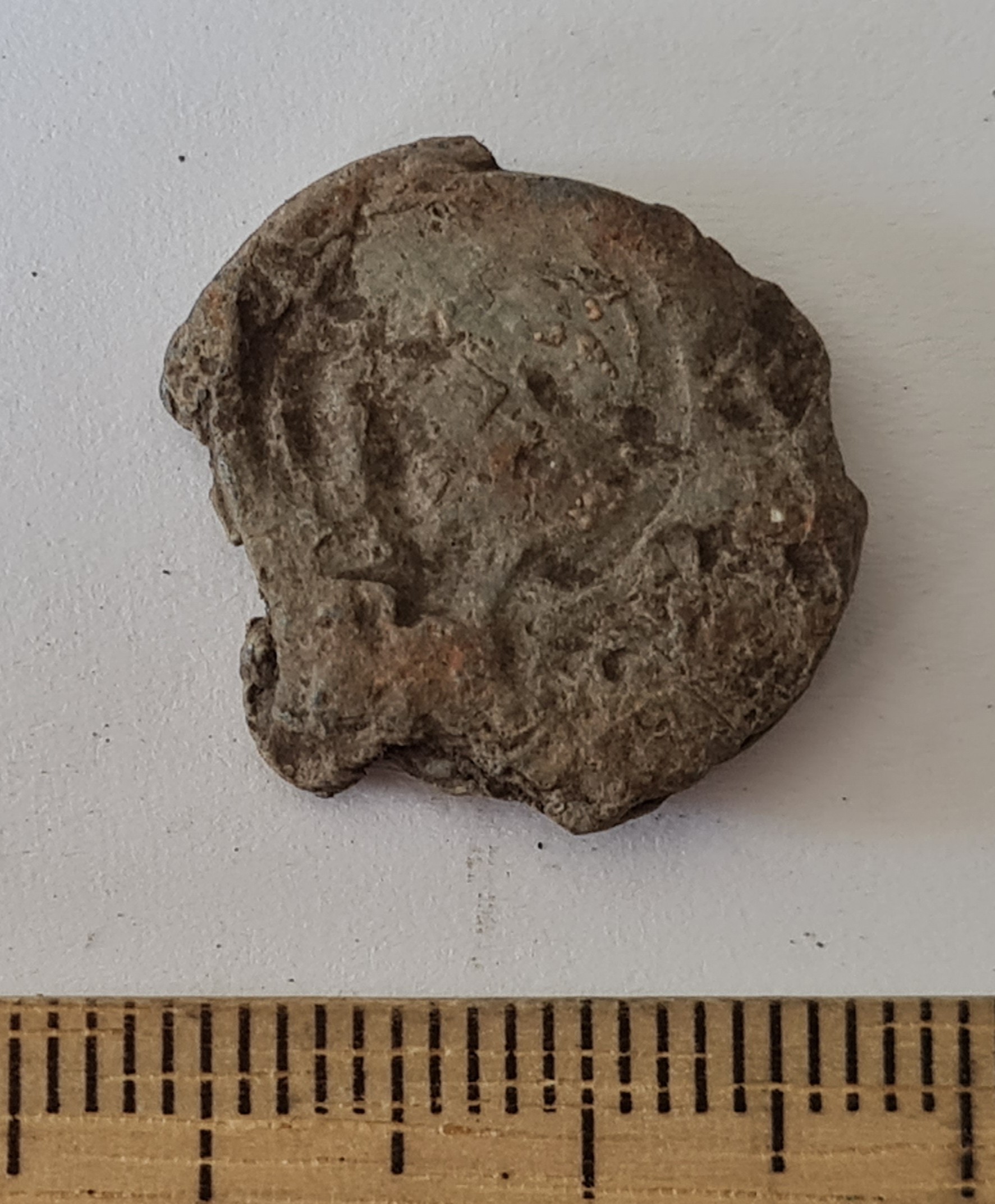
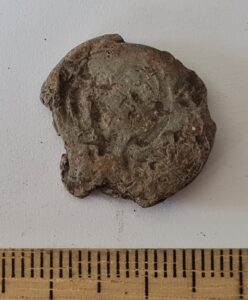
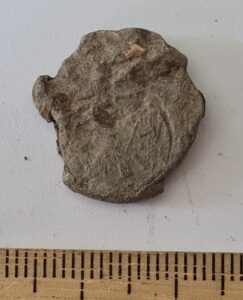
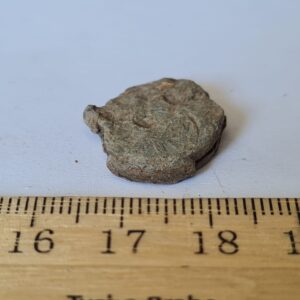
Trade seal.
Muhu
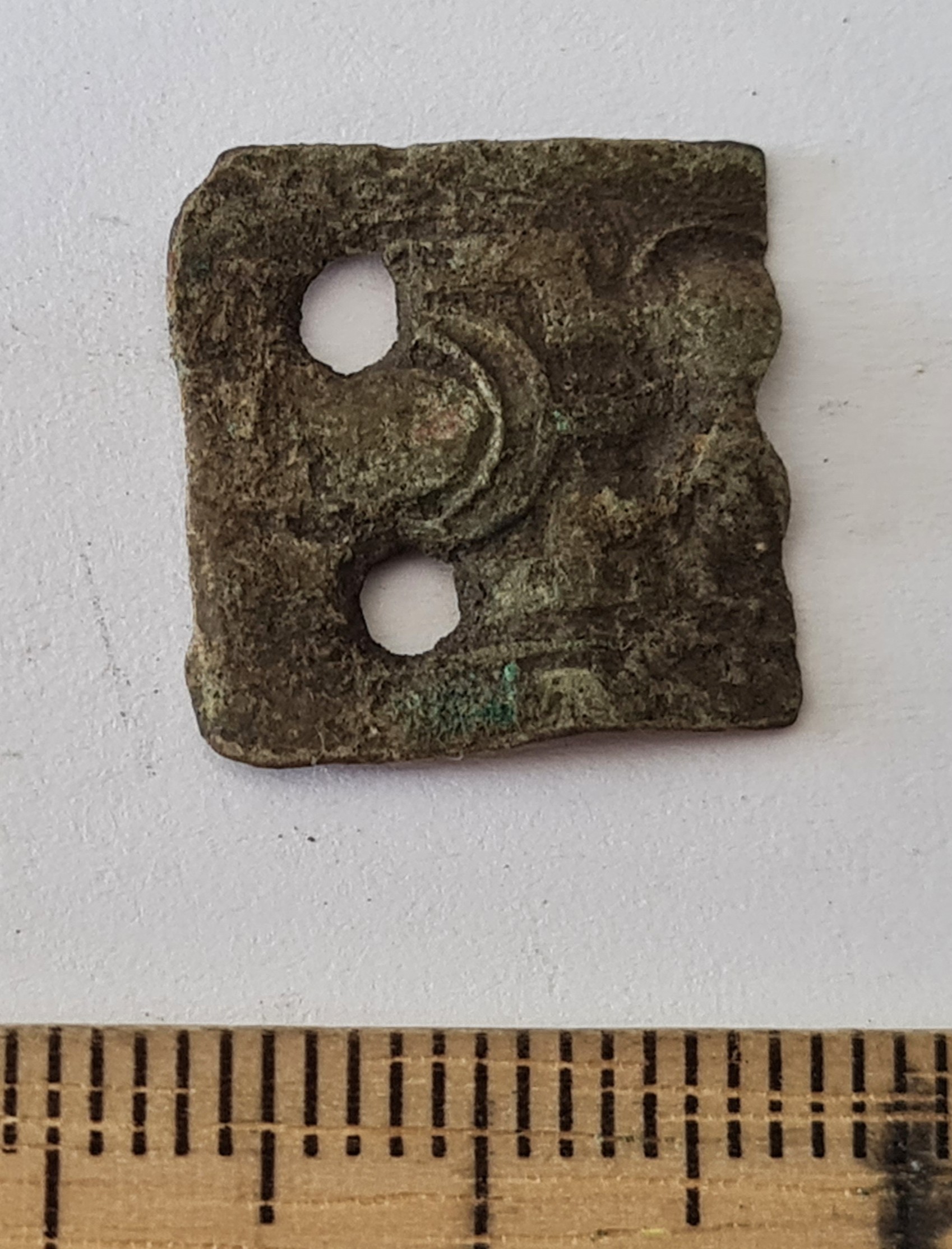
Mount fragment, coppr alloy. With two round attachment holes, one side decorated.
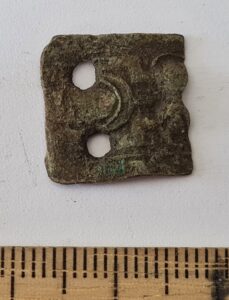
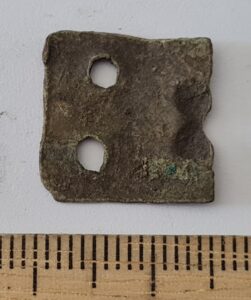
Mount fragment, coppr alloy. With two round attachment holes, one side decorated. More precisely undetermined.

