
Database
Muhu
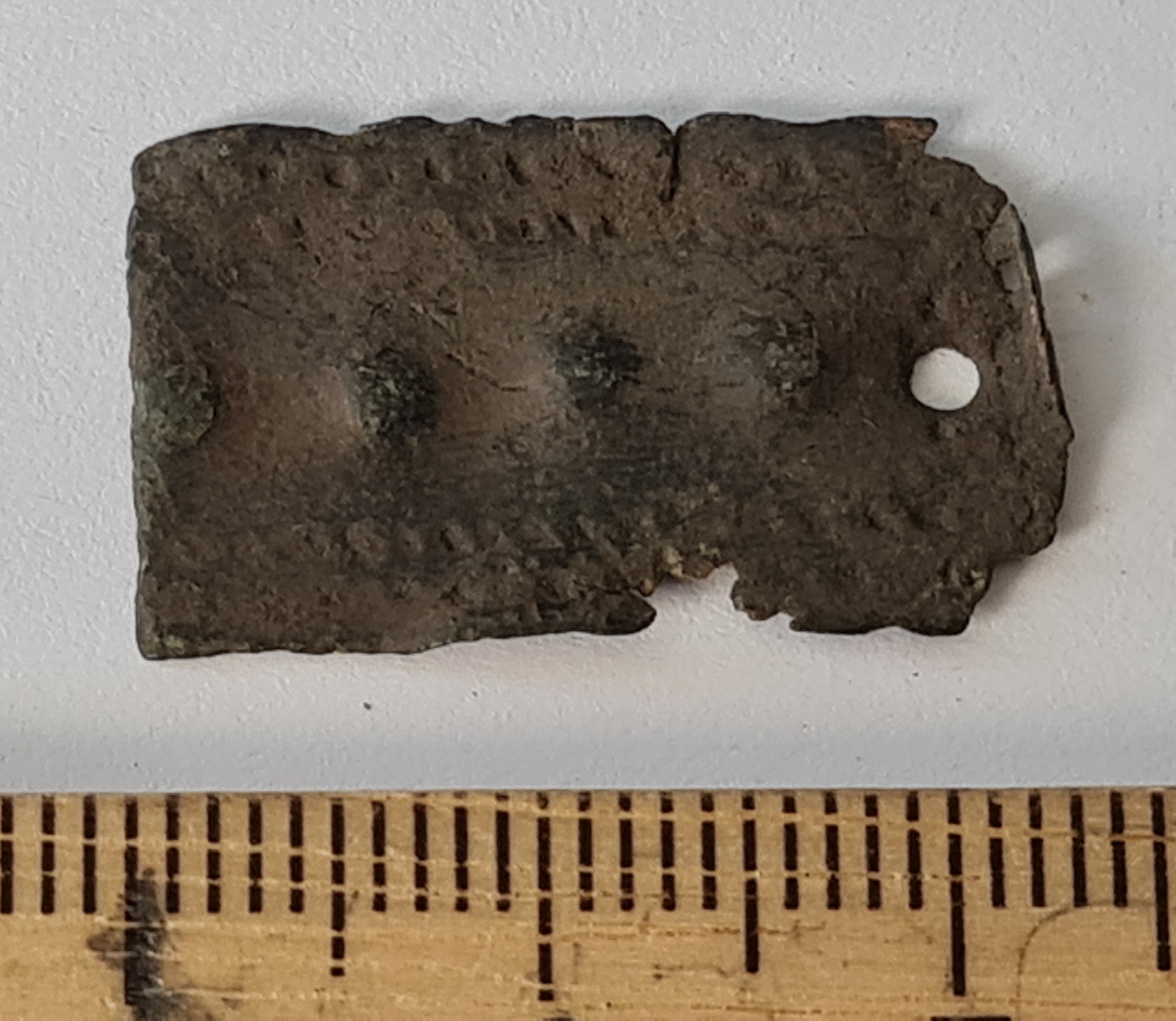
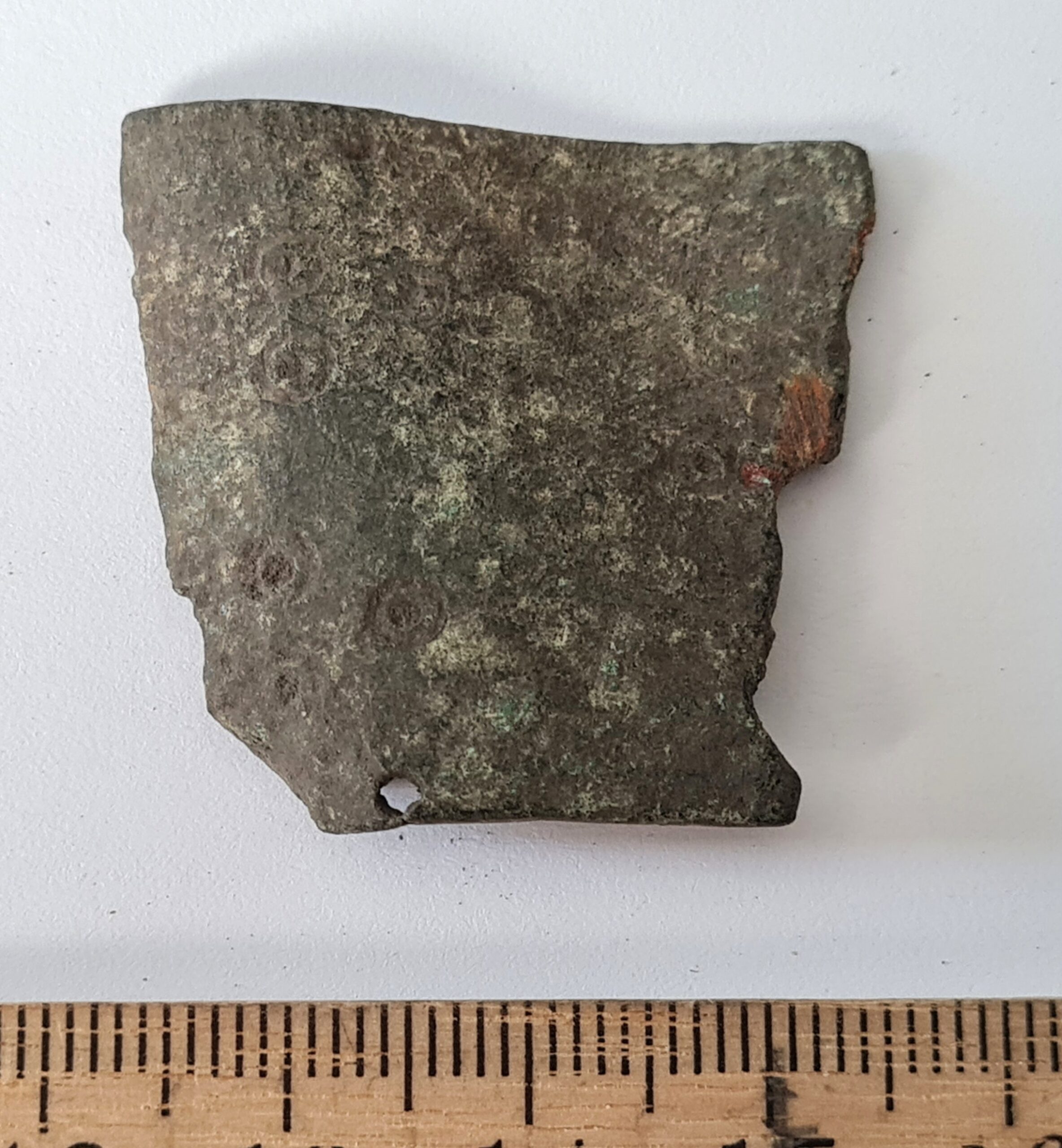
Pealistis, vasesulam. Kohrutatud ornamendiga, ühes otsas neediauk.
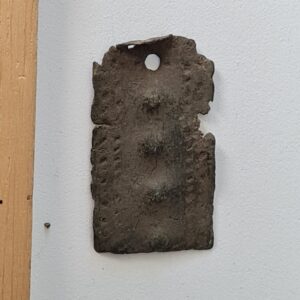
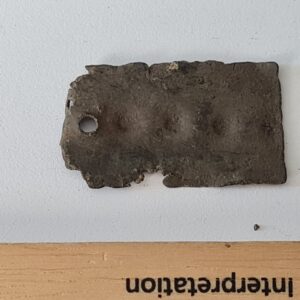
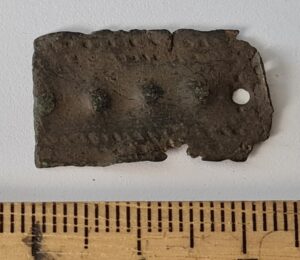
Decoration, copper alloy. Decorated with repoussé ornamentation, with a rivet hole at one end. Probably medieval.
Muhu
Fragment of bracelet, copper alloy. A so-called Saaremaa-type bracelet with flattened, widening terminals.
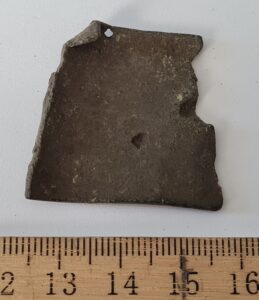
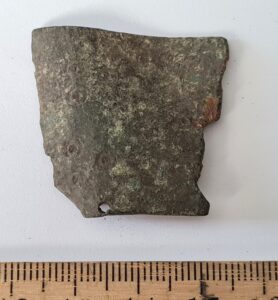
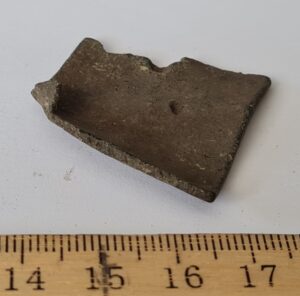
Fragment of bracelet, copper alloy. A so-called Saaremaa-type bracelet with flattened, widening terminals. These are found in stone graves, where they can be dated from the second half of the 10th century to the 12th century. They no longer occur in inhumation burials of the late 12th and 13th centuries (Mägi 2002, 105–106).
Mägi, M. 2002. At the crossroads of space and time: graves, changing society and ideology on Saaremaa (Ösel), 9th–13th centuries AD. Tallinn.
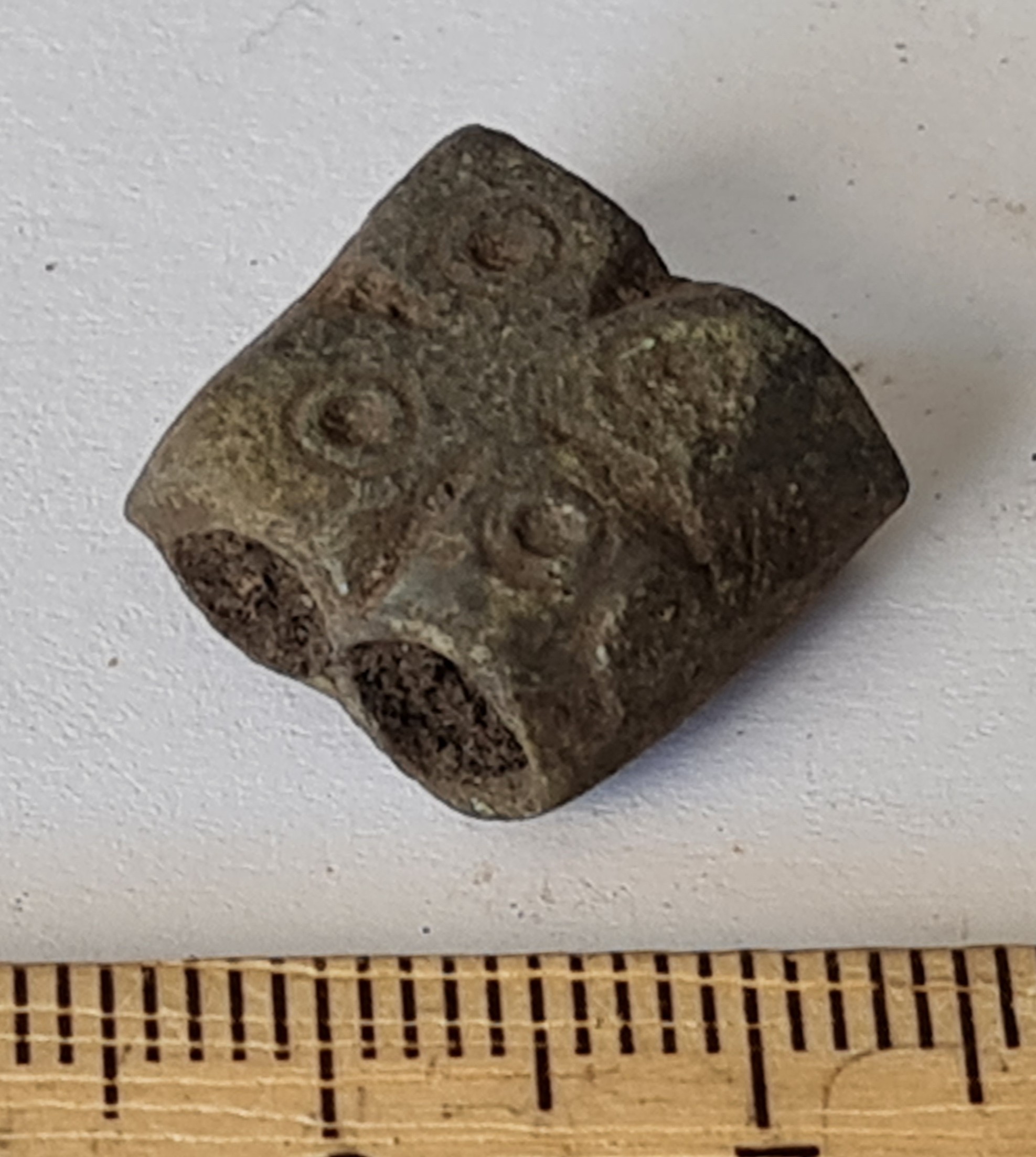
Cubic chain distributer, copper alloy. Chain distributors held together belts composed of metal rings, which have been found in several 13th-century inhumation burials, for example at Valjala (Mägi et al. 2019, 98–99). Such chain belts have been recovered mainly from women’s and children’s graves, and both the chains and the associated cubic chain distributers have been dated to the 12th–13th centuries (Kurisoo et al. 2023, 220–221).
Mägi, M., Malve, M. & Toome, T. 2019. Early Christian burials at Valjala churchyard, Saaremaa. – Archaeological Fieldwork in Estonia, 2018, 93–118.; Kurisoo, T., Posti, M.-L., Jegorov, S. & Kangert, N. 2023. New public discoveries in 2022 against a backdrop of concerns about reporting and processing finds. – Archaeological Fieldwork in Estonia 2022, 217–238.
Muhu
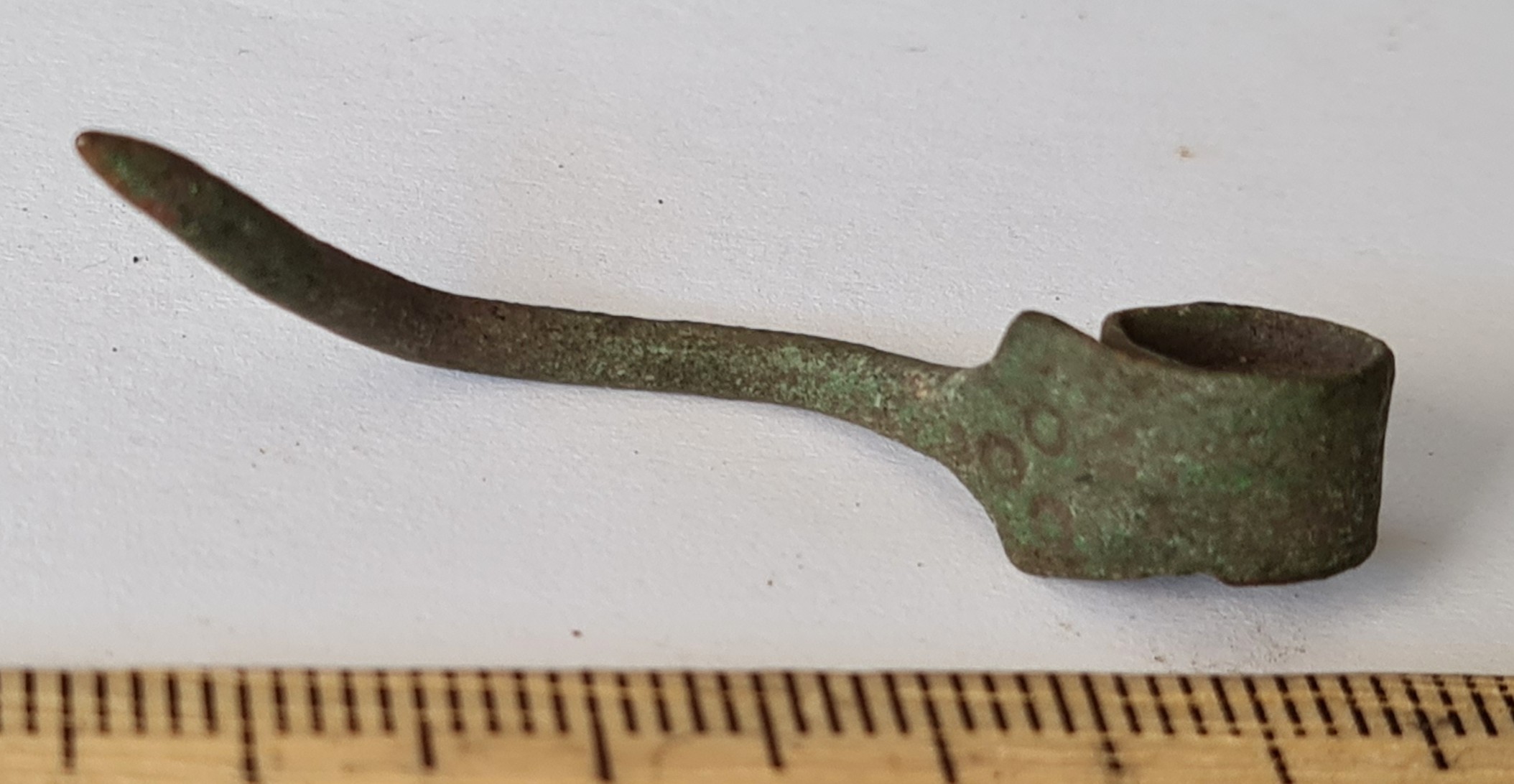
Needle of penannular brooch, copper alloy. Concave transition to the foot, decorated with four circles.
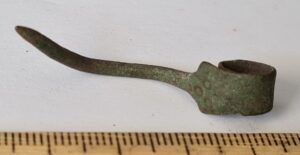
Needle of penannular brooch, copper alloy. Concave transition to the foot, decorated with four circles. Probably from the 13th–14th century.
Muhu
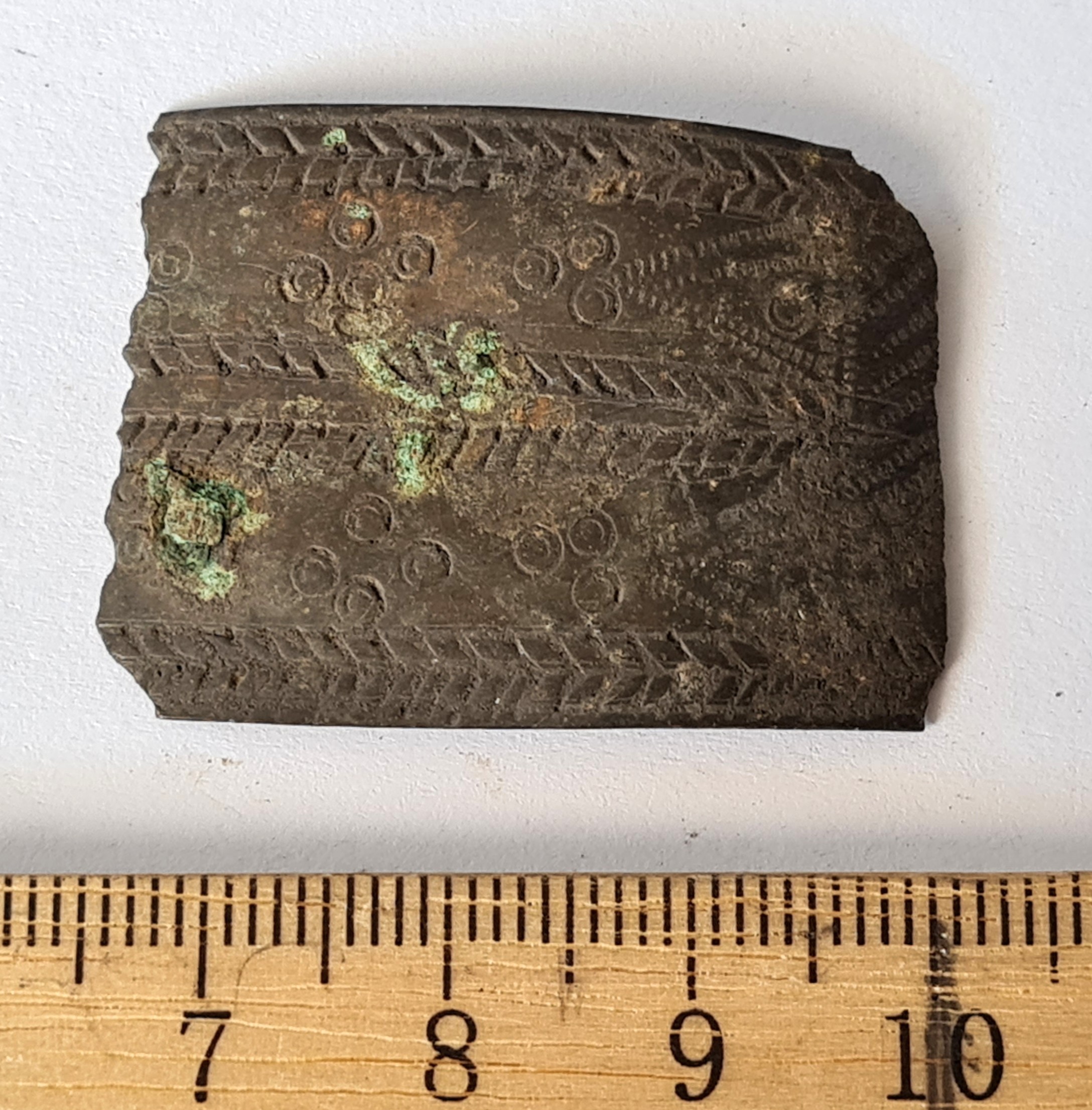
Bracelet, copper alloy. Hollow-convex, thin, with narrowing ends and decorated.
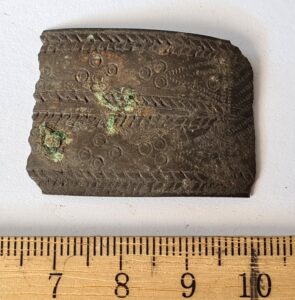
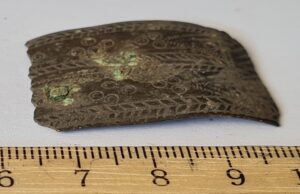
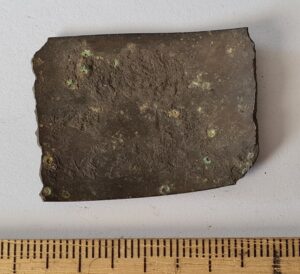 Bracelet, copper alloy. Concave, thin, with tapering ends, decorated. Such bracelets were widespread in the burials of Livs, Latvia, but have sometimes been also found in stone graves with cremations in Saaremaa (Mägi 2002, 106). The Livic bracelets were developed from similar, but casted bracelets that have been considered Scandinavian. The thin variants mainly belong to the 11th-12th centuries (Spirĝis 2008, 287-290).
Mägi, M. 2002. At the crossroads of space and time: graves, changing society and ideology on Saaremaa (Ösel), 9th–13th centuries AD. Tallinn.;Spirģis, R. 2008. Bruņrupuču saktas ar krūšu važiņrotām un lībiešu kultūras attīstība Daugavas lejtecē 10.-13. gadsimtā. Latvijas Vēstures Institūta apgāds, Rīga.
Muhu
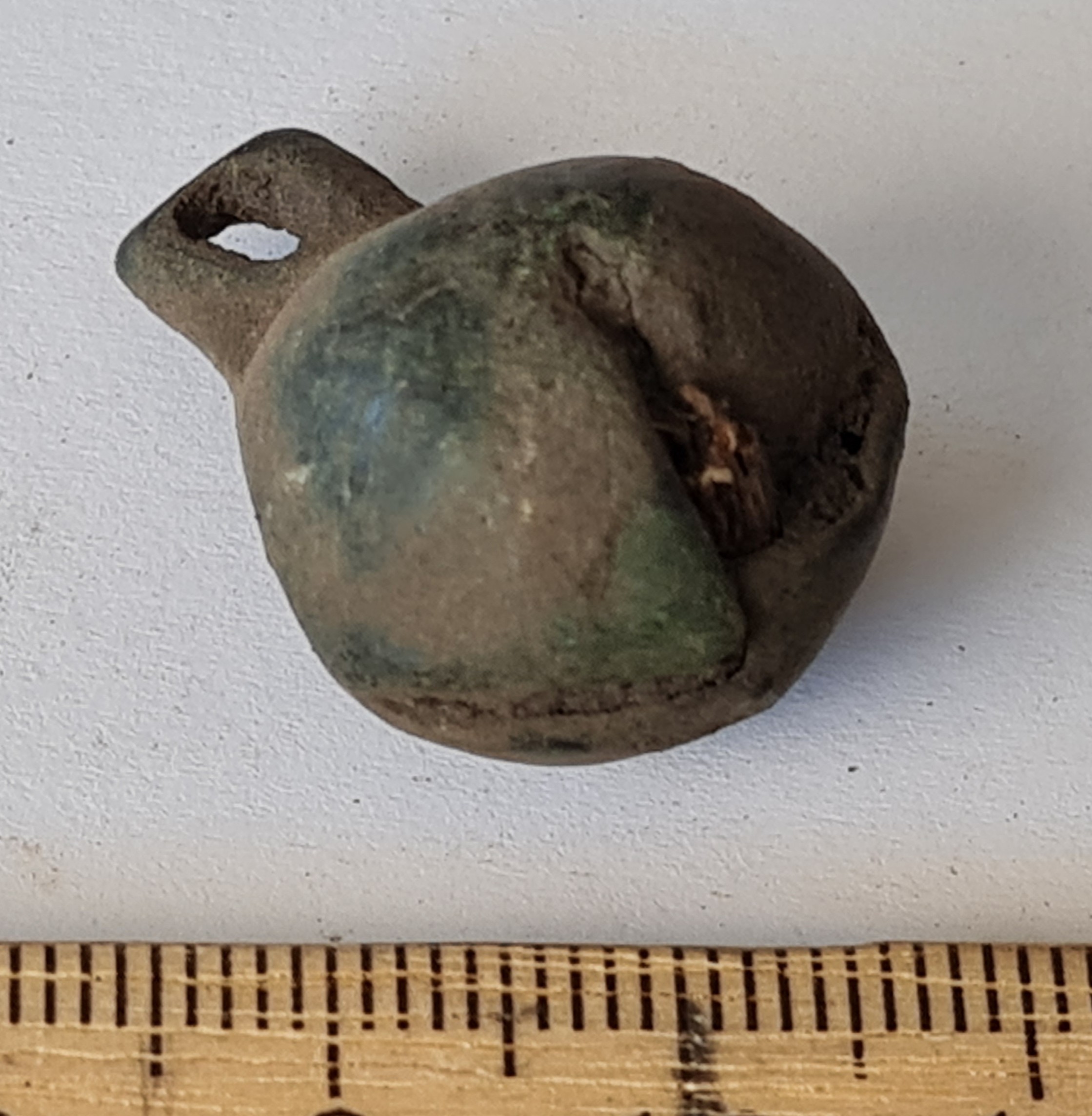
Bell, copper alloy. Four-lobed, plain, with a square suspension loop.
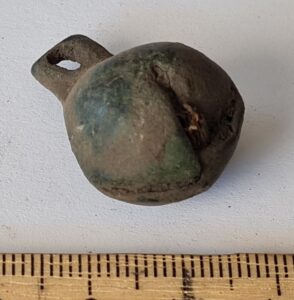
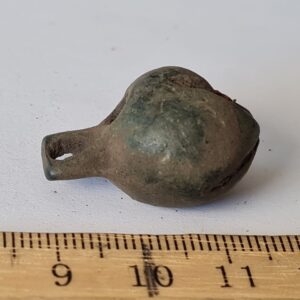
Bell, copper alloy. Four-lobed, plain, with a square suspension loop. Such bells have been found in large numbers, for example at the Siksälä cemetery, where they are mostly dated to the 14th century and occasionally also to the 15th century (Valk & Laul 2014, 110; Valk et al. 2014). They are also known from Courland, for instance from the Vilkmuiža burials at Dundaga (e.g. Muižnieks & Žeiere 2021, 321). They were worn both as parts of necklaces and, in the case of men, for example as buttons. Bells of this shape are also abundantly known from the Muhu settlement site.
Valk, H. & Laul, S. 2014. Siksälä kalme I: Muistis ja Ajalugu. Tartu ülikool, Ajaloo ja arheoloogia instituut, Tallinn.; Valk, H., Ratas, J., Laul, S. 2014. Siksälä kalme II. Matuste ja leidude kataloog. Tartu Ülikool.: Tartu.; Muižnieks, V. & Žeiere, I. 2021. Dundagas Laukmuižas 13. – 14. gadsimta senkapi. The 13th-14th Century Cemetery of Dundagas Laukmuiža. – Latvias nacionālā vēstures muzeja raksti nr. 30. Arheoloģija. Rīga.
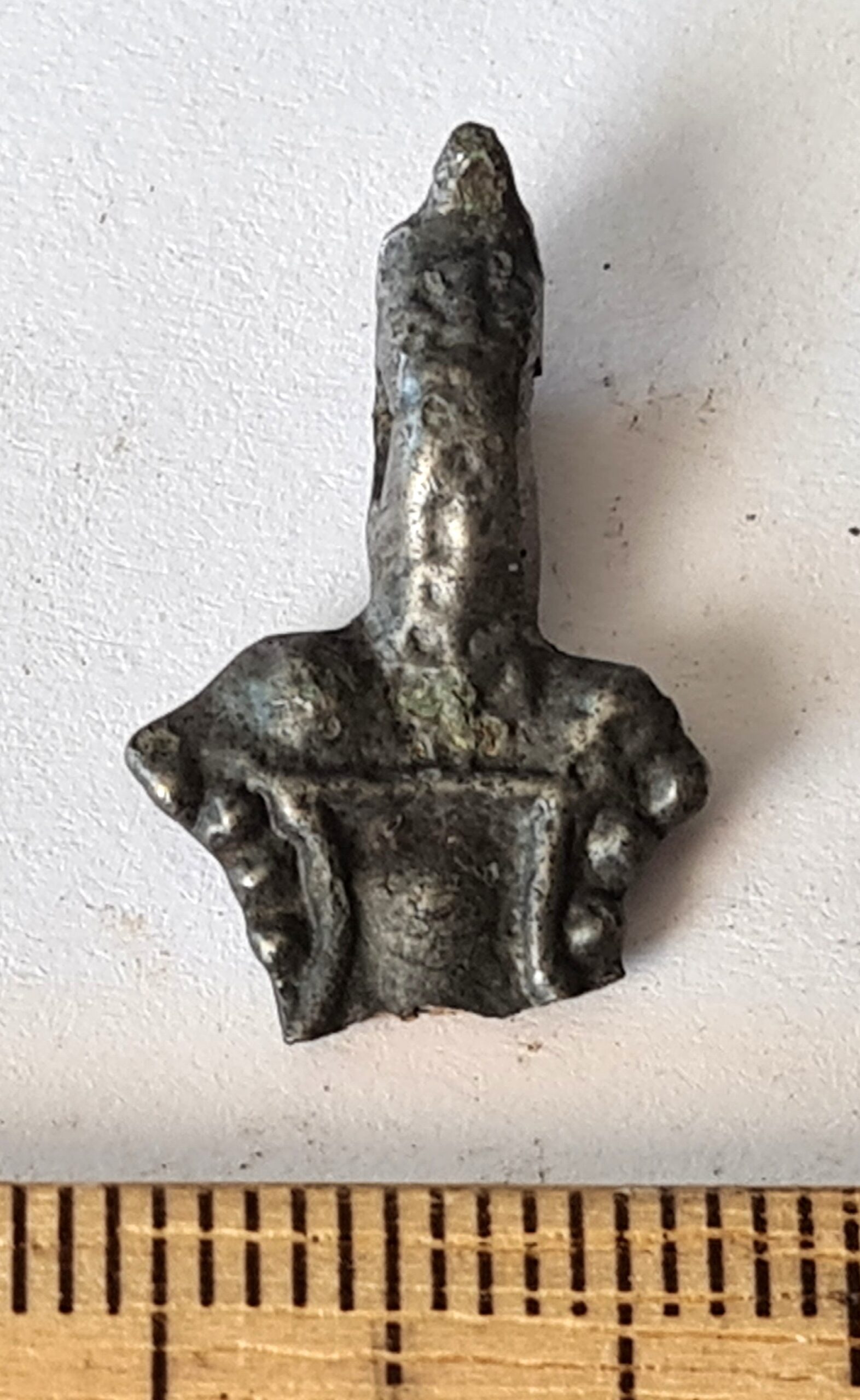
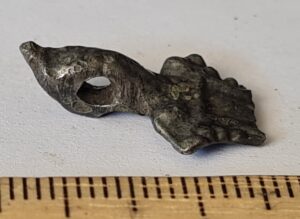
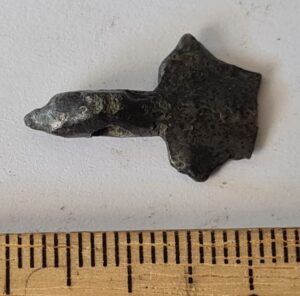
Pendant, silver.
Muhu
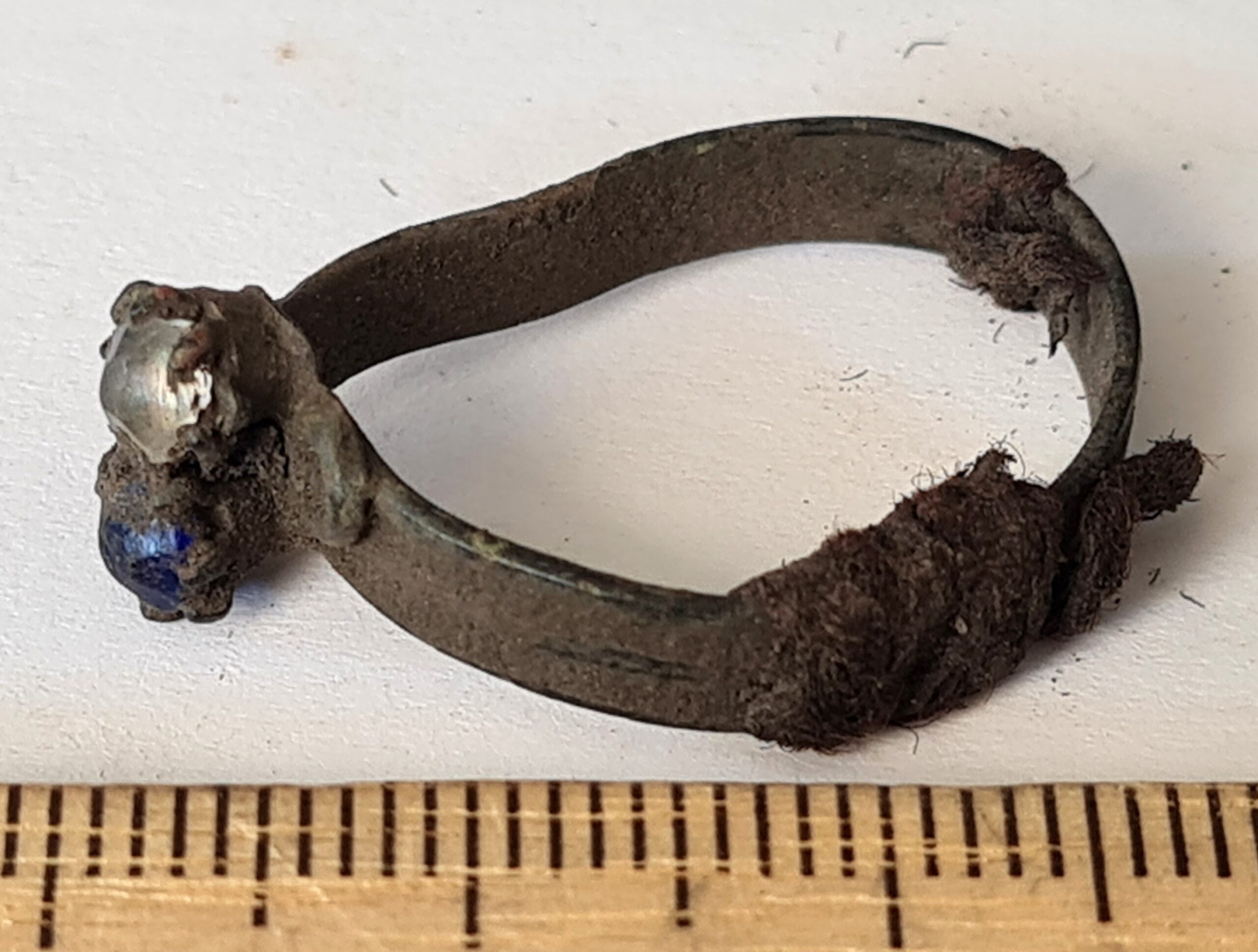
Finger-ring, copper alloy. Set with three stones of different colours. A cord has been preserved around the ring, indicating that it was probably worn around the neck.
 ‘
‘ 
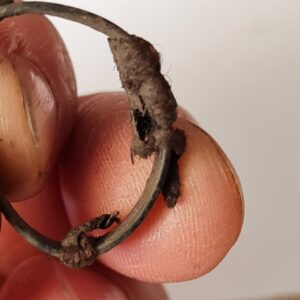
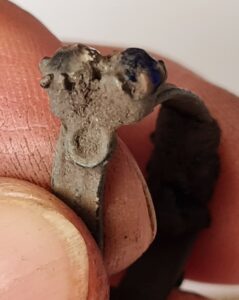
Finger-ring, copper alloy. Set with three stones of different colours. A cord has been preserved around the ring, indicating that it was probably worn around the neck. From Early Modern period.
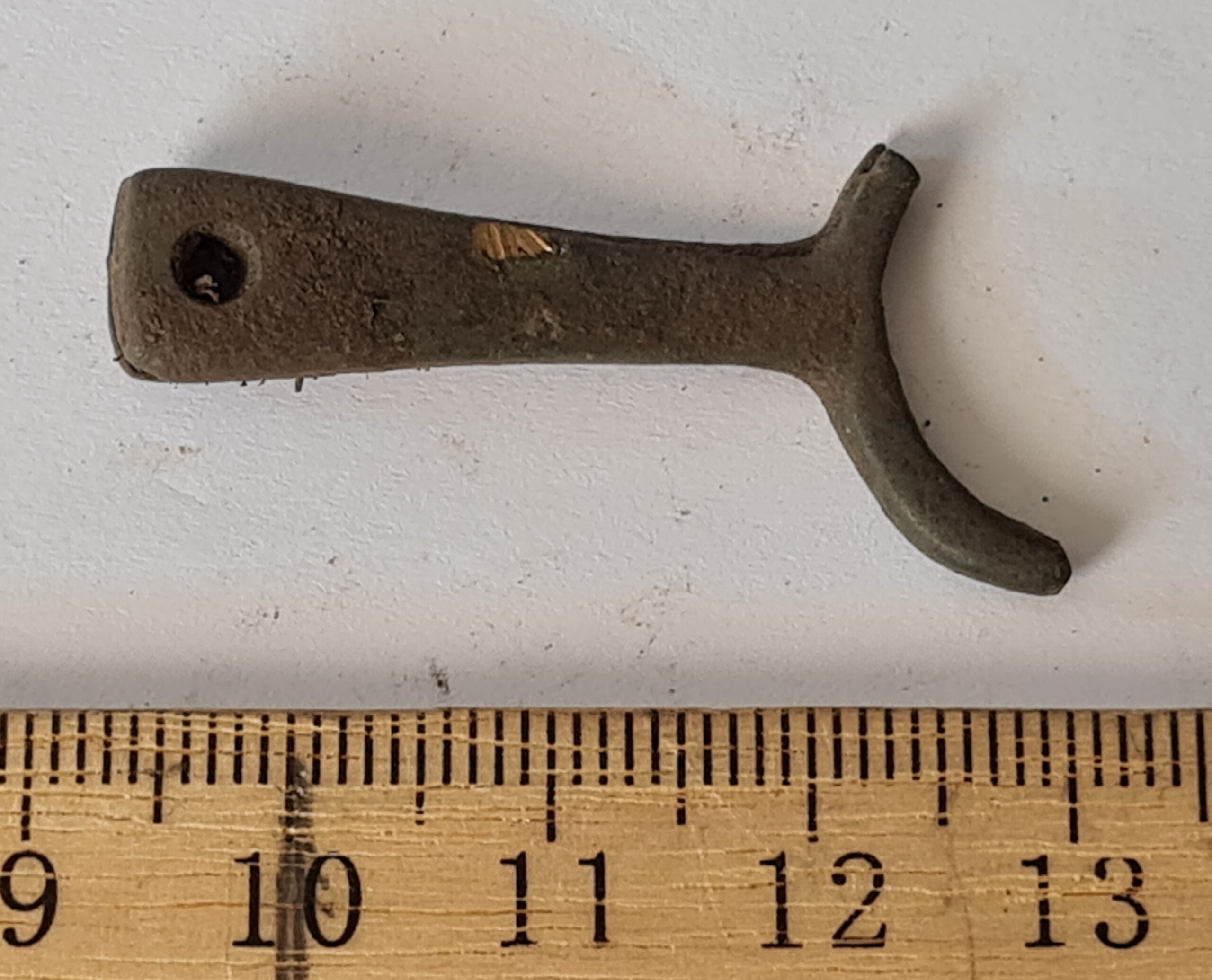
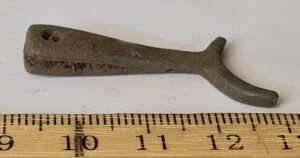
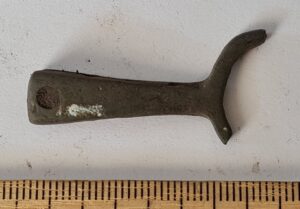
Belt pendant(?), copper alloy

