Database
Ure
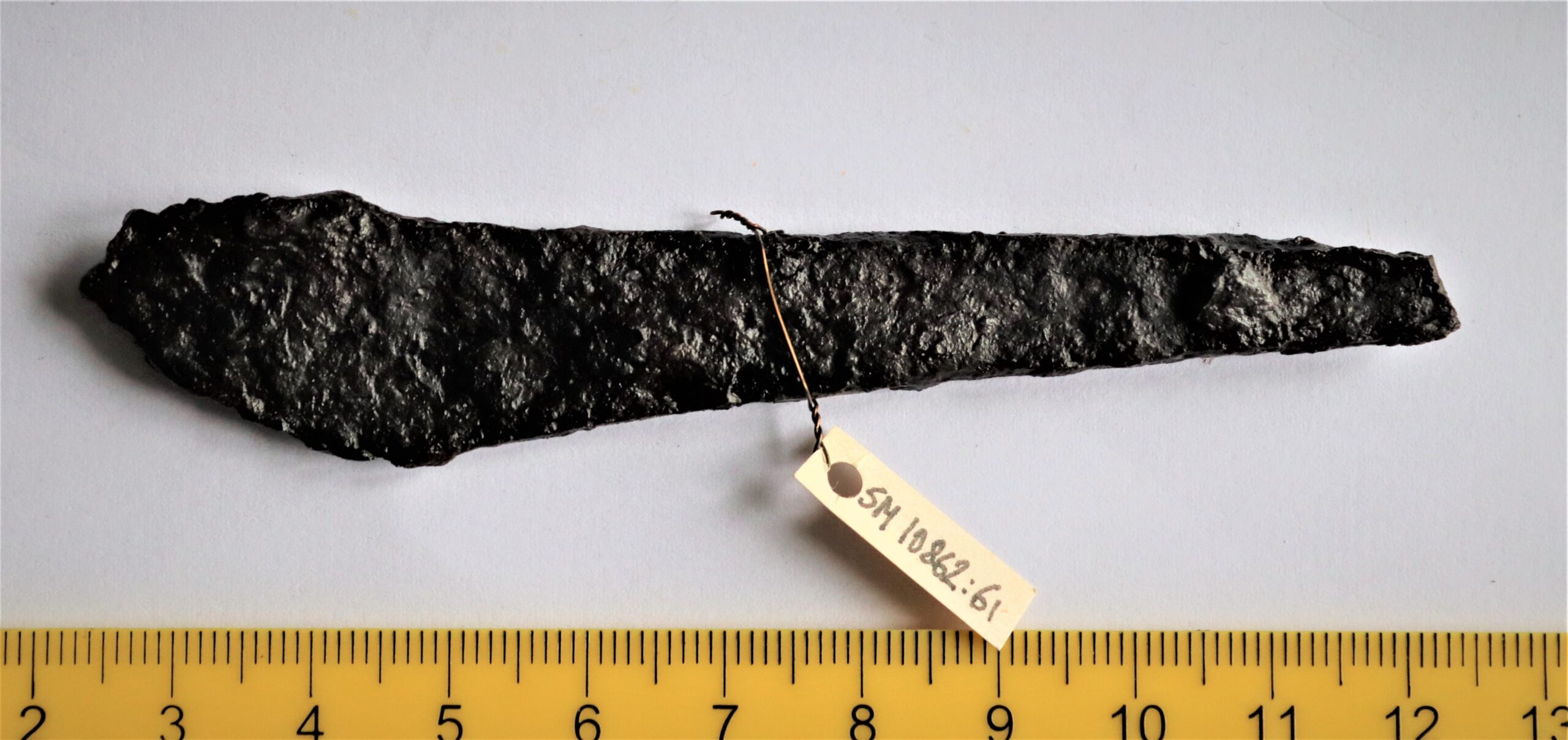
Knife fragment, iron. Tang and part of the blade that is on the side of the tang. The cross-section of the tang is flat quadrilateral.
Ure
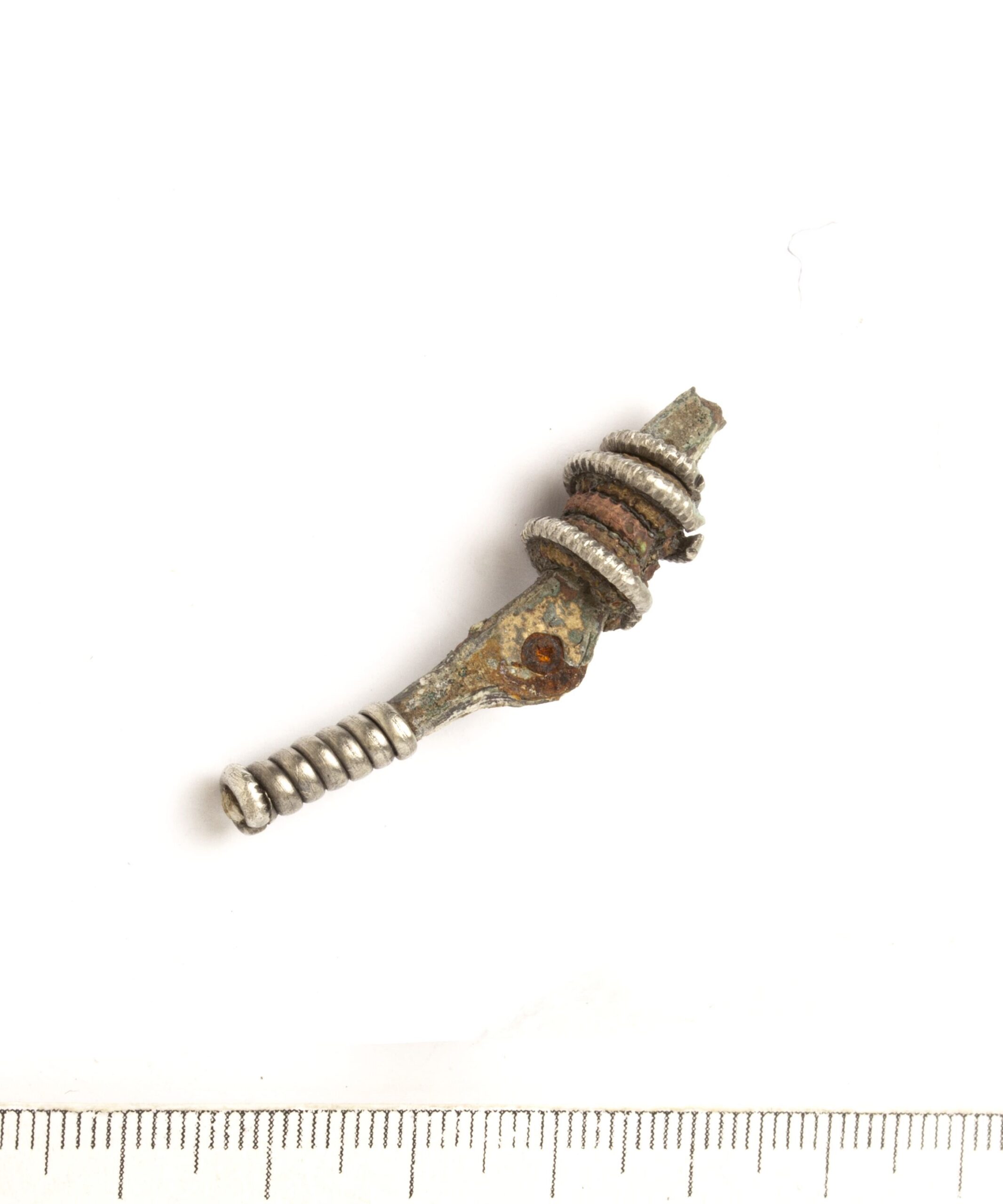
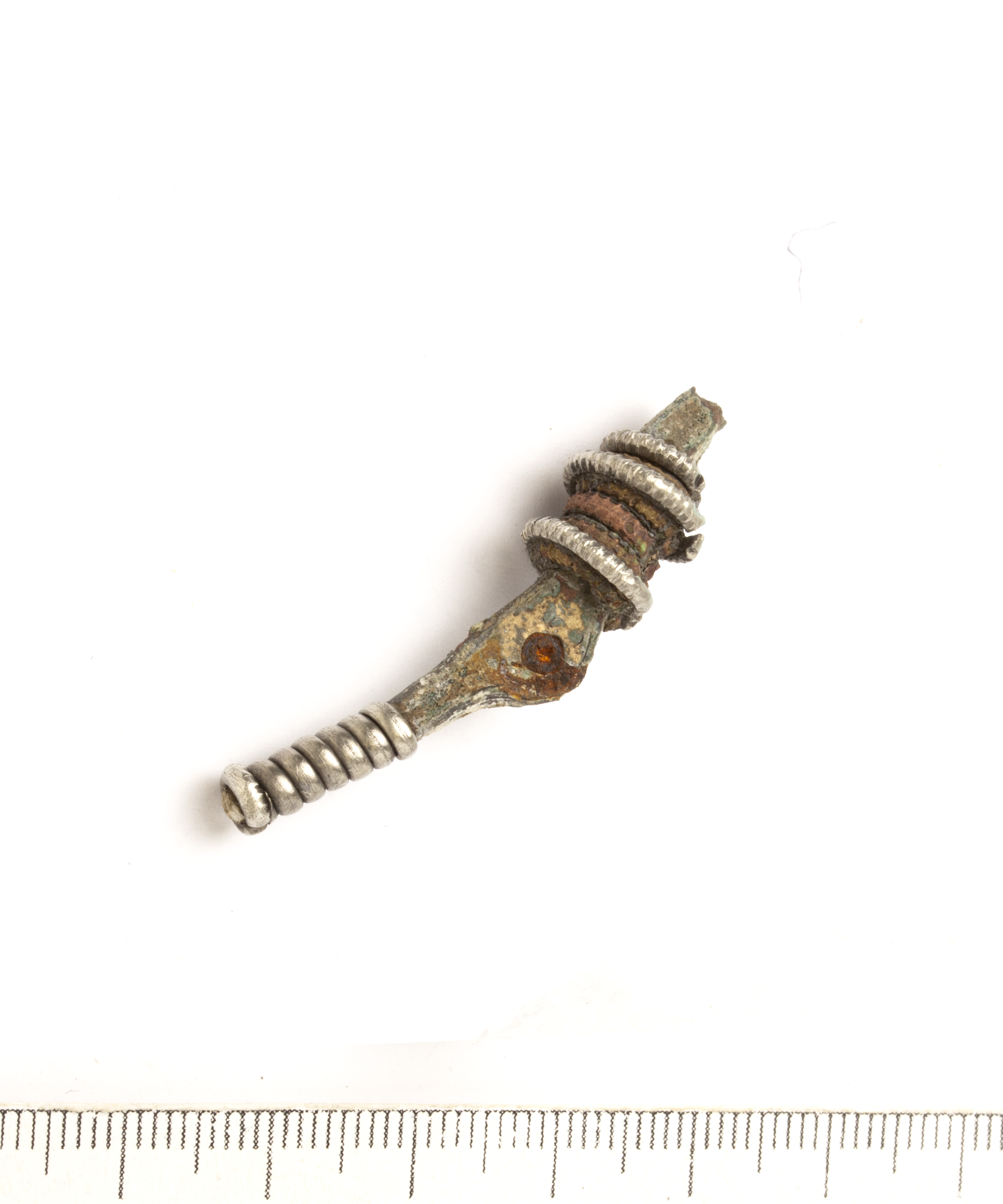
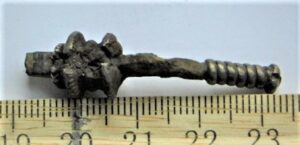
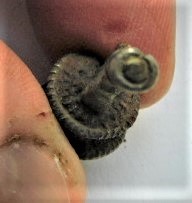
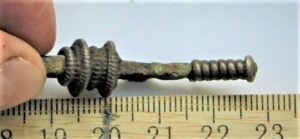
Fragment of crossbow brooch, silver + bronze + iron. The upper part of the arch, pierced by a spiral shaft; some iron is preserved in the hole. The knob is wrapped in silver wire. On the top of the neck, are three silver-wire hoop sets, and between them an embossed band imitating the previous ones. The neck has a square cross-section.
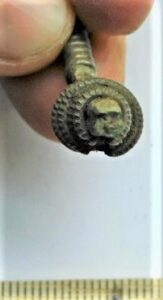
First poto: Jaana Ratas.
Fragment of crossbow brooch, silver + bronze + iron. The upper part of the arch, pierced by a spiral shaft; some iron is preserved in the hole. The knob is wrapped in silver wire. On the top of the neck, are three silver-wire hoop sets, and between them an embossed band imitating the previous ones. The neck has a square cross-section. Probably a local product, from the end of the 3rd-4th century (Rohtla 2005, 123 jj).
Literature:
Rohtla, M.-L. 2005. Crossbow fibula as a reflection of social status and relations. – Culture and Material Culture. – Interarchaeologia, 1. Ed. by V. Lang. Tartu – Riga – Vilnius, 121–145.
Ure
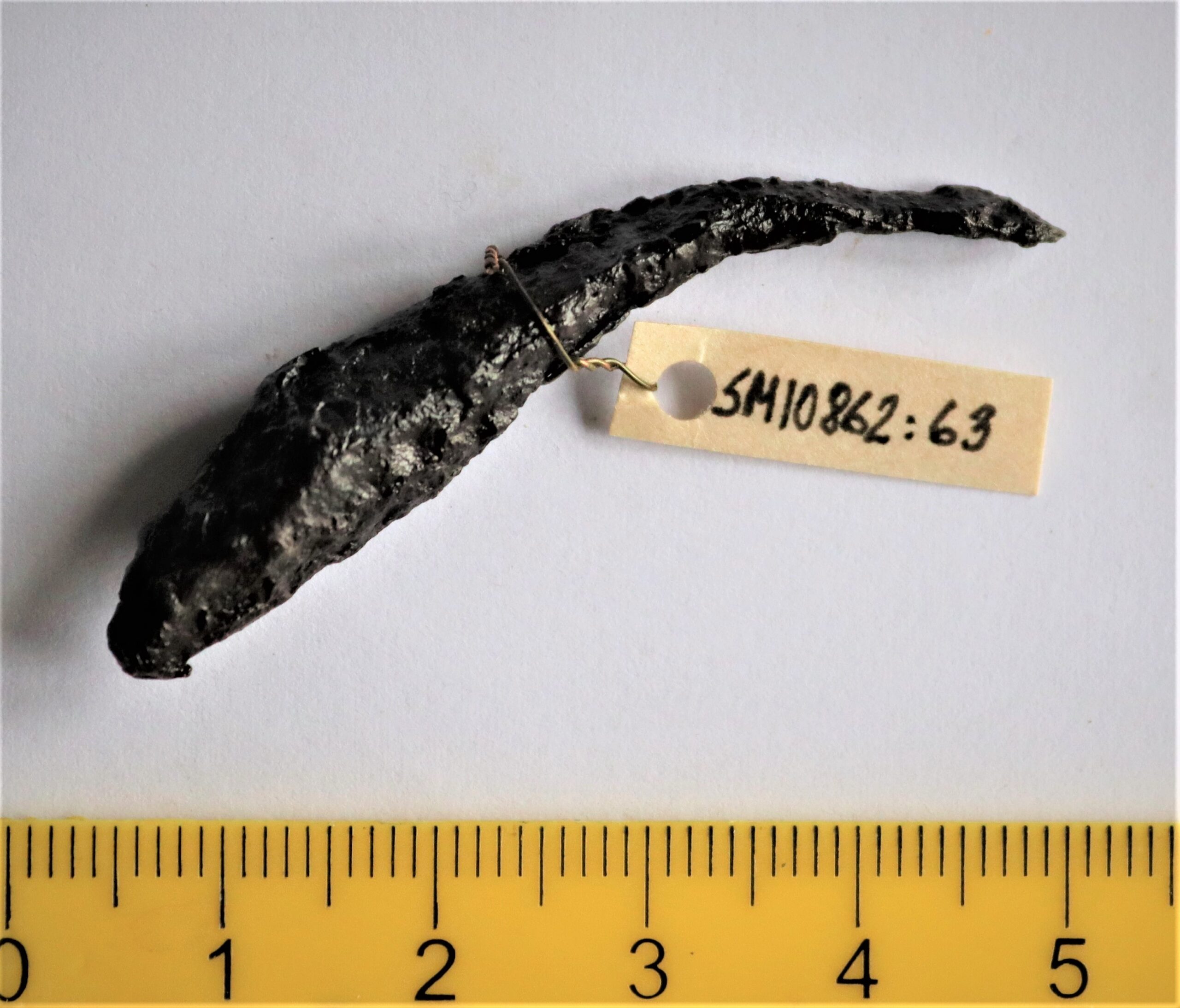
Arrowhead (?), iron. The tip of the blade is flat, but the neck has a square cross-section (side of the square is 6-7 mm) and the tip appears to be pointed.
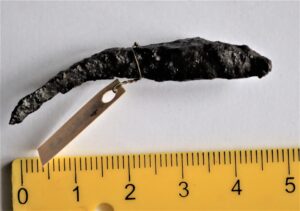
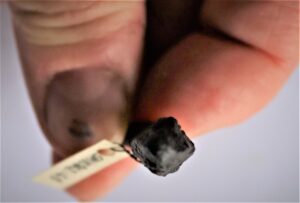
Arrowhead (?), iron. The tip of the blade is flat, but the neck has a square cross-section (side of the square is 6-7 mm) and the tip appears to be pointed.
Ure
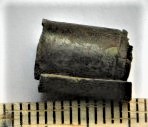
Bronze sheet, rolled together. Ends slightly in between each other and there is a thin line at one end.
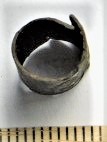
Bronze sheet, rolled together. Ends slightly in between each other and there is a thin line at one end.
Ure
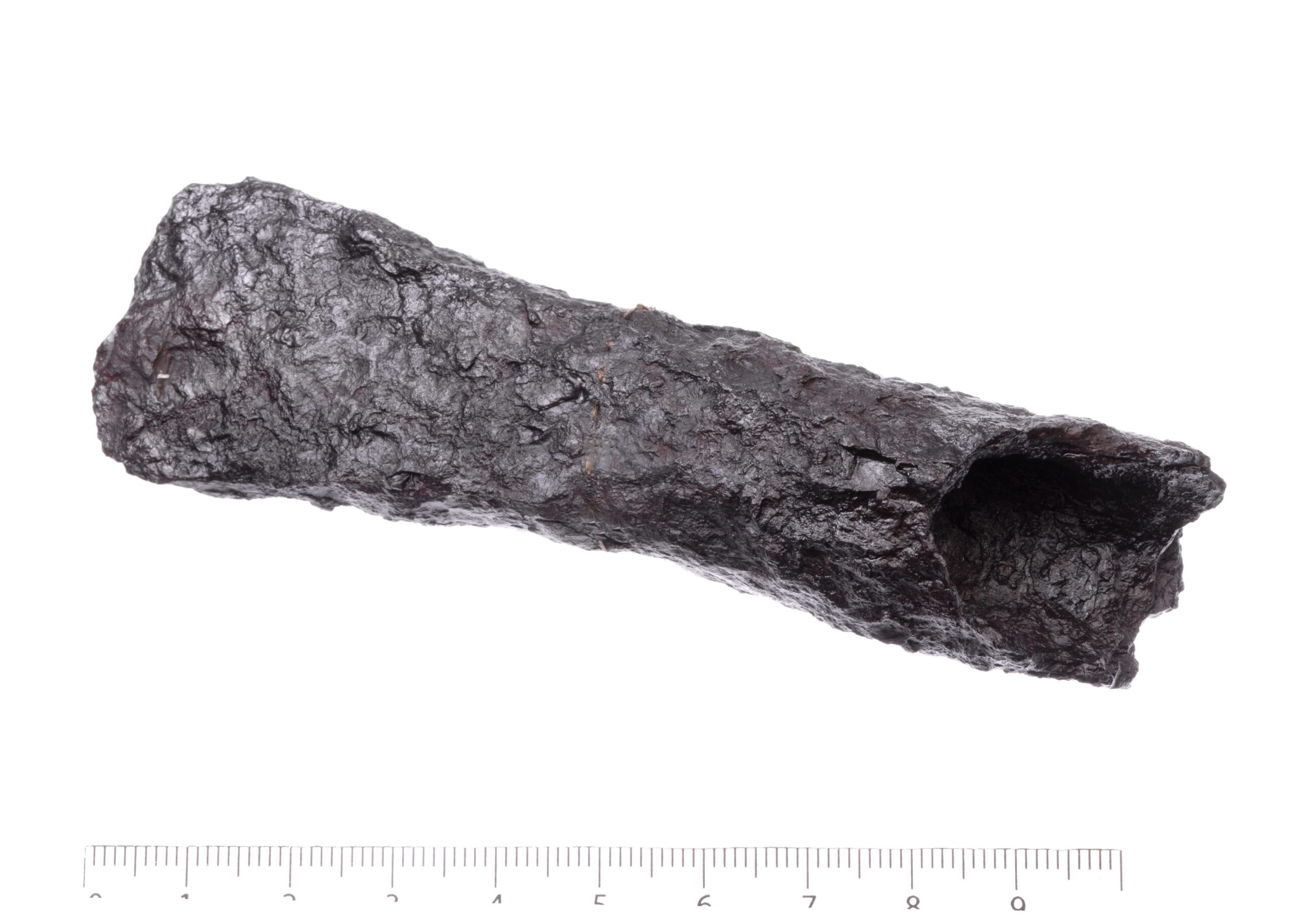
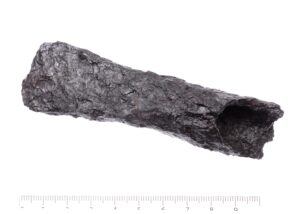
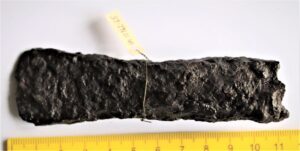
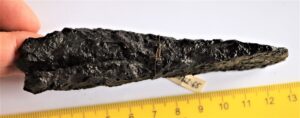
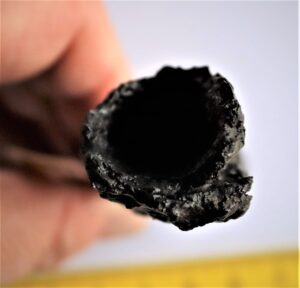
Socketed axe, iron. With a narrow blade. The height is 11 cm, the diameter of the handle is around 2 cm. Socketed axes were during a long period widespread in Finland, the Eastern Baltic and Northwestern Russia. 93 socketed axes of the same type as in Ure have been found in the Kohtla deposit, North-Estonia, and dated to the 1st -4th century AD.
First photo: Jaana Ratas.
Socketed axe, iron. With a narrow blade. The height is 11 cm, the diameter of the handle is around 2 cm. Socketed axes were during a long period widespread in Finland, the Eastern Baltic and Northwestern Russia. 93 socketed axes of the same type as in Ure have been found in the Kohtla deposit, North-Estonia, and dated to the 1st -4th century AD (Oras et al 2018; Saage, et al 2018).
Literature:
Oras, E., Kriiska, A., Kimber, A., Paavel, K. & Juus, T. 2018. Kohtla-Vanaküla weapons and tools deposit: an Iron Age sacrificial site In North-East Estonia. – Estonian Journal of Archaeology 2018, 22, 1, 5–31. https://doi.org/10.3176/arch.2018.1.02.
Saage, R., Kiilmann, K. and Tvauri, A. 2018. Manufacture Technology of Socketed Iron Axes. – Estonian Journal of Archaeology 2018, 22, 1, 51–65. https://doi.org/10.3176/arch.2018.1.04.
Ure
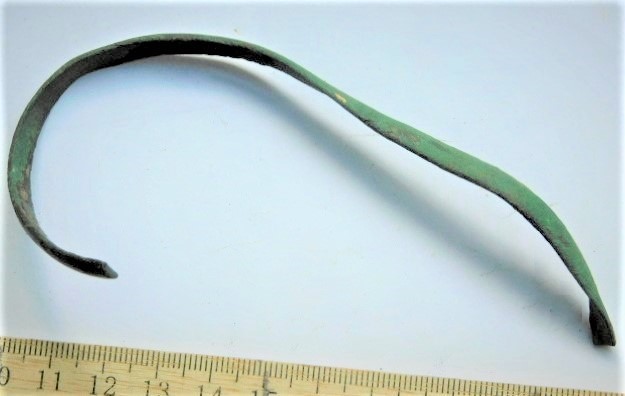
Bracelet, bronze. Stretched loose, shaped like a band, the cross-section is flat and curvy. The width is even and there are 5-6 thin transverse lines at both ends. Bracelets of this type were commin the Roman Iron Age Saaremaa and surroundings.
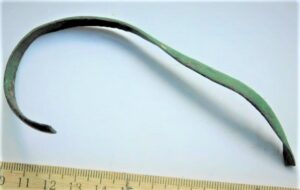
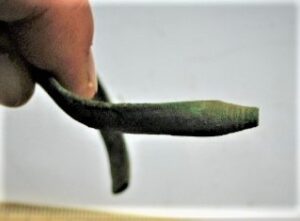
Bracelet, bronze. Stretched loose, shaped like a band, the cross-section is flat and curvy. The width is even and there are 5-6 thin transverse lines at both ends. Bracelets of this type were commin the Roman Iron Age Saaremaa and surroundings (Lang 2007, 212-213).
Literature:
Lang, V. 2007. The Bronze and Early Iron Ages in Estonia. – Estonian Archaeology, 3. Tartu. Read the article: here.
Ure
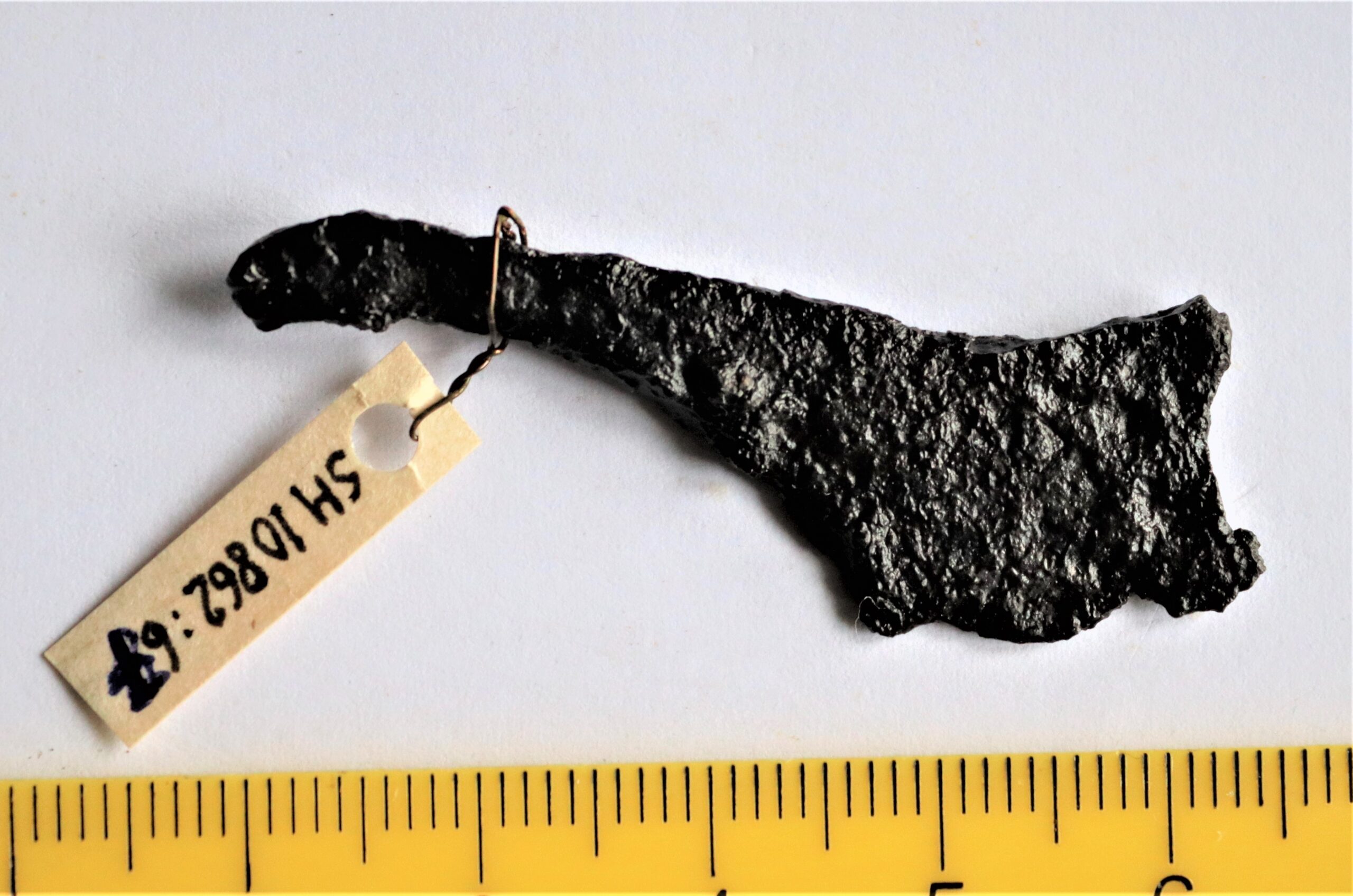
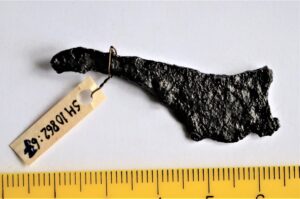
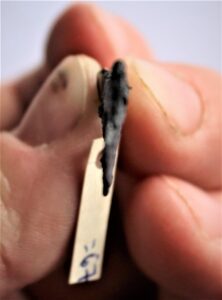
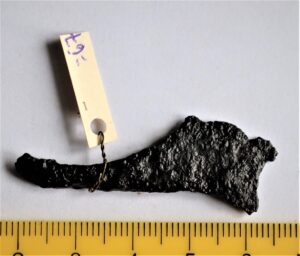
Razor fragment, iron. Part of the tang and the blade. The tang has flat cross-section. Similar knives have been found in North Estonian 3rd-5th-century graves.
Parallel:
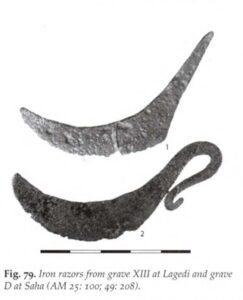
A razor similar to the Ure specimen is known from the Lagedi grave, North-Estonia (Lang 2007, joon. 79: 1).
Razor fragment, iron. Part of the tang and the blade. The tang has flat cross-section. Similar knives have been found in North Estonian 3rd-5th-century graves (Lang 2007, 143).
Literature:
Lang, V. 2007. The Bronze and Early Iron Ages in Estonia. – Estonian Archaeology, 3. Tartu. Read the article: here.
Ure
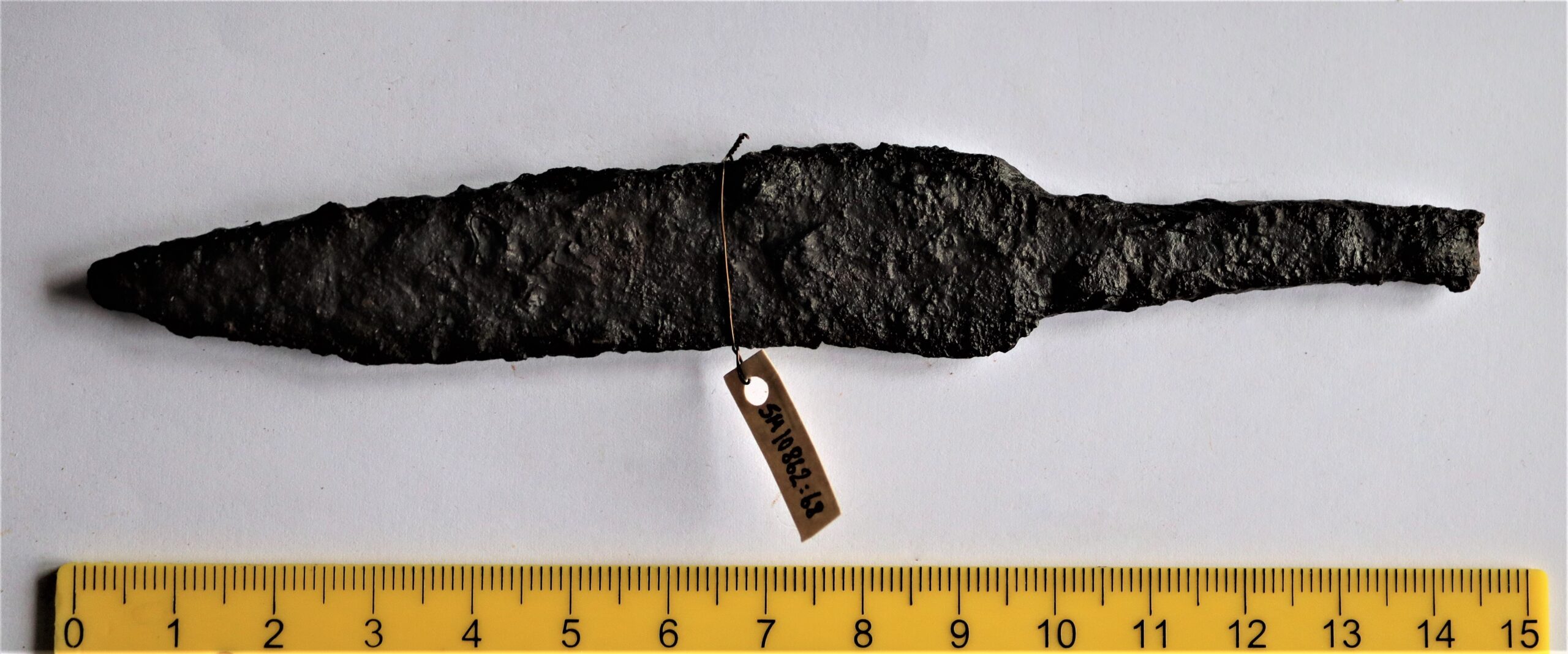
Knife, iron. The spine is a bit curvy, 6 mm wide. The cross-section of the tang is flat quadrilateral, and the tip of the tang is broken.
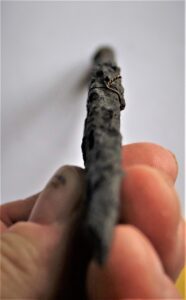
Knife, iron. The spine is a bit curvy, 6 mm wide. The cross-section of the tang is flat quadrilateral, and the tip of the tang is broken.
Ure
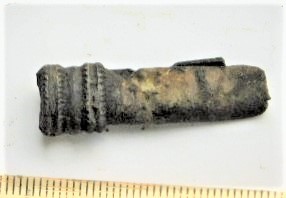
Crossbow brooch fragment, bronze and silver. Part of the foot. On the back, there is a partially preserved needle container that is made of the foot that is bent backward, with a ring decoration on top. It consists of a triple ring set, the center one is made of bronze, and the rims of silver. The lower part of the foot has an oval cross-section. Possibly traces of silver plating on the front of the foot.
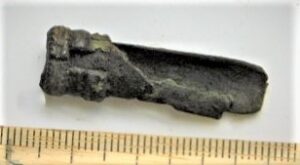
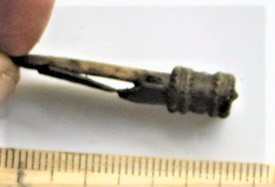
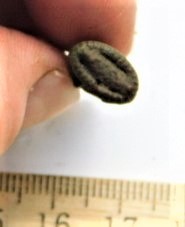
Crossbow brooch fragment, bronze and silver. Part of the foot. On the back, there is a partially preserved needle container that is made of the foot that is bent backward, with a ring decoration on top. It consists of a triple ring set, the center one is made of bronze, and the rims of silver. The lower part of the foot has an oval cross-section. Possibly traces of silver plating on the front of the foot. Probably from the Roman Iron Age (Rohtla 2005, 123-125).
Literature:
Rohtla, M.-L. 2005. Crossbow fibula as a reflection of social status and relations. – Culture and Material Culture. – Interarchaeologia, 1. Ed. by V. Lang. Tartu – Riga – Vilnius, 121–145.

