
Database
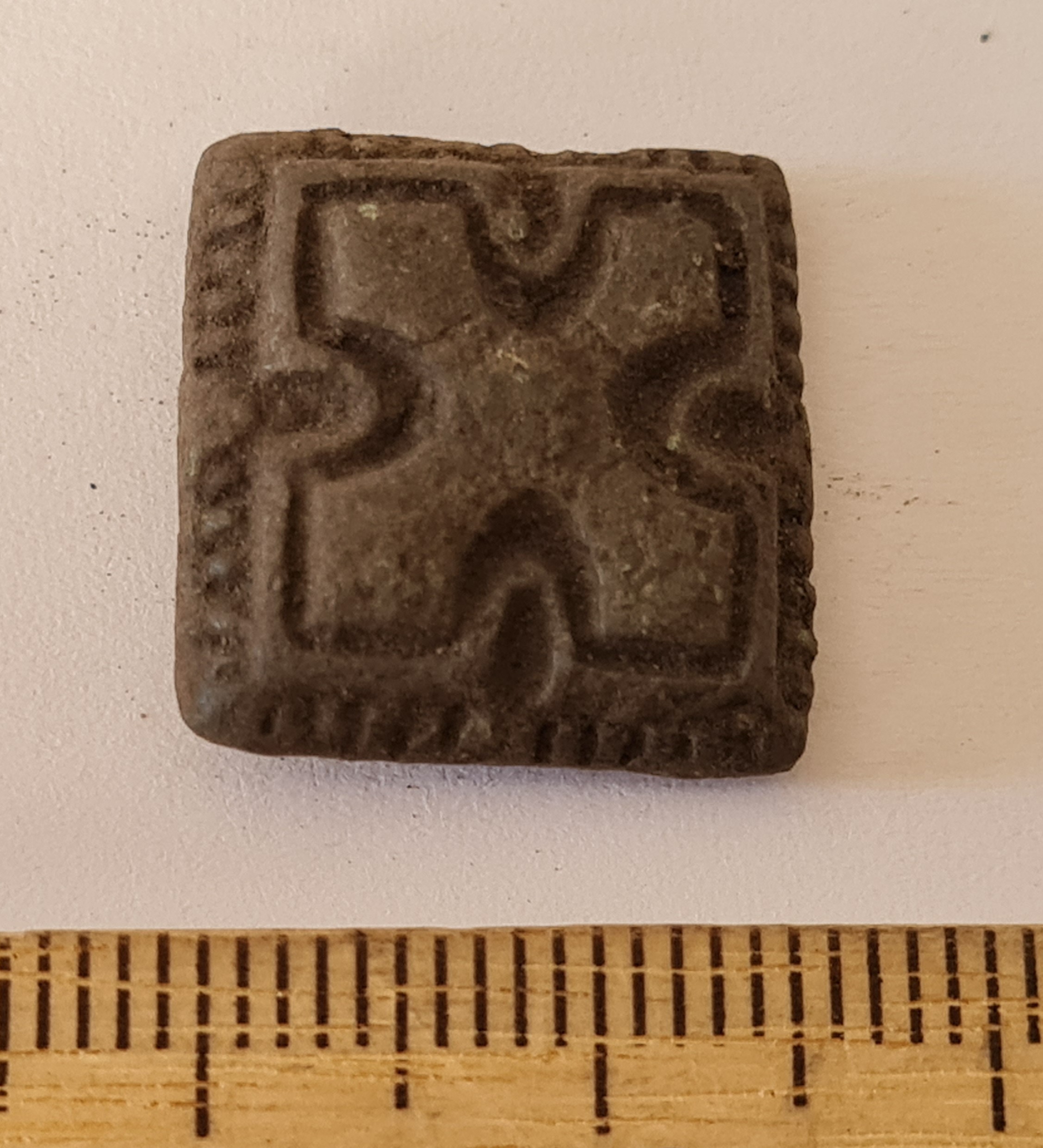
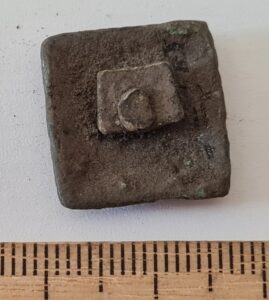
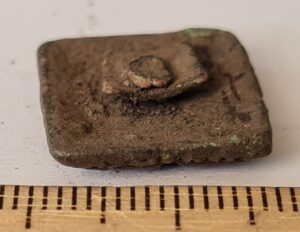
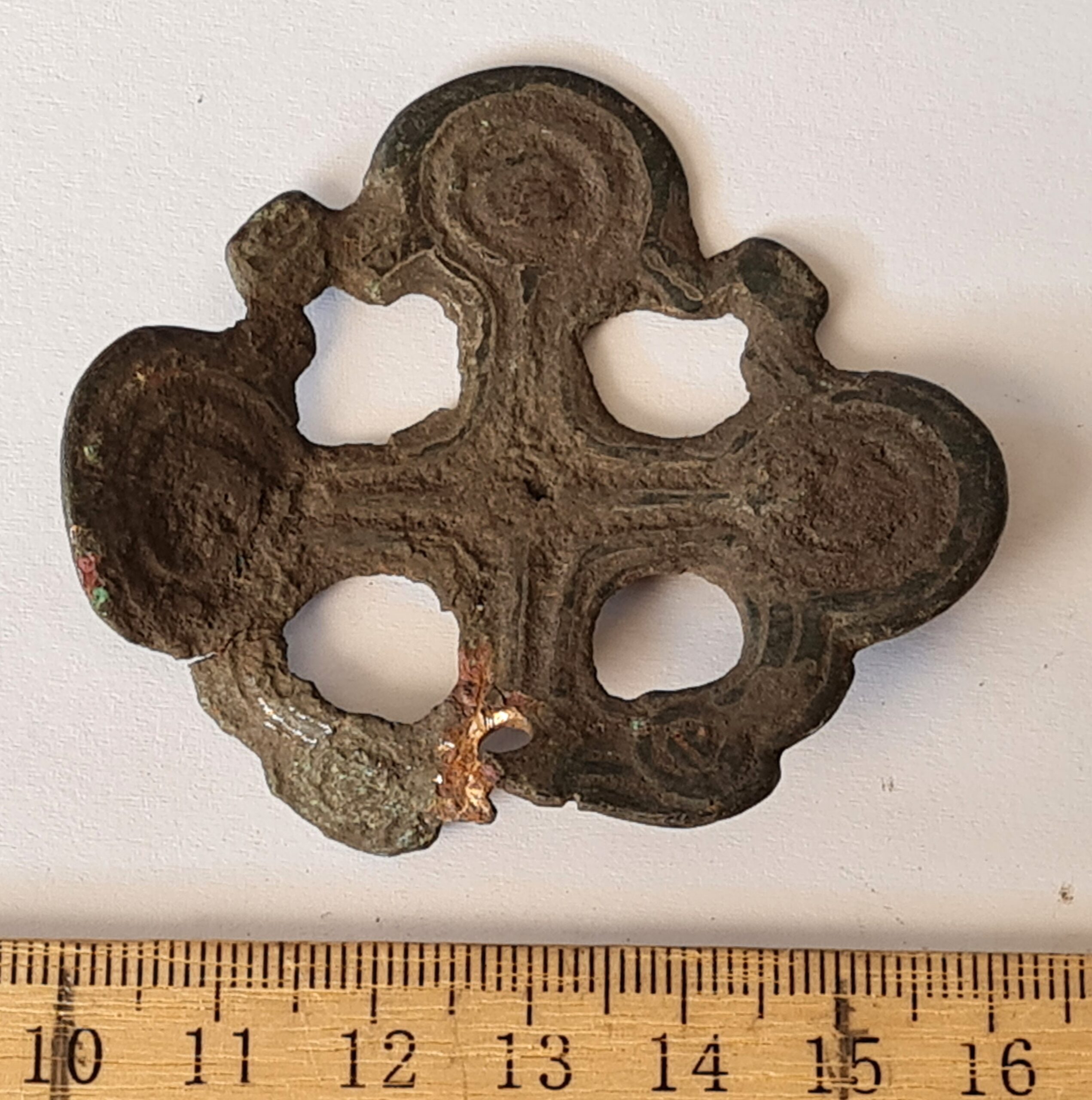
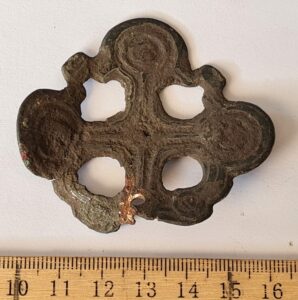
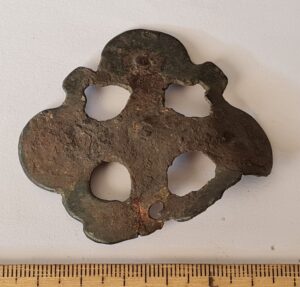
Belt mount, copper alloy. Square-shaped mounts with cross-motifs are very widespread in Estonian stone graves with cremations (Mägi 2002, 96-99; Mandel 2017, 83, tahv XLII).They have been often found together with Gotland-Baltic type buckles and animal style joining mounts (e g Lehtsalo-Hilander 1982, 154).
Lehtsalo-Hilander, P.-L. 1982. Luistari II: The Artefacts. SMYA 82: 2. Helsinki.; Mägi, M. 2002. At the crossroads of space and time: graves, changing society and ideology on Saaremaa (Ösel), 9th–13th centuries AD. Tallinn.; Mandel, M. 2017. Maidla muinaskalmistu saladused. Eesti Ajaloomuuseum, Tallinn.
Muhu
Fragment of Saaremaa type flat triangular-headed pin, copper alloy.
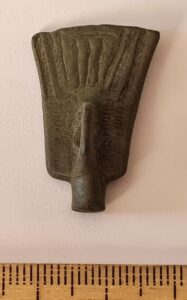
Fragment of Saaremaa type flat triangular-headed pin, copper alloy. From the 11th-12th century. With flat, heart-shaped terminals and a characteristic punched-dot ornament. Most pins of this type have been found in stone graves with cremation burials in Saaremaa and, occasionally, in western Estonia (Mägi 2002, 104). They no longer occur in inhumation burials later than the early 13th century. Individual examples of such pins are also known from the Livs territory in Latvia, probably from the burials of Saaremaa women there (e.g. Zariņa 2006, pl. 209: 2).
Mägi, M. 2002. At the crossroads of space and time: graves, changing society and ideology on Saaremaa (Ösel), 9th–13th centuries AD. Tallinn.; Zariņa, A. 2006. Salaspils Laukskolas kapulauks 10.–13. gadsimts. Rīga: Latvijas Vēstures Institūta Apgāds.
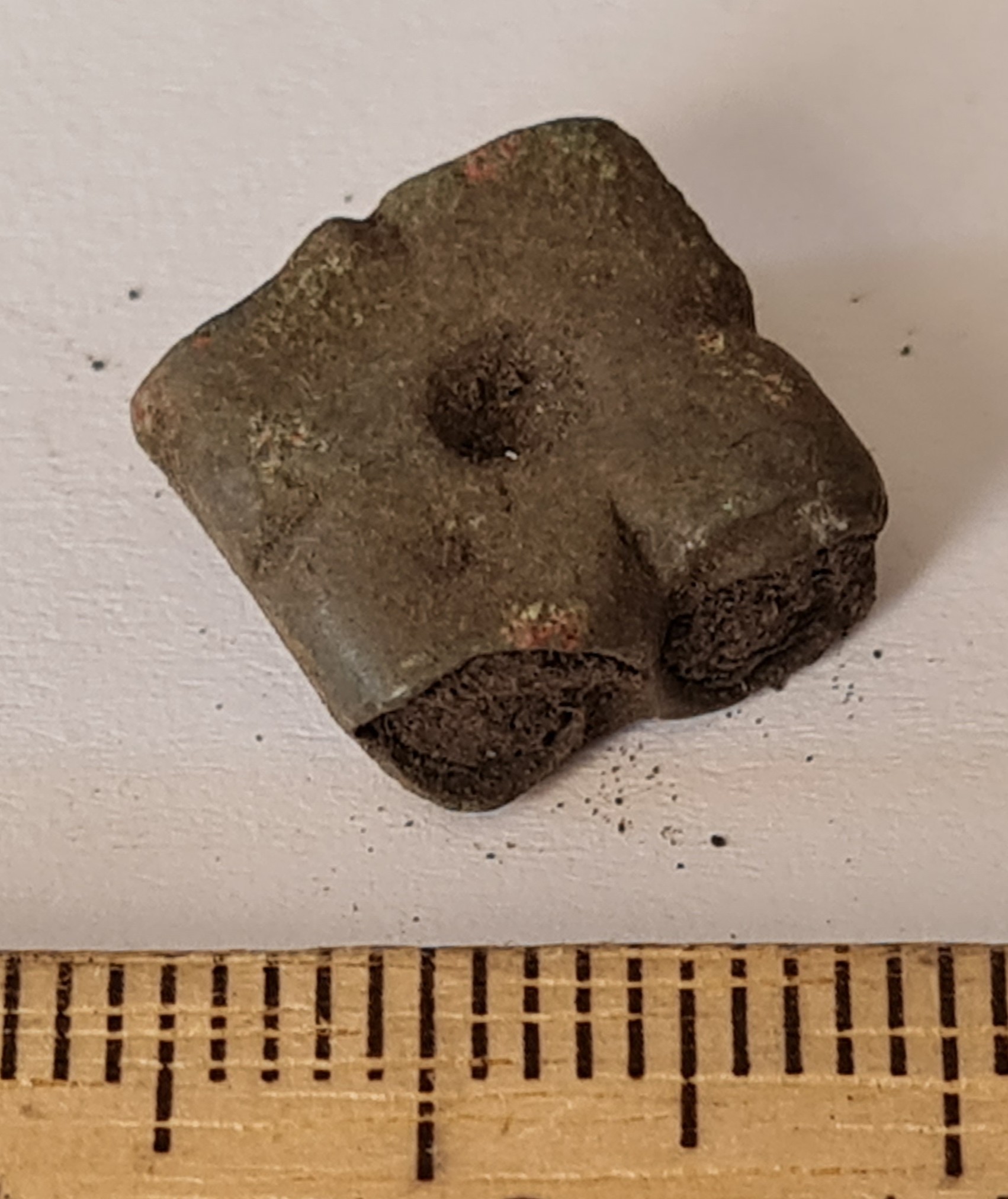
Cubic chain distributer, copper alloy. Chain distributors held together belts composed of metal rings, which have been found in several 13th-century inhumation burials, for example at Valjala (Mägi et al. 2019, 98–99). Such chain belts have been recovered mainly from women’s and children’s graves, and both the chains and the associated cubic chain distributers have been dated to the 12th–13th centuries (Kurisoo et al. 2023, 220–221).
Mägi, M., Malve, M. & Toome, T. 2019. Early Christian burials at Valjala churchyard, Saaremaa. – Archaeological Fieldwork in Estonia, 2018, 93–118.; Kurisoo, T., Posti, M.-L., Jegorov, S. & Kangert, N. 2023. New public discoveries in 2022 against a backdrop of concerns about reporting and processing finds. – Archaeological Fieldwork in Estonia 2022, 217–238.
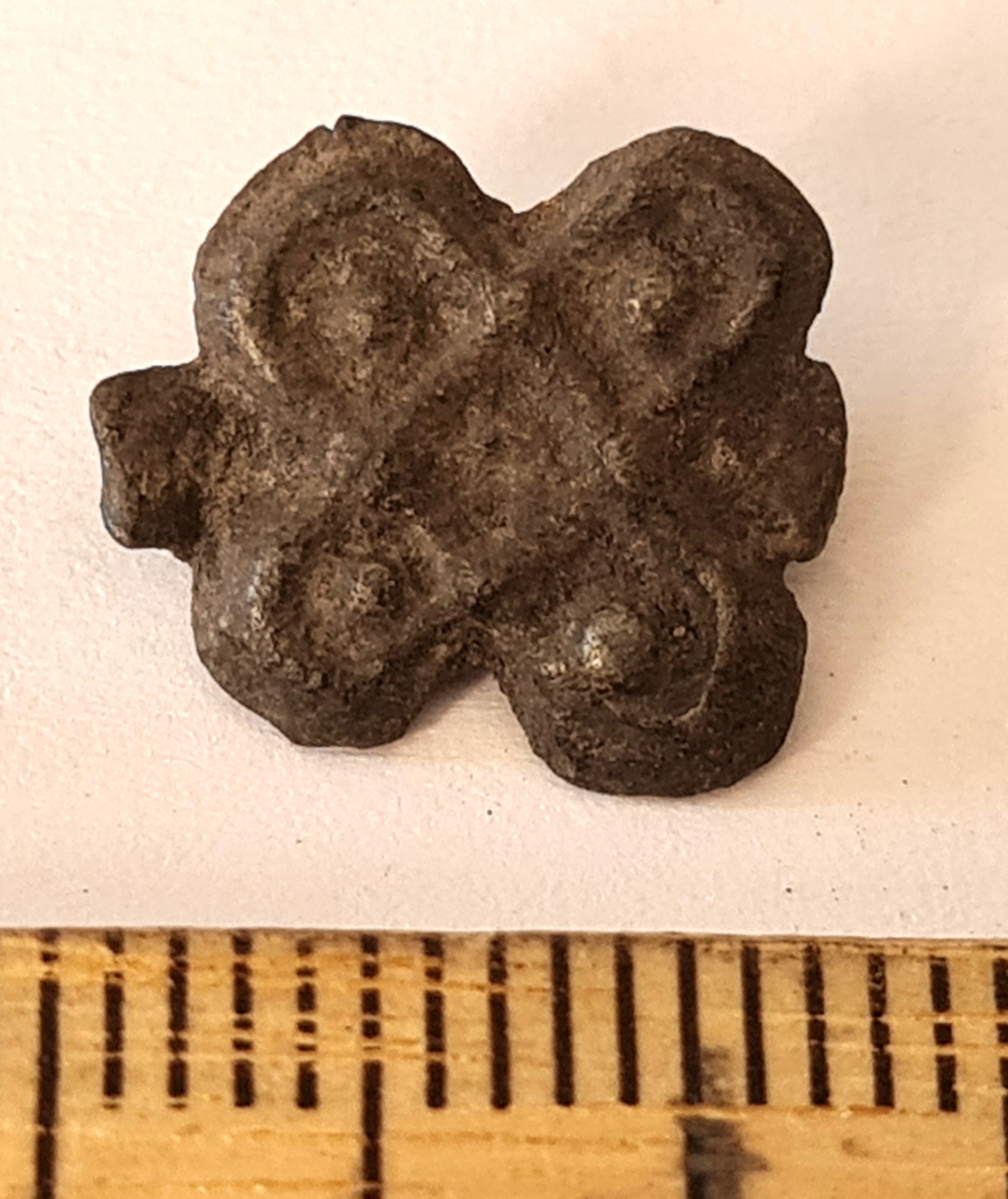
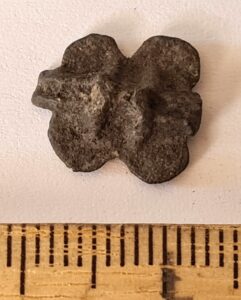
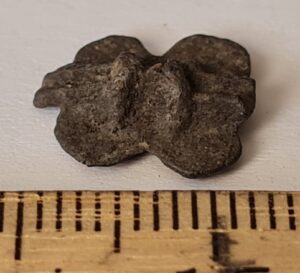
Mount, tin. Medieval or Early Modern.
Muhu
Double cross-headed pin with connected terminals, copper alloy.
Double cross-headed pin with connected terminals, copper alloy. Such pins are mainly found in inhumations from the first half of the 13th-century in Saaremaa, North- and West – Estonia but were possibly taken into use as early as in the very end of the 12th century (see also Mägi et al. 2018, 94, Fig. 14: 1). Similar pins have been found in Latvia, especially in the area of Livs, where they are dated, referring to the Estonian finds, to the 12th-13th century and considered Estonian influence (Jērums 2014, 94).
Mägi, M. 2002. At the crossroads of space and time: graves, changing society and ideology on Saaremaa (Ösel), 9th–13th centuries AD. Tallinn.; Mägi, M., Malve, M. & Toome, T. 2019. Early Christian burials at Valjala churchyard, Saaremaa. – Archaeological Fieldwork in Estonia, 2018, 93–118.; Jērums, N. 2014. Krustadatas Latvijā. – Arheoloģija un Etnogrāfija, XXVIII. Rīga: Latvijas Vēstures Institūta apgāds, 56-123.
Muhu
Finger-ring with double-spiral ends, copper alloy.
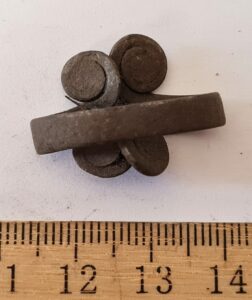
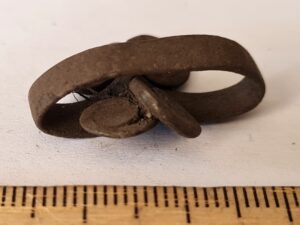
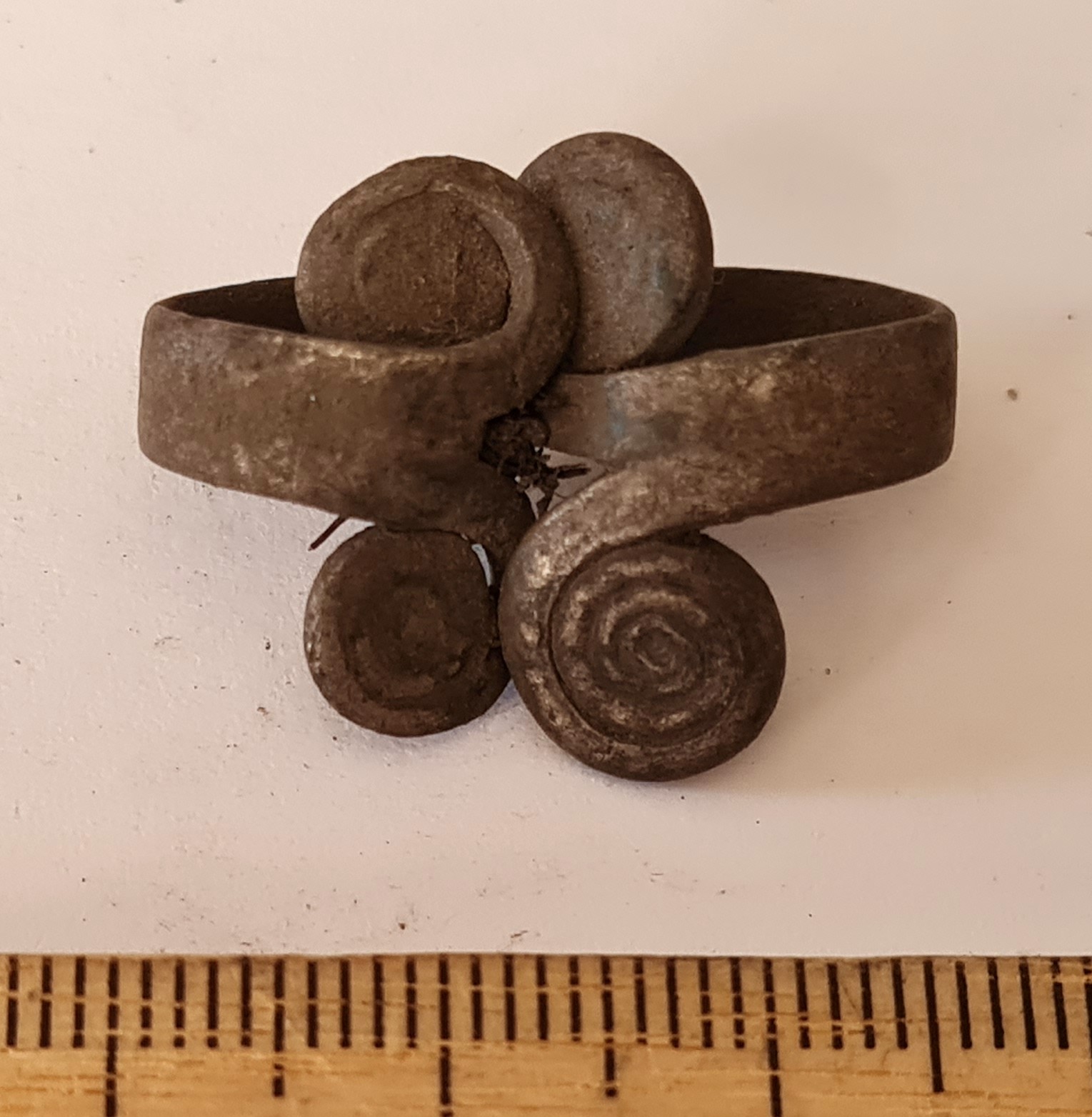
Finger-ring with double-spiral ends, copper alloy. Rings with double spiral ends appear in the Estonian archaeological material already in the 4th century AD, but they were especially popular in the 7th-11th centuries (Mägi 2002, 108; Tvauri 2014, 149). Viking Age rings of this type have been found in Saaremaa, e. g. in the stone graves of Käku and Randvere (Mägi 2002, 108) and in Maidla grave in mainland Estonia (Mandel 2017, Pl. XXXIX). Rings with double spiral ends also appeared in the archaeological material of Finland, Latvia and Lithuania in the early Iron Age and then again in the Viking Age (Lehtosalo-Hilander 1982, Fig. 35:12; Laul 2001, 143; Mugurevičs 2008, 146).
Mägi, M. 2002. At the crossroads of space and time: graves, changing society and ideology on Saaremaa (Ösel), 9th–13th centuries AD. Tallinn.; Tvauri, A. 2014. Rahvasterännuaeg, eelviikingiaeg ja viikingiaeg Eestis. Tartu Ülikooli kirjastus. Tartu.; Lehtsalo-Hilander, P.-L. 1982. Luistari II: The Artefacts. SMYA 82: 2. Helsinki.; Laul, S. 2001. Rauaaja kultuuri kujunemine Eesti kaguosas. (Muinasaja teadus, 9.) Tallinn.; Mugurēvičs, Ē. 2008. Viduslaiku ciems un pils Salaspils novadā. Latvijas Vēstures Institūta Apgāds, Rīga.
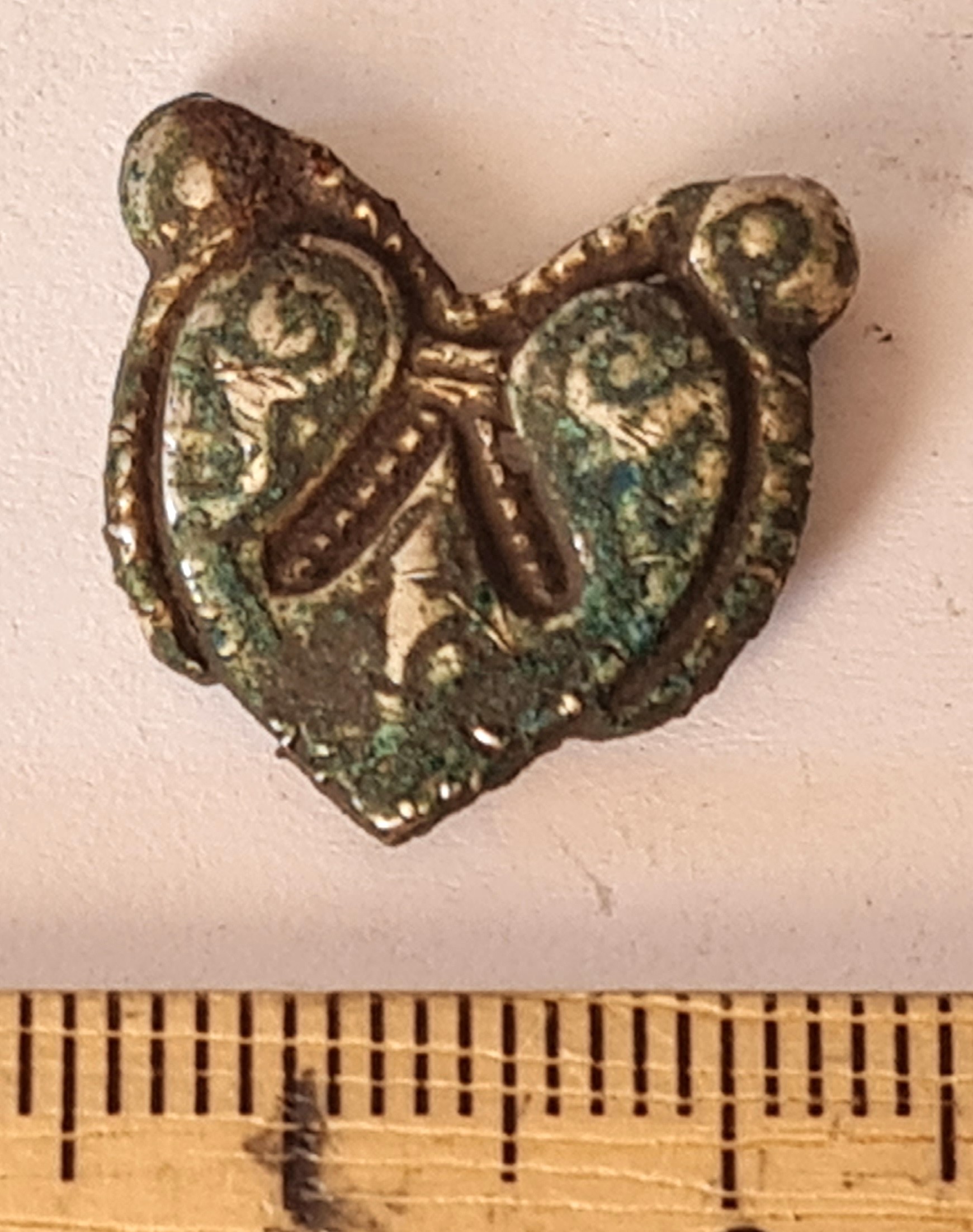
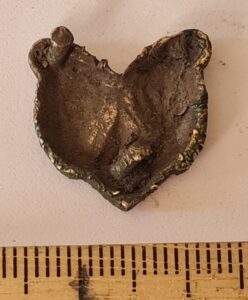
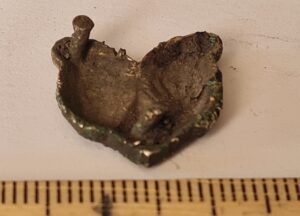
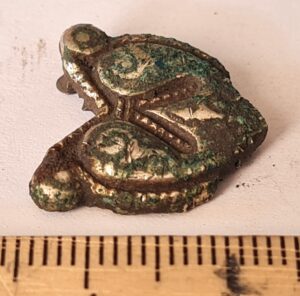
Heart-shaped cast belt mounts, silver. Simpler heart-shaped cast belt mounts made of copper alloy were widespread mainly in the 11th–12th centuries (e.g. Mägi 2002, pl. 30; Mandel 2017, pl. XLII).
Mägi, M. 2002. At the crossroads of space and time: graves, changing society and ideology on Saaremaa (Ösel), 9th–13th centuries AD. Tallinn.; Mandel, M. 2017. Maidla muinaskalmistu saladused. Eesti Ajaloomuuseum, Tallinn.
Muhu
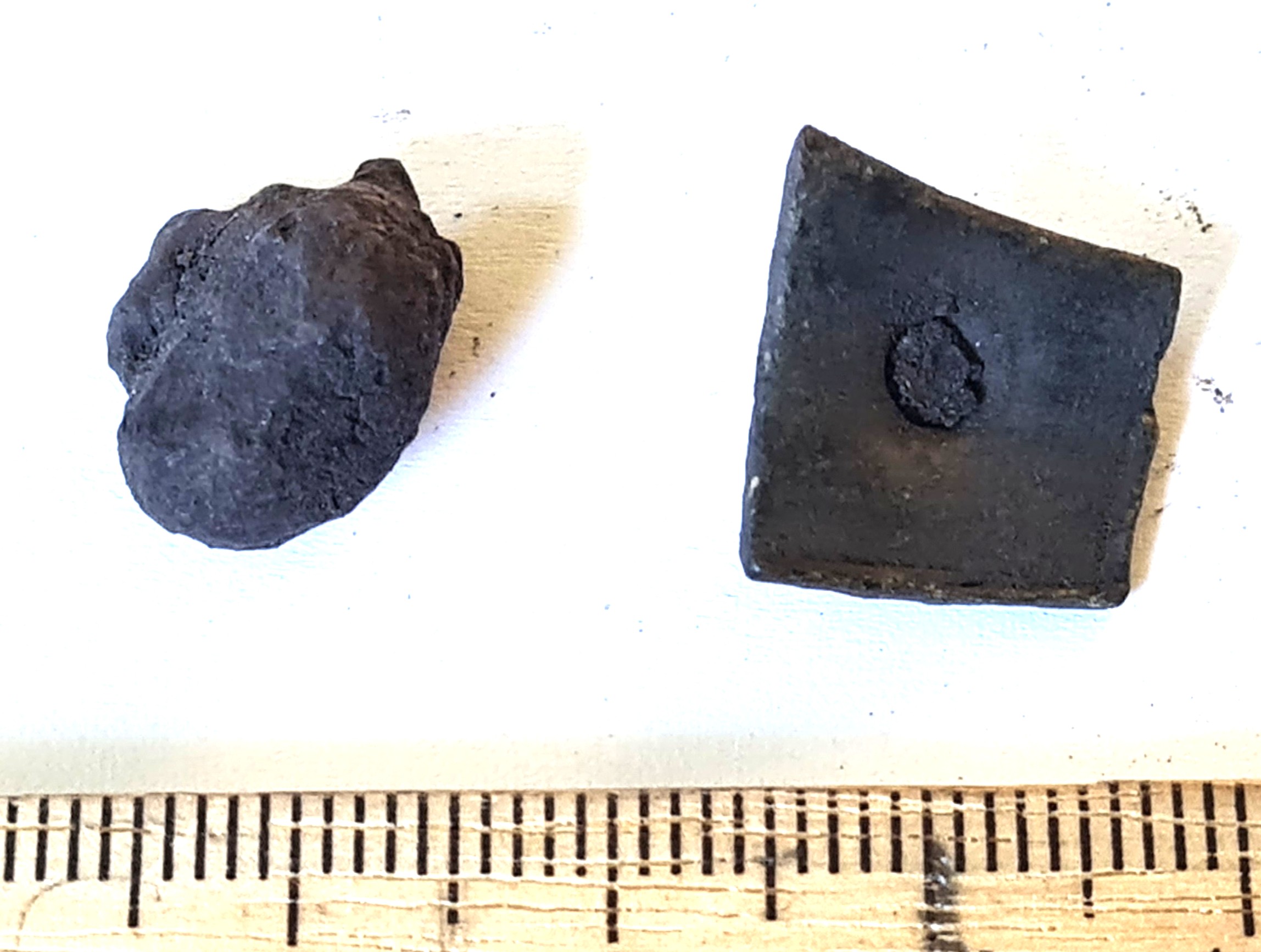
Two fragments of artefact, copper alloy. One of them is the base-plate of mount.
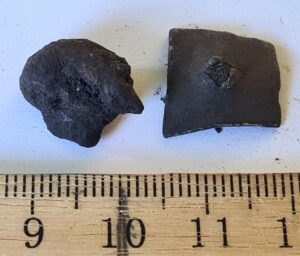
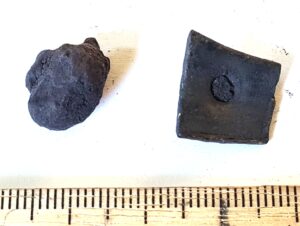
Two fragments of artefact, copper alloy. One of them is the base-plate of mount.
Muhu
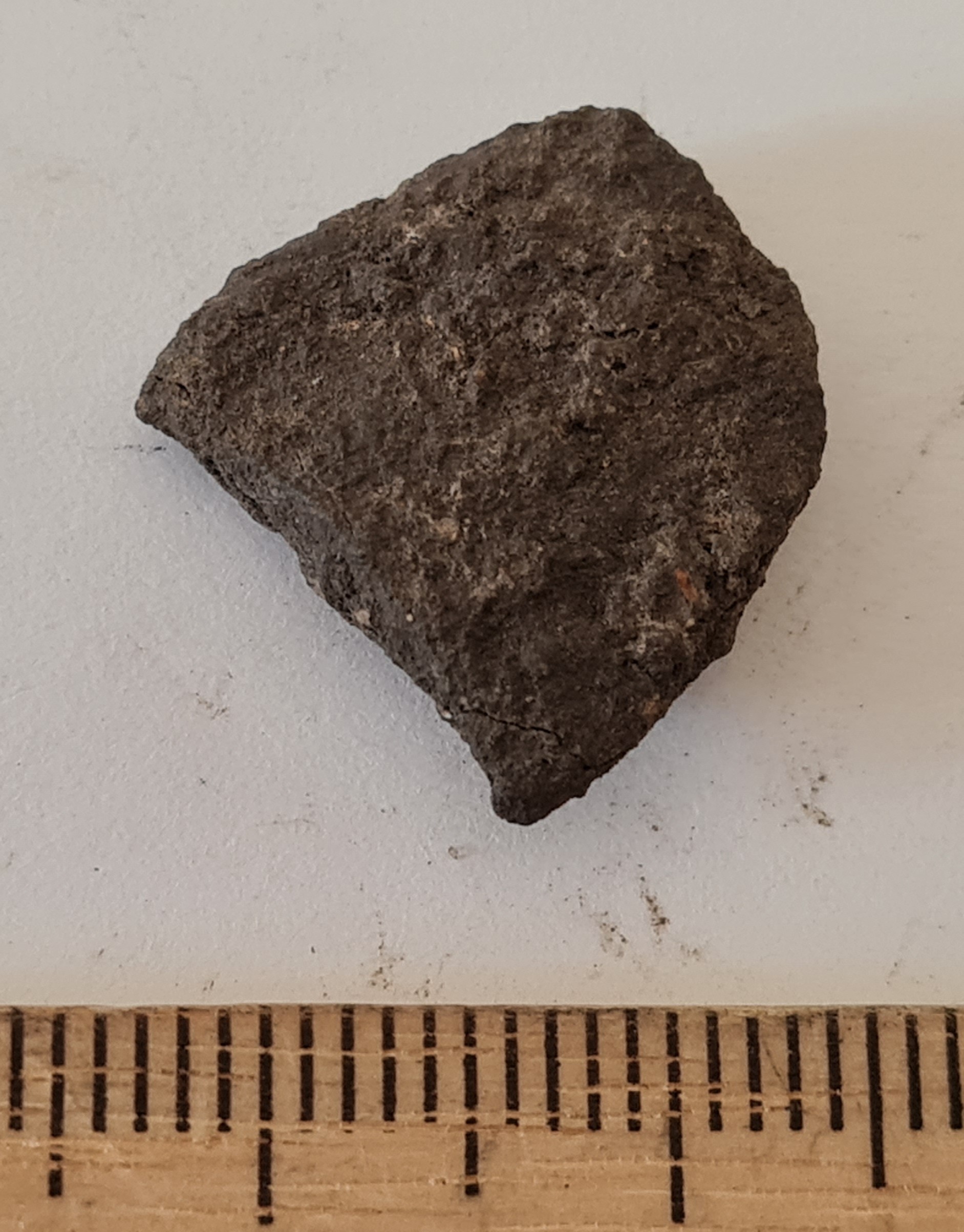
Fragment of artefact, silver (?).

