
Database
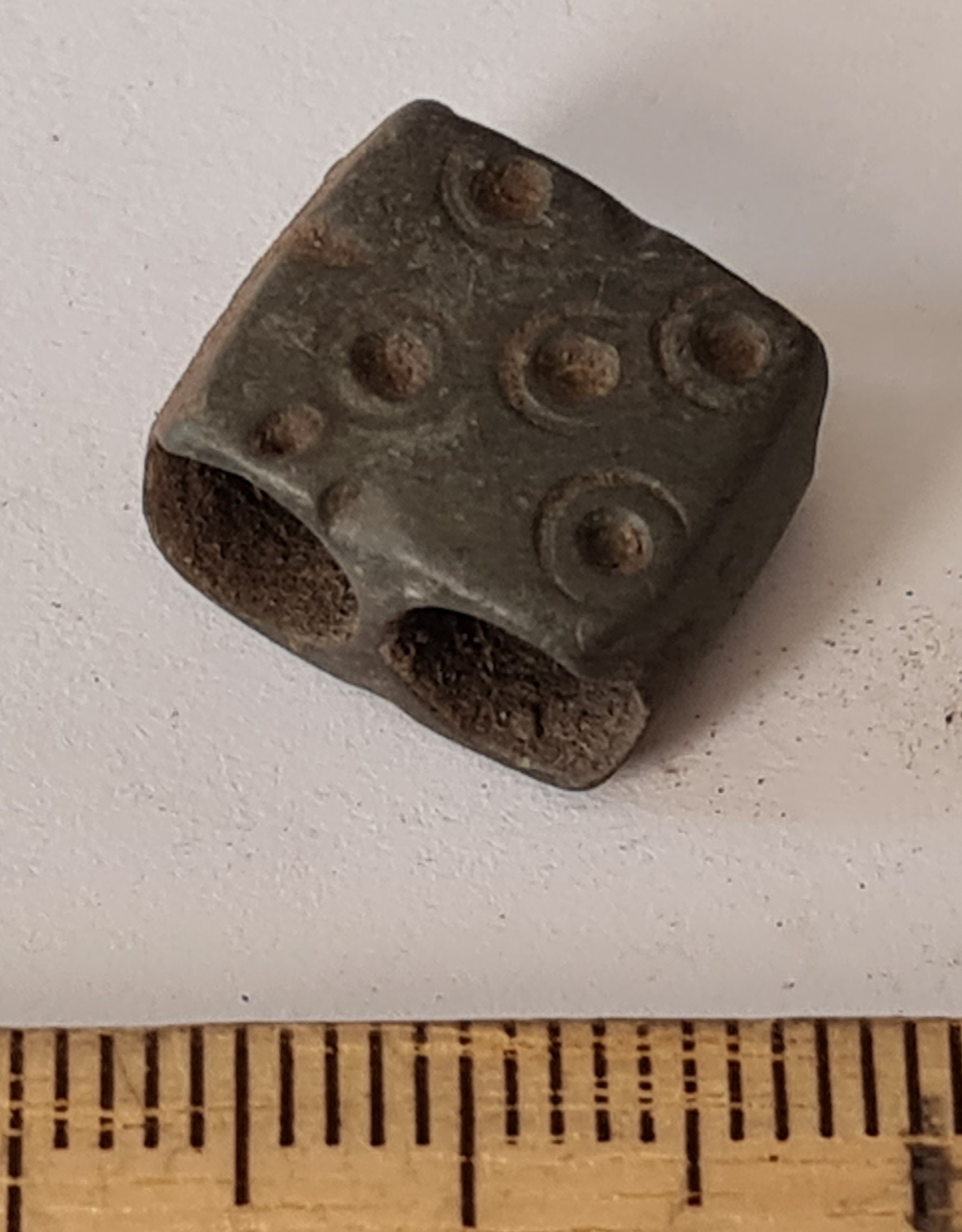
Cubic chain distributer, copper alloy. Chain distributors held together belts composed of metal rings, which have been found in several 13th-century inhumation burials, for example at Valjala (Mägi et al. 2019, 98–99). Such chain belts have been recovered mainly from women’s and children’s graves, and both the chains and the associated cubic chain distributers have been dated to the 12th–13th centuries (Kurisoo et al. 2023, 220–221).
Mägi, M., Malve, M. & Toome, T. 2019. Early Christian burials at Valjala churchyard, Saaremaa. – Archaeological Fieldwork in Estonia, 2018, 93–118.; Kurisoo, T., Posti, M.-L., Jegorov, S. & Kangert, N. 2023. New public discoveries in 2022 against a backdrop of concerns about reporting and processing finds. – Archaeological Fieldwork in Estonia 2022, 217–238.
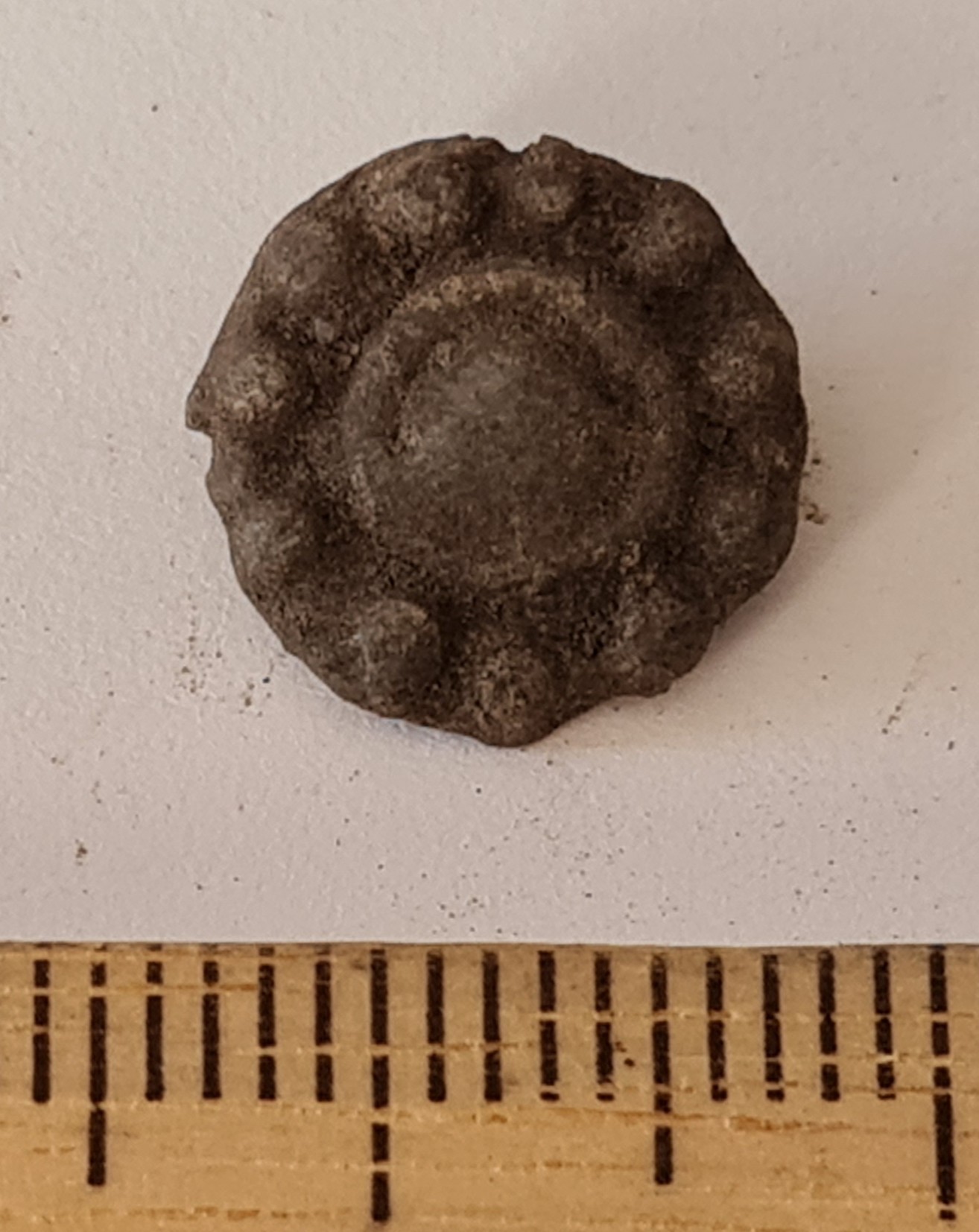
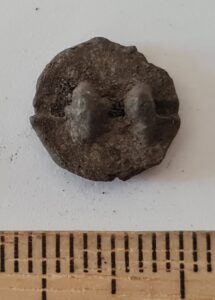
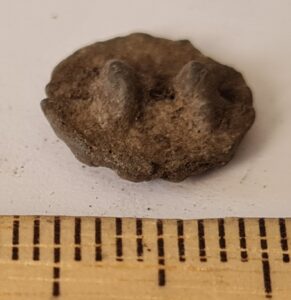
Mount, tin. Medieval or Early Modern. Tin mounts occur in a wide variety of shapes; however, at Siksälä, mounts of this particular form have been found in burials 22 and 33, both dated to the 14th century (Valk et al. 2014, 43, 54).
Valk, H., Ratas, J., Laul, S. 2014. Siksälä kalme II. Matuste ja leidude kataloog. Tartu Ülikool: Tartu.
Muhu
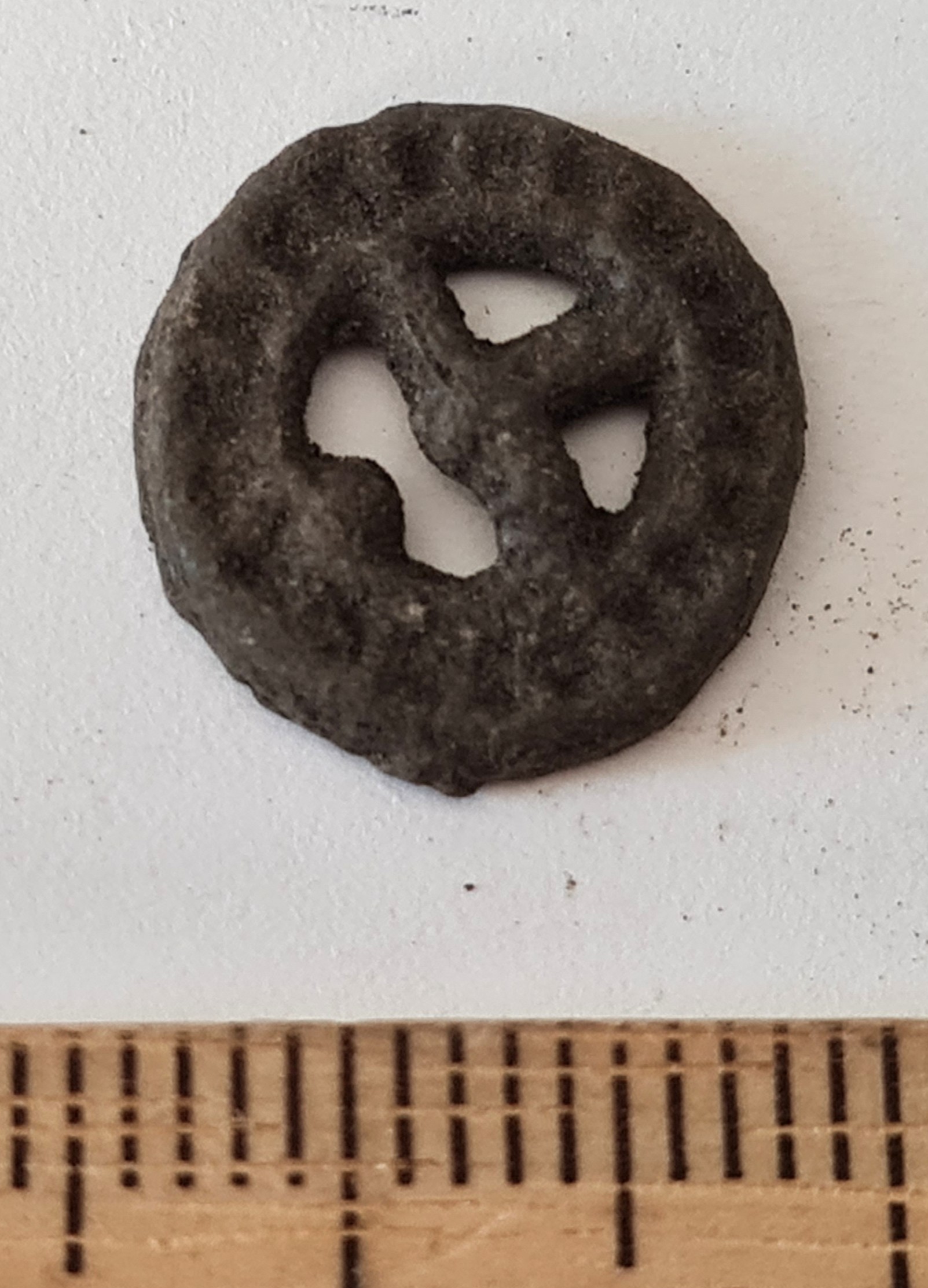
Mount, tin or copper alloy. Circular, open-work.
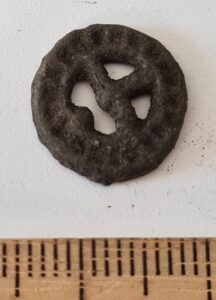
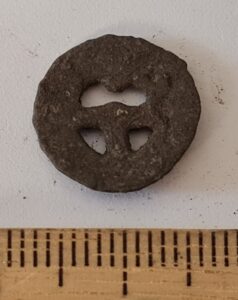
Mount, tin or copper alloy. Circular, open-work. Most likely from Medieval or Early Modern period.
Muhu
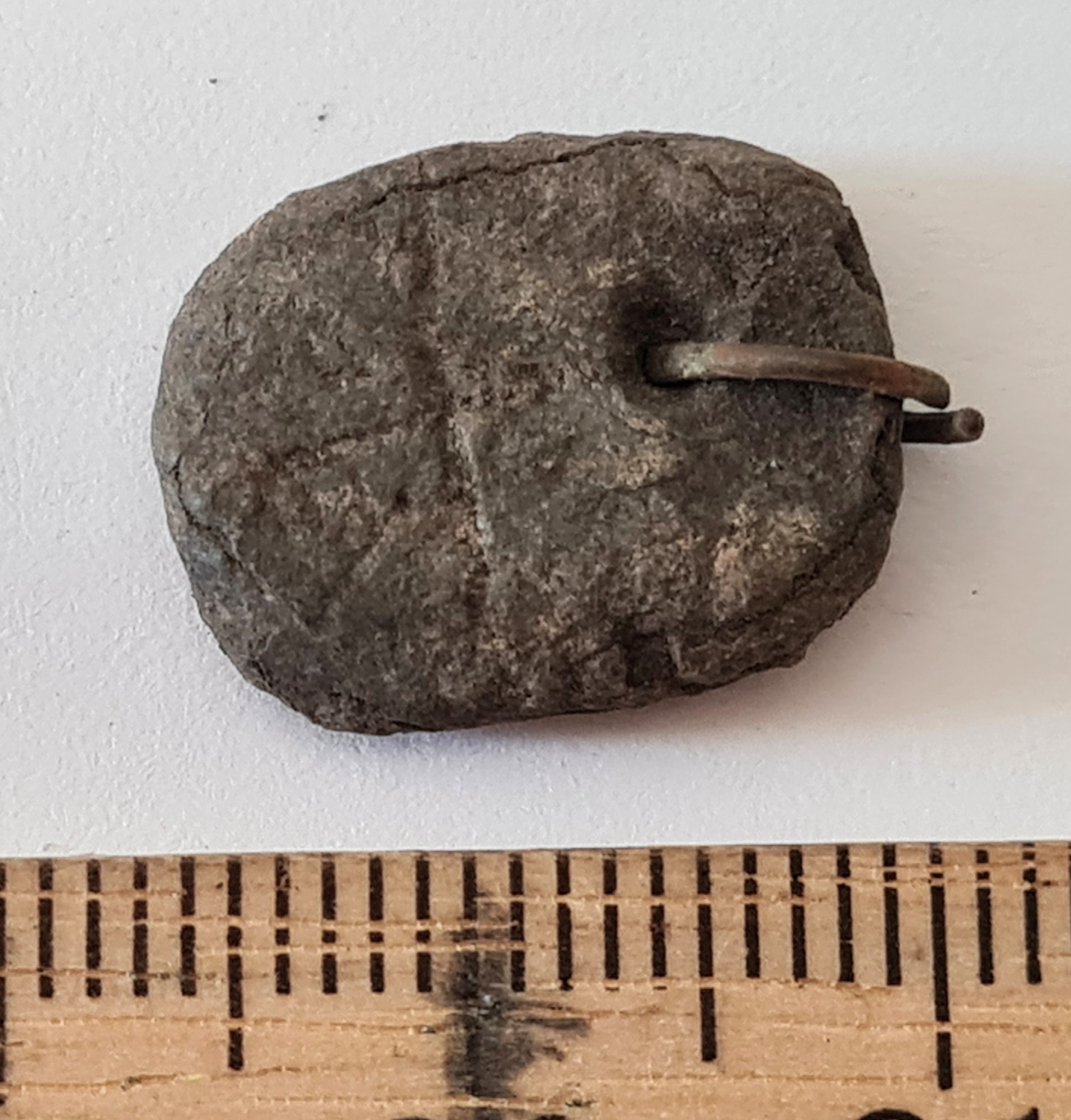
Pendant, copper alloy(?). Oval; on one side a cross, on the other four depressions. A small ring passes through the perforation.
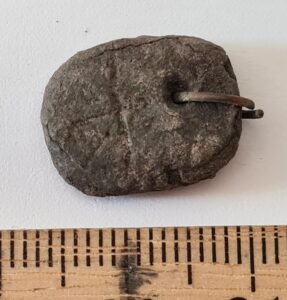
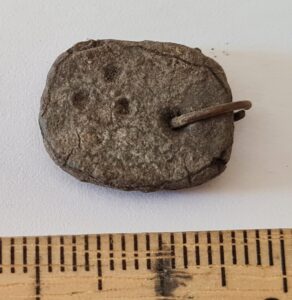
Pendant, copper alloy(?). Oval; on one side a cross, on the other four depressions. A small ring passes through the perforation. A very similar silver pendant, although without ornamentation, has been found, for example, in burial 2a at Vilkmuiža in Dundaga, dated to the late 13th or early 14th century (Muižnieks & Žeiere 2021, 191, 315).
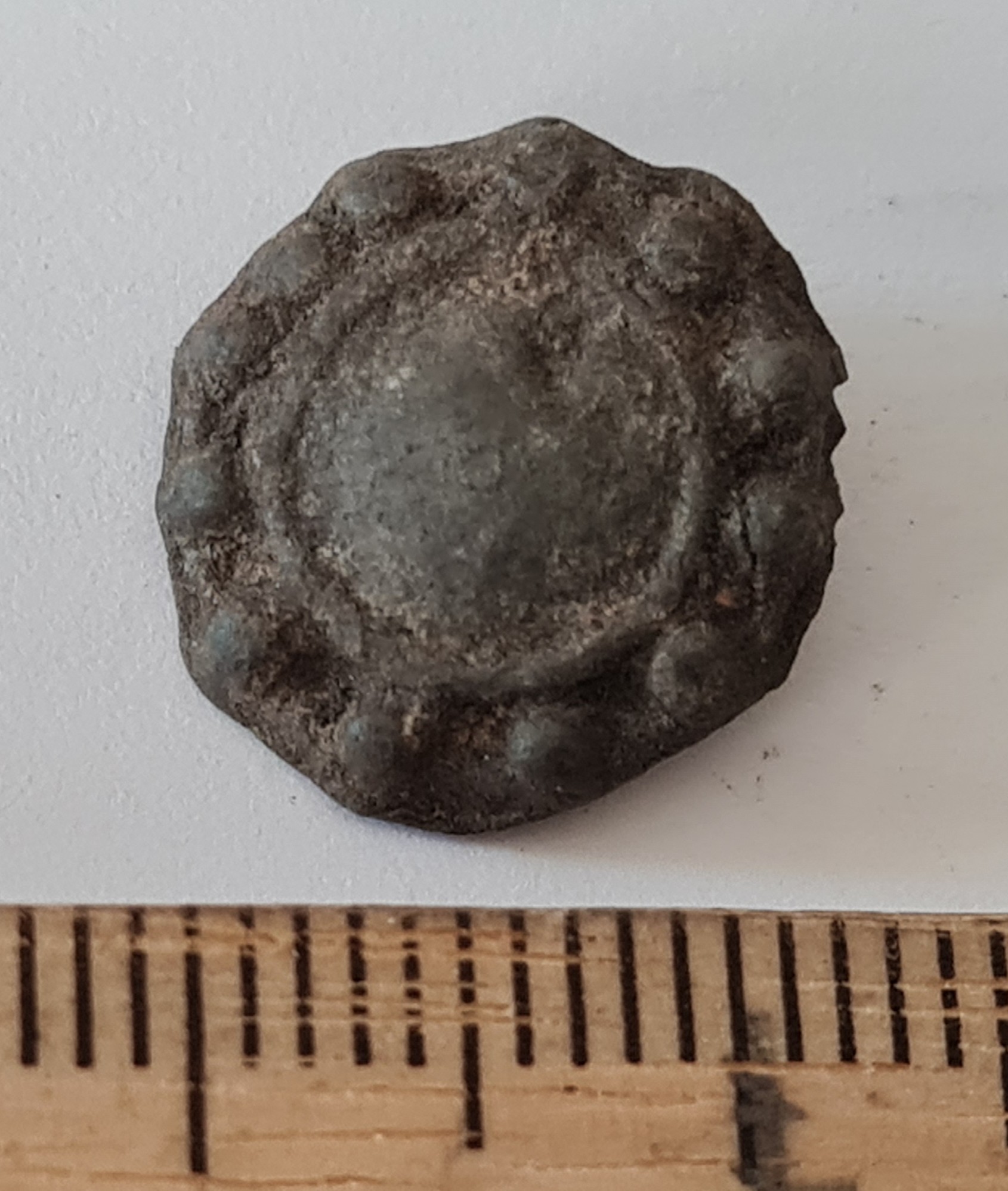
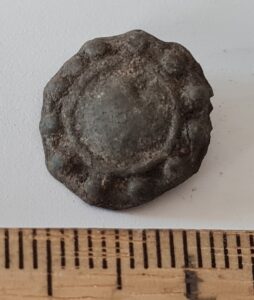
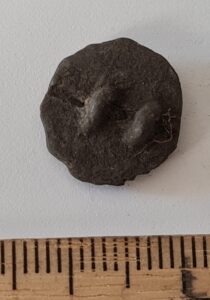
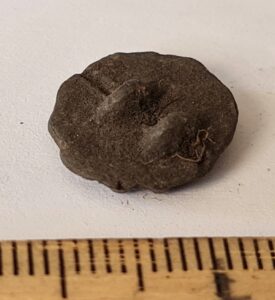
Mount, tin. Medieval or Early Modern. Tin mounts occur in a wide variety of shapes; however, at Siksälä, mounts of this particular form have been found in burials 22 and 33, both dated to the 14th century (Valk et al. 2014, 43, 54).
Valk, H., Ratas, J., Laul, S. 2014. Siksälä kalme II. Matuste ja leidude kataloog. Tartu Ülikool: Tartu.
Muhu
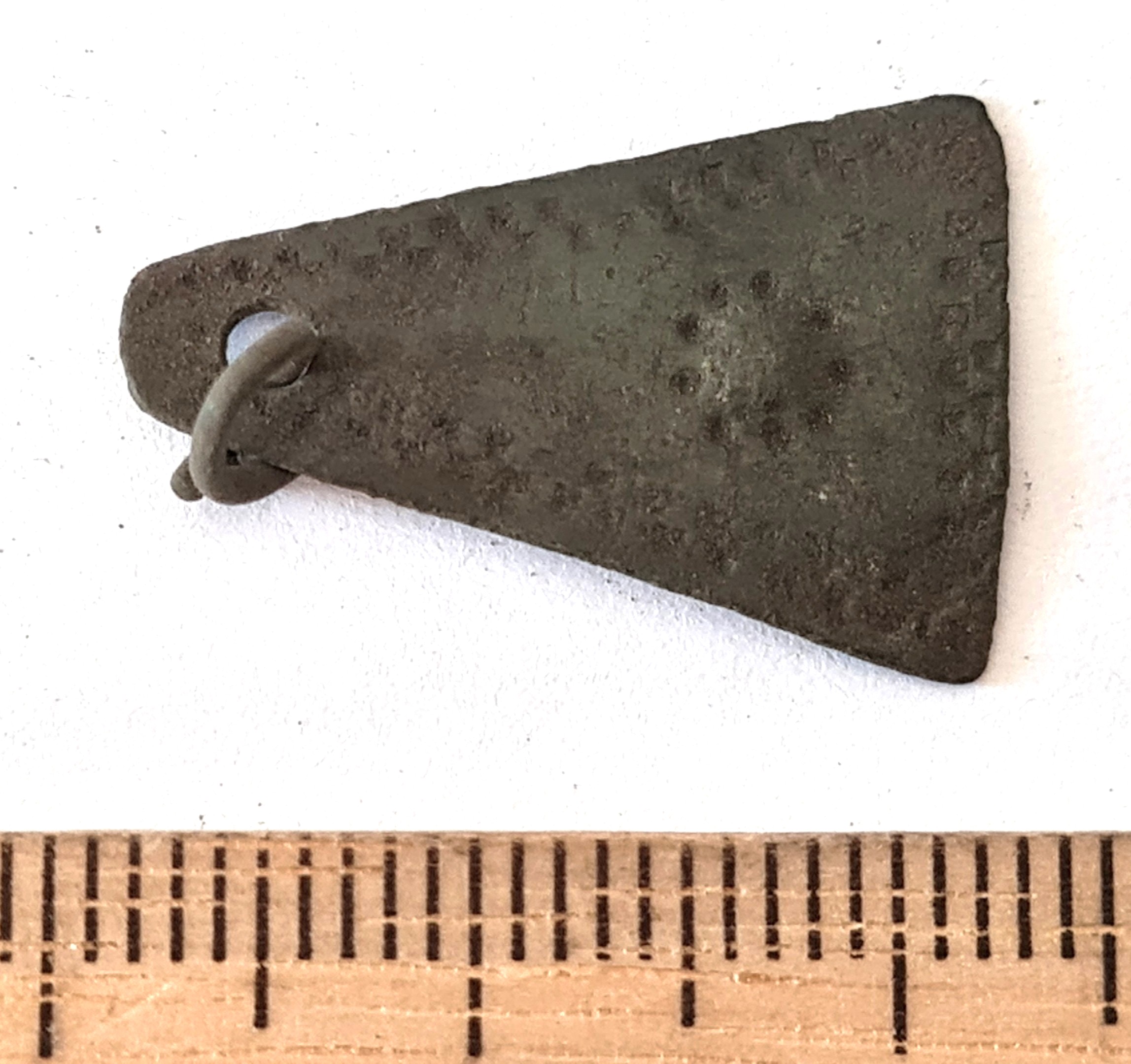
Pendant, copper alloy. Trapezoidal, decorated with repoussé ornamentation.
Pendant, copper alloy. Trapezoidal, decorated with repoussé ornamentation. Similar examples at Siksälä have been dated to the 14th–15th centuries (e.g. Valk et al. 2014, 134–135). Trapezoidal pendants already occurred in the 13th century, but the thin variants with repoussé decoration should be later (see also Valk & Laul 2014, 110–112). The Muhu pendant, however, bears somewhat different ornamentation compared to those from Siksälä.
Valk, H. & Laul, S. 2014. Siksälä kalme I: Muistis ja Ajalugu. Tartu ülikool, Ajaloo ja arheoloogia instituut, Tallinn.; Valk, H., Ratas, J., Laul, S. 2014. Siksälä kalme II. Matuste ja leidude kataloog. Tartu Ülikool.: Tartu.
Muhu
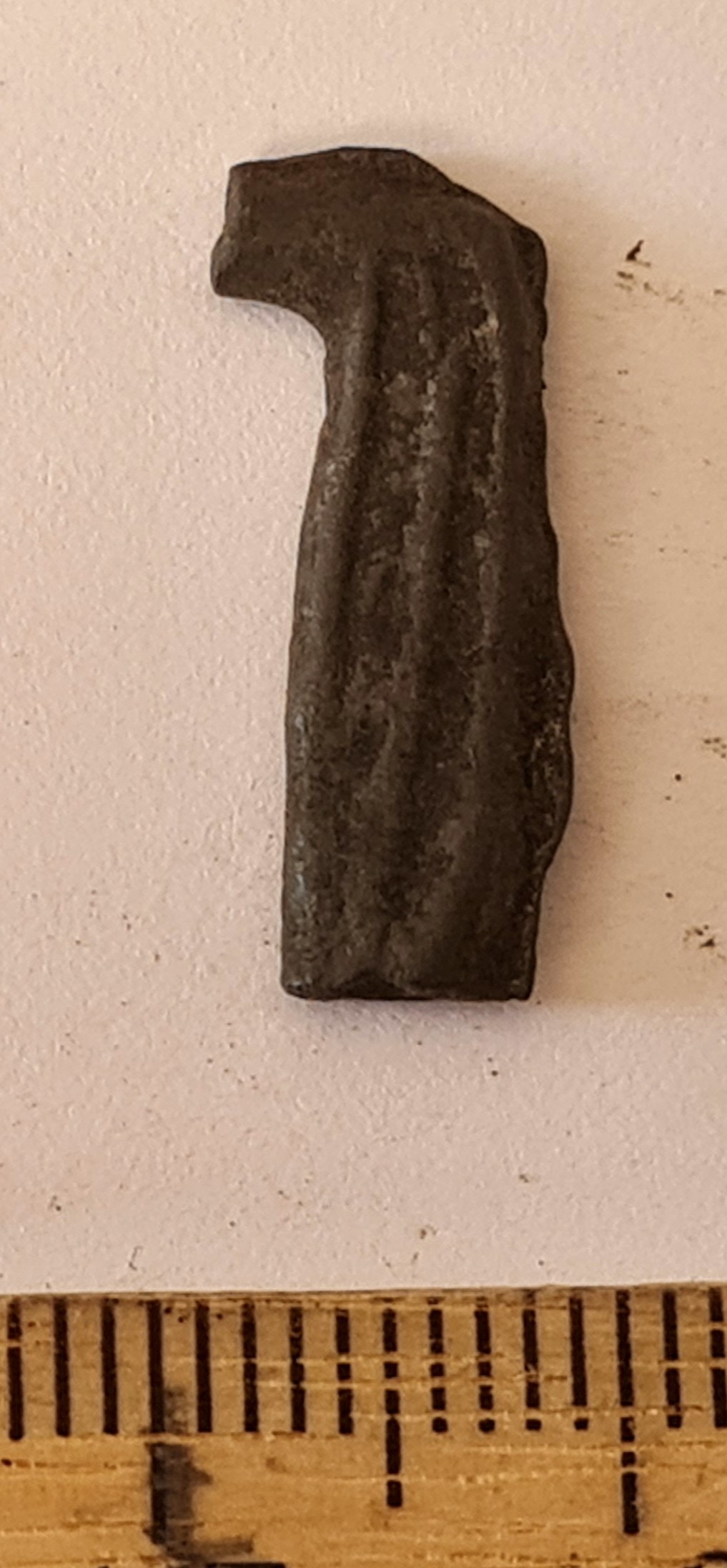
Artefact fragment, copper alloy. Possibly shoe buckle from the 17th-18th century.
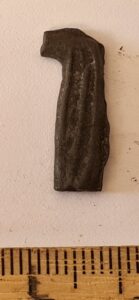
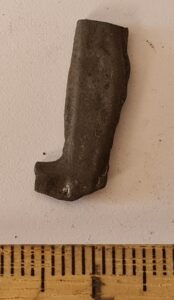
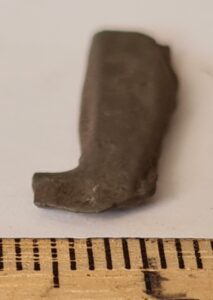
Artefact fragment, copper alloy. Possibly shoe buckle from the 17th-18th century.
Muhu
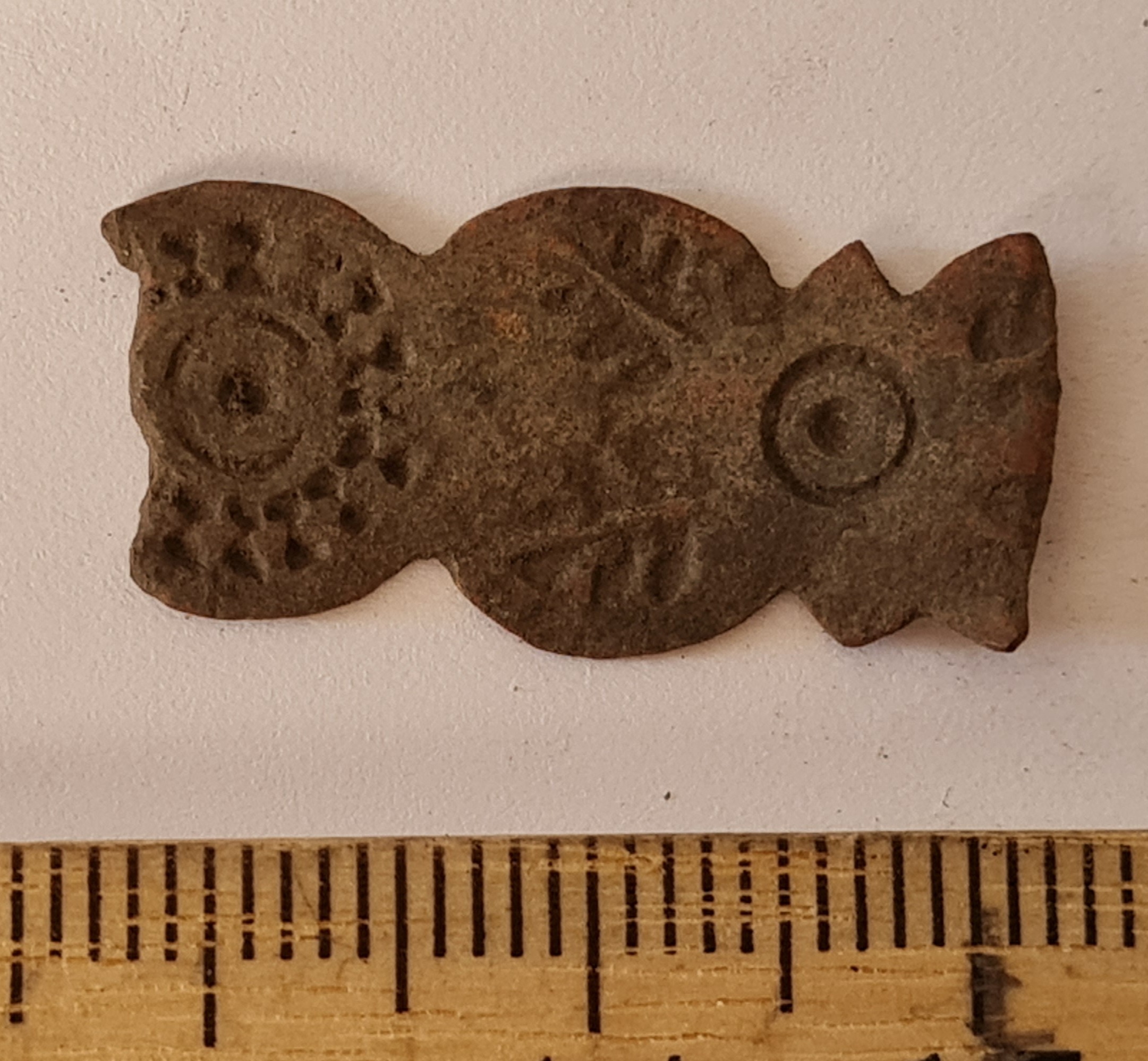
Mount, copper alloy. More precisely undetermined.
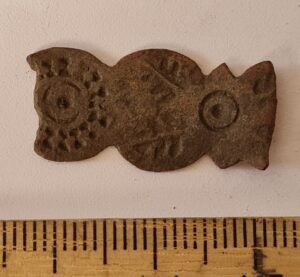
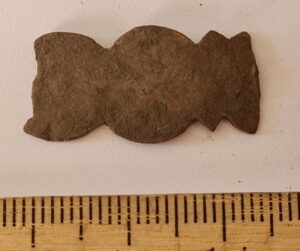
Mount, copper alloy. More precisely undetermined.
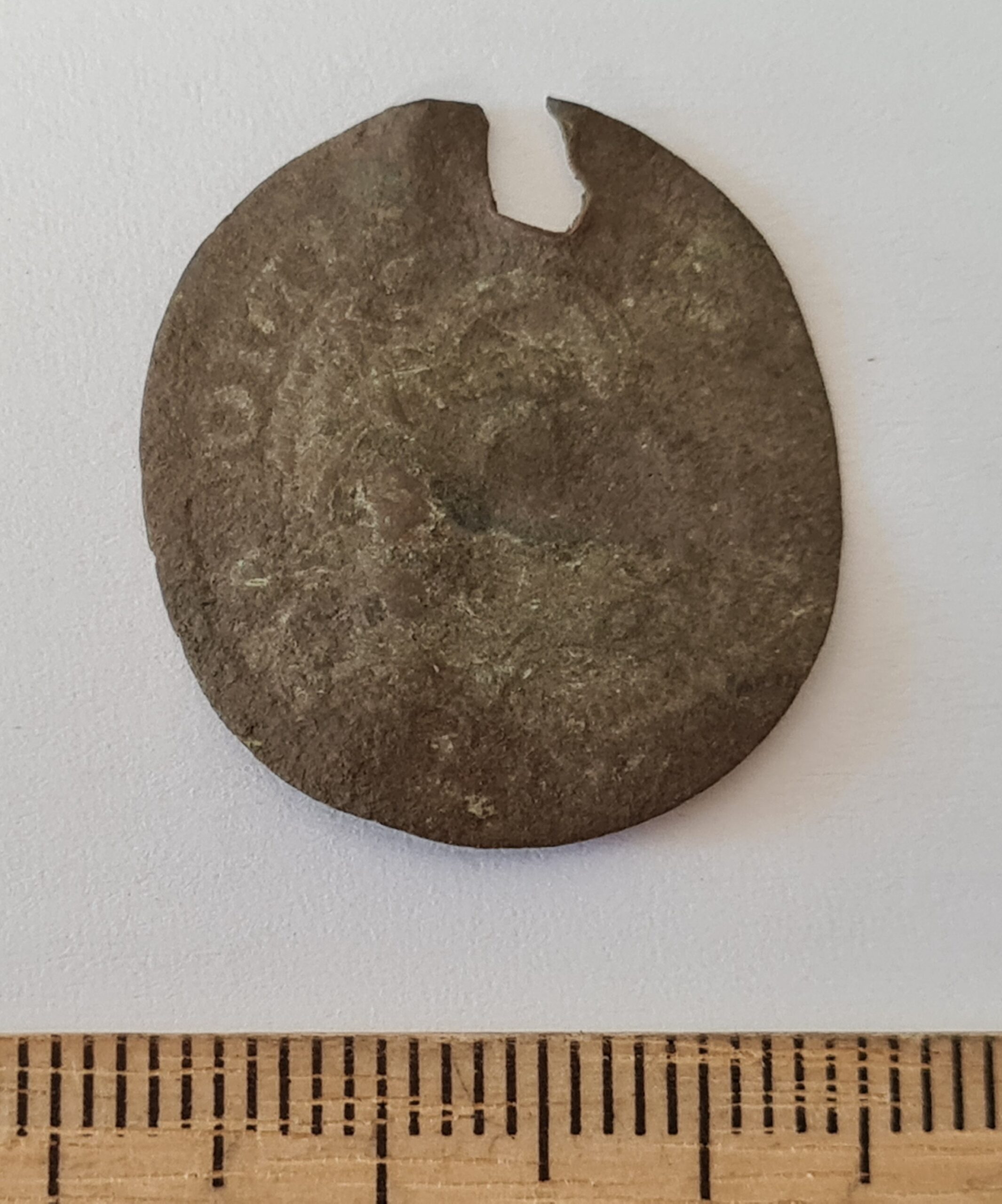
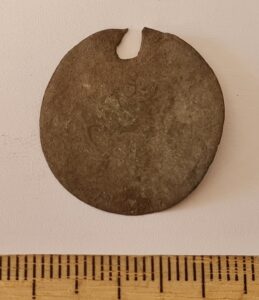
Coin pendant.

