
Database
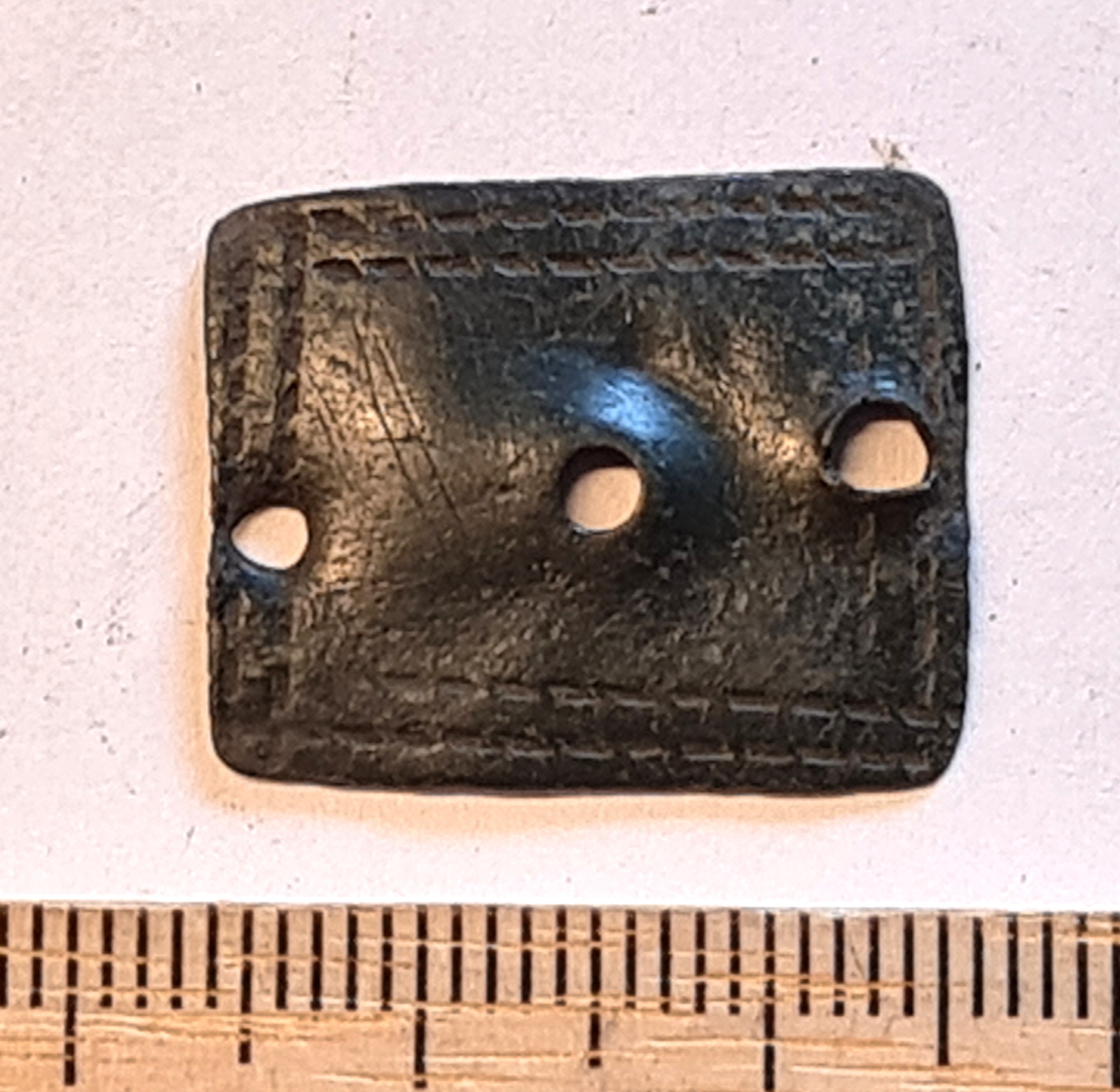
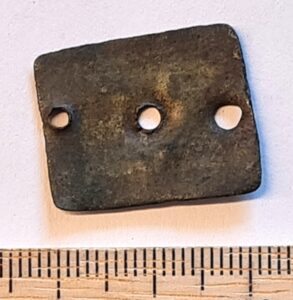
Mount, copper alloy. The edges are decorated with a dotted-line ornament; three perforations for attachment. Probably Early Modern.
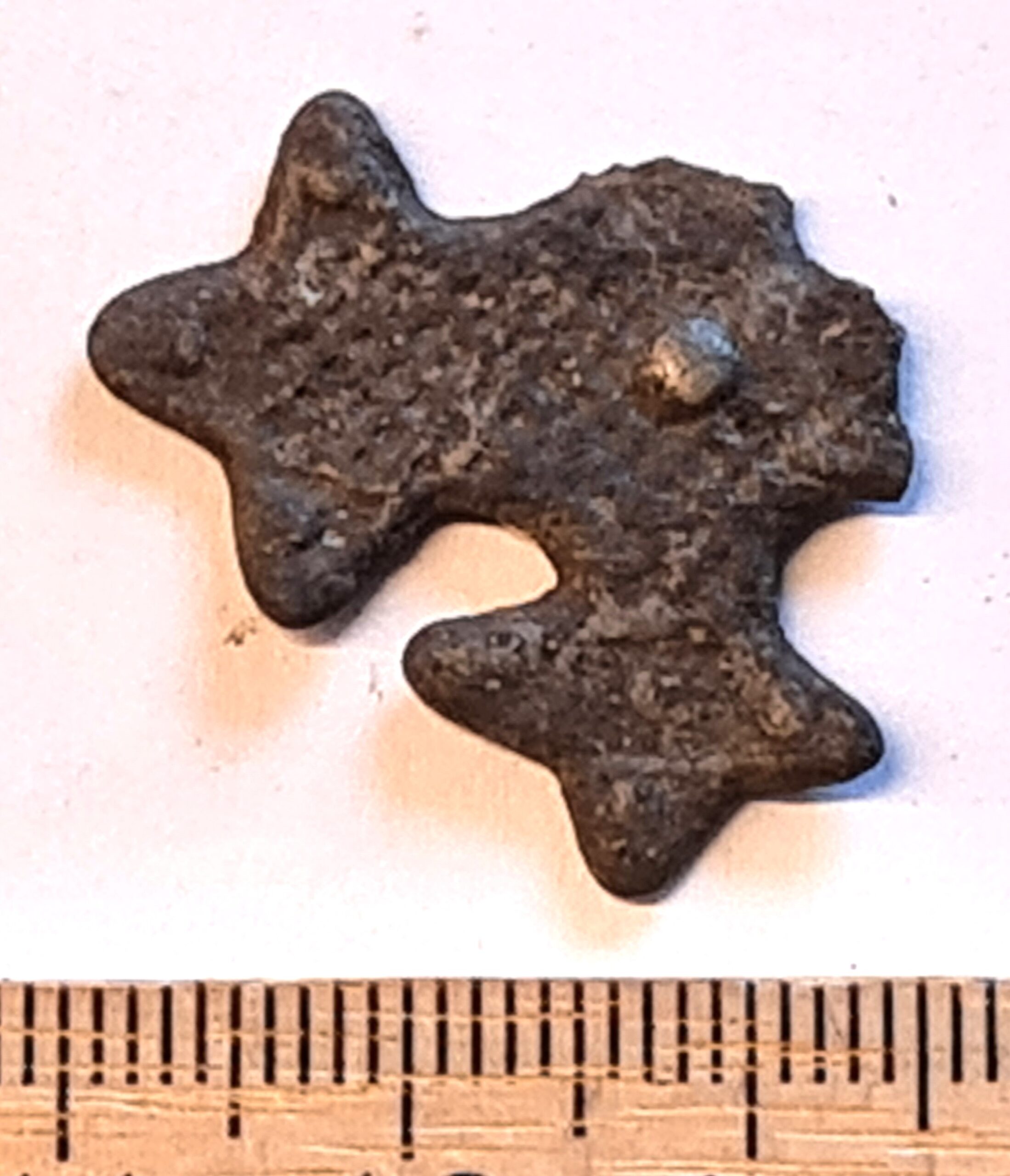
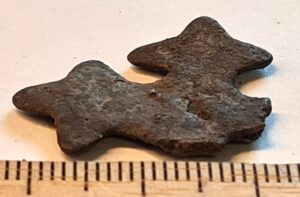
Fragment of cross pendant, copper alloy. Very similar one has been found from Siksälä within burial CCXLIII, dated to the 14th century (Valk et al 2014. 255).
Valk, H., Ratas, J., Laul, S. 2014. Siksälä kalme II. Matuste ja leidude kataloog. Tartu Ülikool: Tartu.
Muhu
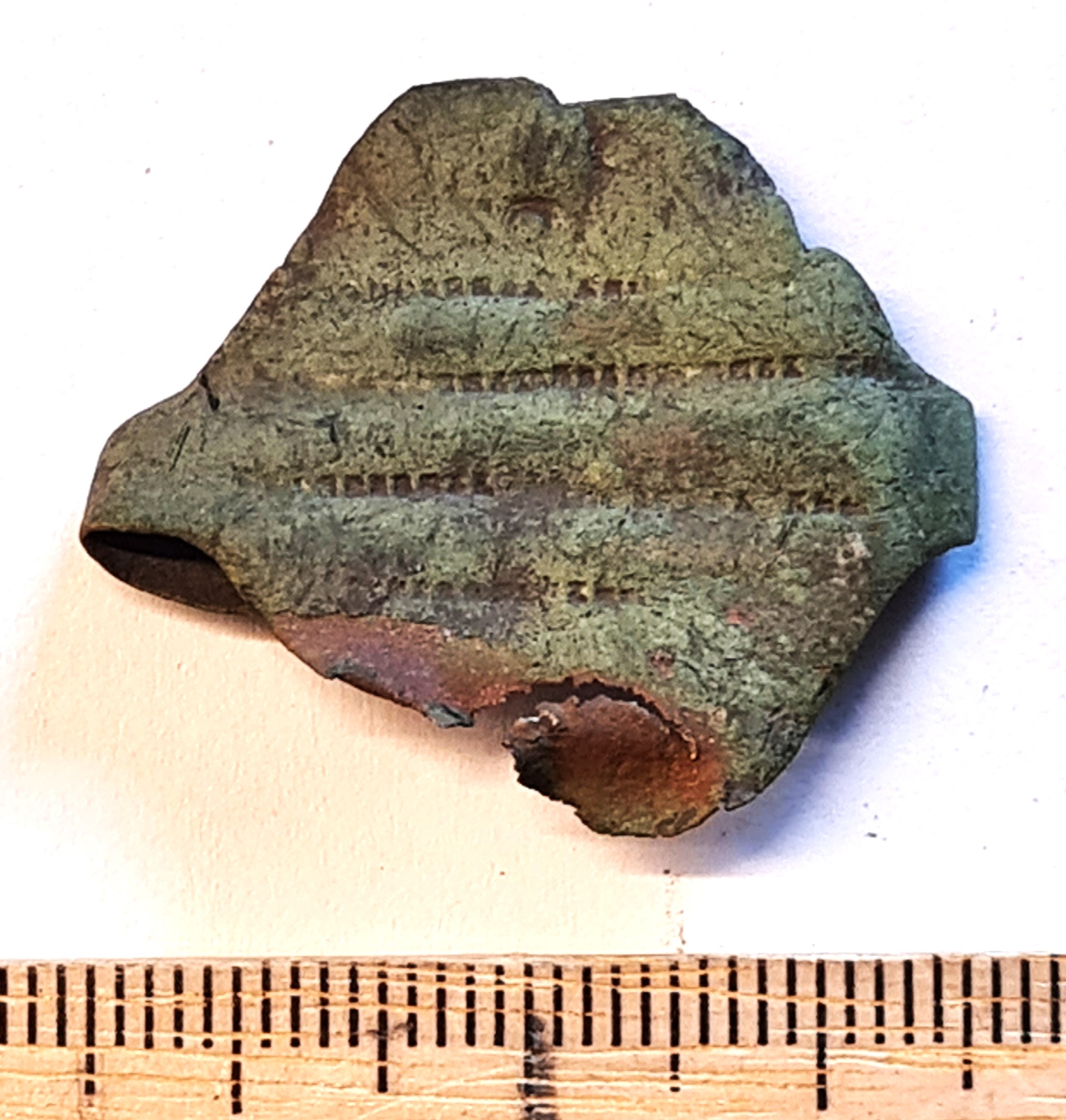
Finger-ring with middle shield, copper alloy.
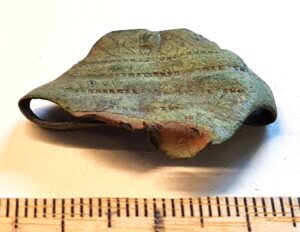
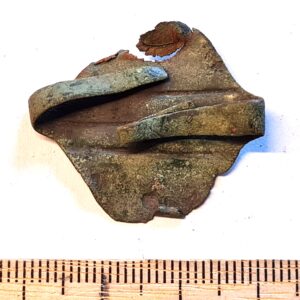
Finger-ring with middle shield, copper alloy. In Siksälä, such examples have been found mainly in burials dating to the late 13th or 14th century (e.g. Valk et al 2014, 27). In any case, they should not be earlier than the mid-13th century, but they may also date as late as the 15th century (Valk & Laul 2014, 118).
Valk, H., Ratas, J., Laul, S. 2014. Siksälä kalme II. Matuste ja leidude kataloog. Tartu Ülikool: Tartu.
Muhu
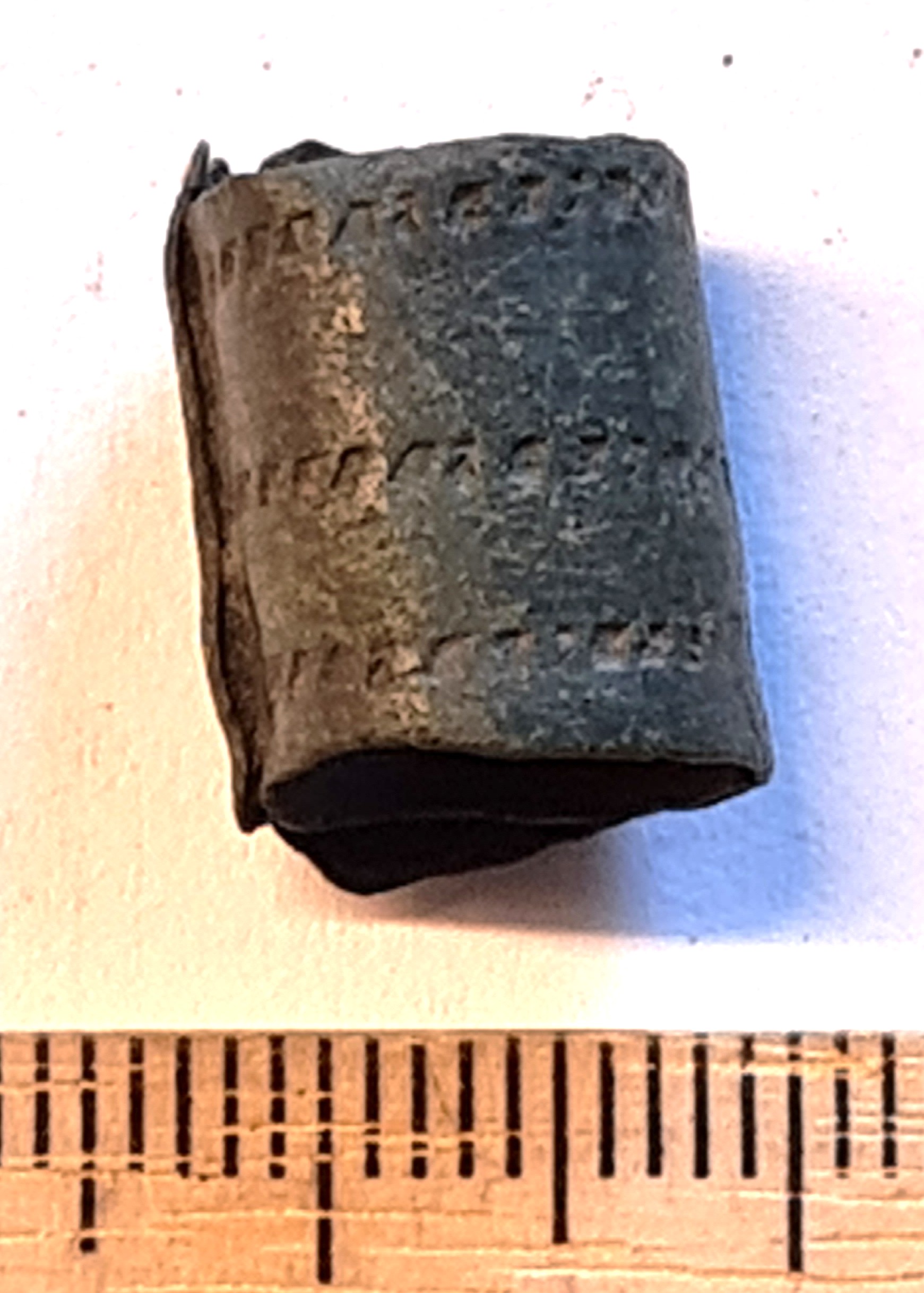
The pin foot of a penannular brooch, copper alloy.
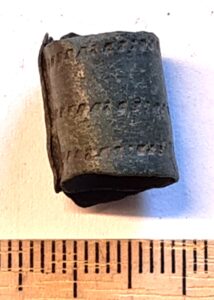
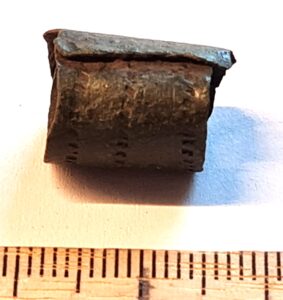
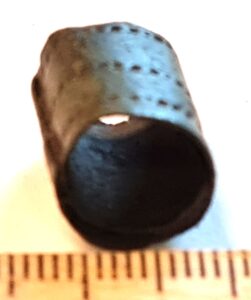
The pin foot of a penannular brooch, copper alloy. Broad, decorated with incised line ornamentation. It can most likely be dated to the 12th–13th centuries.
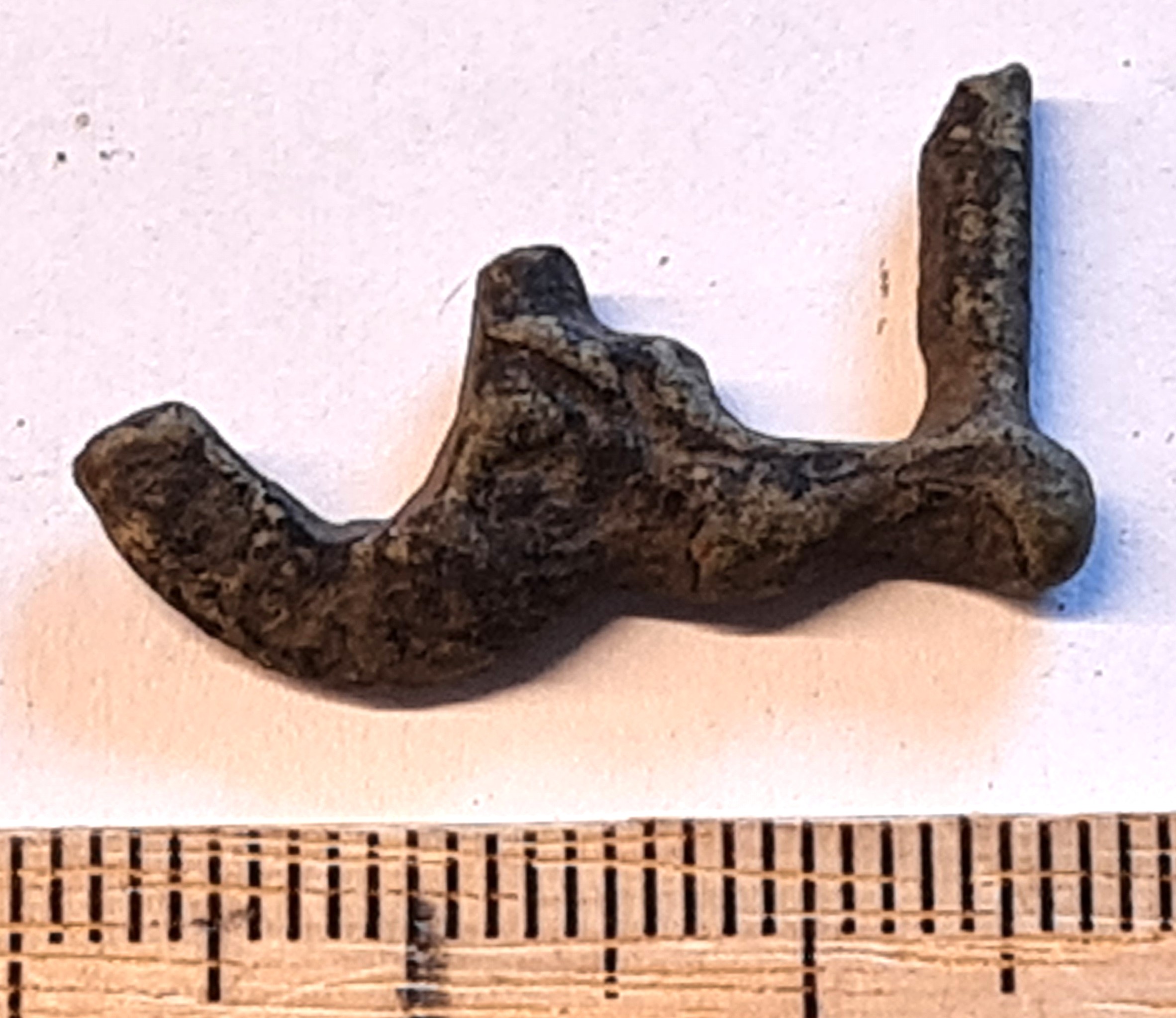
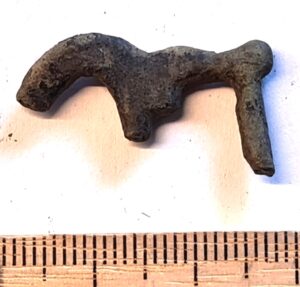
Gotland-Baltic type buckle, copper alloy. A late variant. It has previously been suggested that buckles of this type originated from Gotland, but later evidence indicates that the form may originally have derived from the Baltic region and subsequently developed further on Gotland (Mägi 2002, 97; Lehtosalo-Hilander 1982, 149–151). Such examples are occasionally also found in 13th-century inhumation burials, for instance at the Pada cemetery.
Muhu
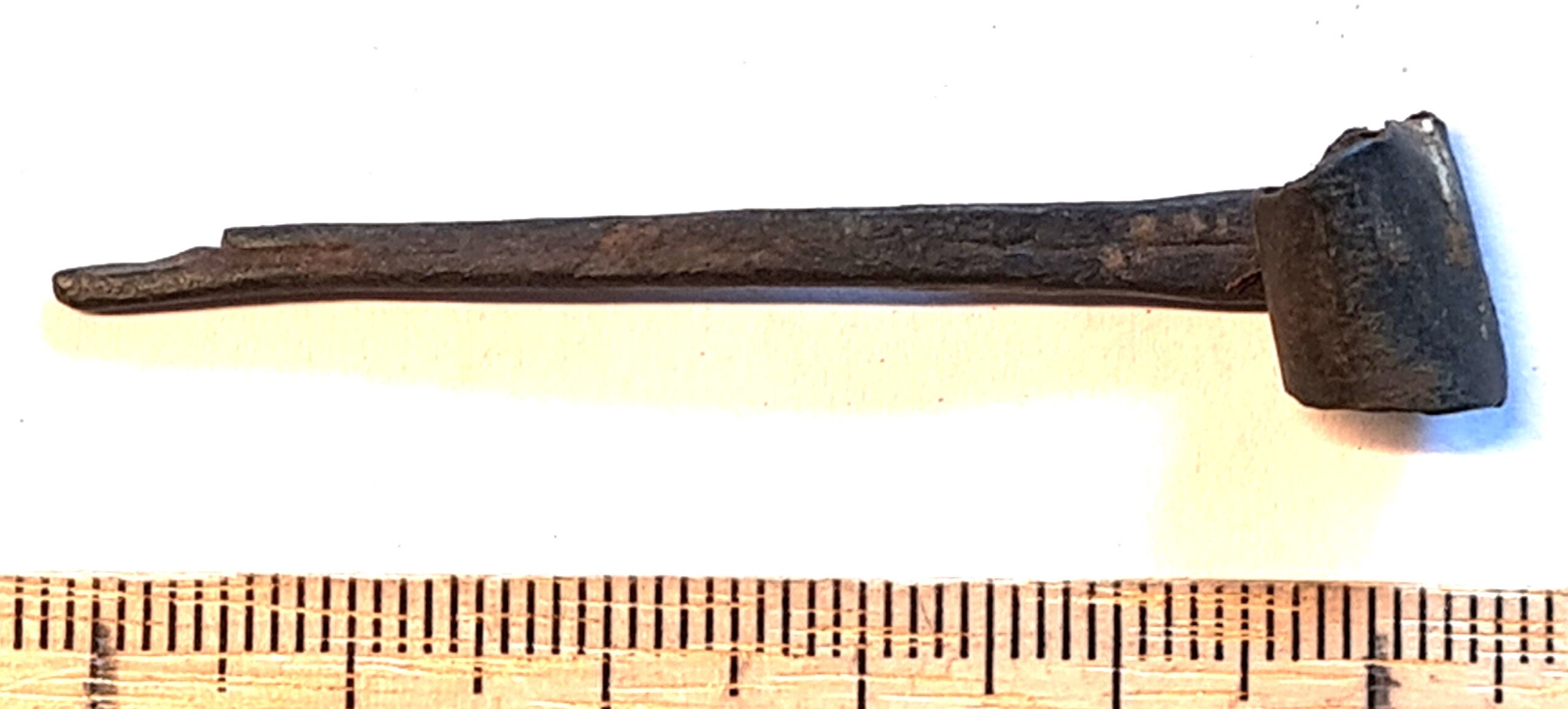
Needle of penannular brooch, copper alloy.
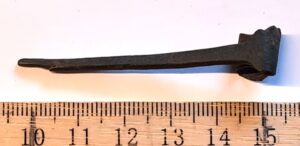
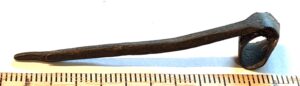
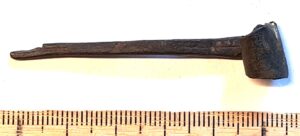
Needle of penannular brooch, copper alloy. A smooth transition from the pin to the foot. Probably datable to the 14th–15th centuries.
Mägi, M. 2002. At the crossroads of space and time: graves, changing society and ideology on Saaremaa (Ösel), 9th–13th centuries AD. Tallinn.;Lehtsalo-Hilander, P.-L. 1982. Luistari II: The Artefacts. SMYA 82: 2. Helsinki.
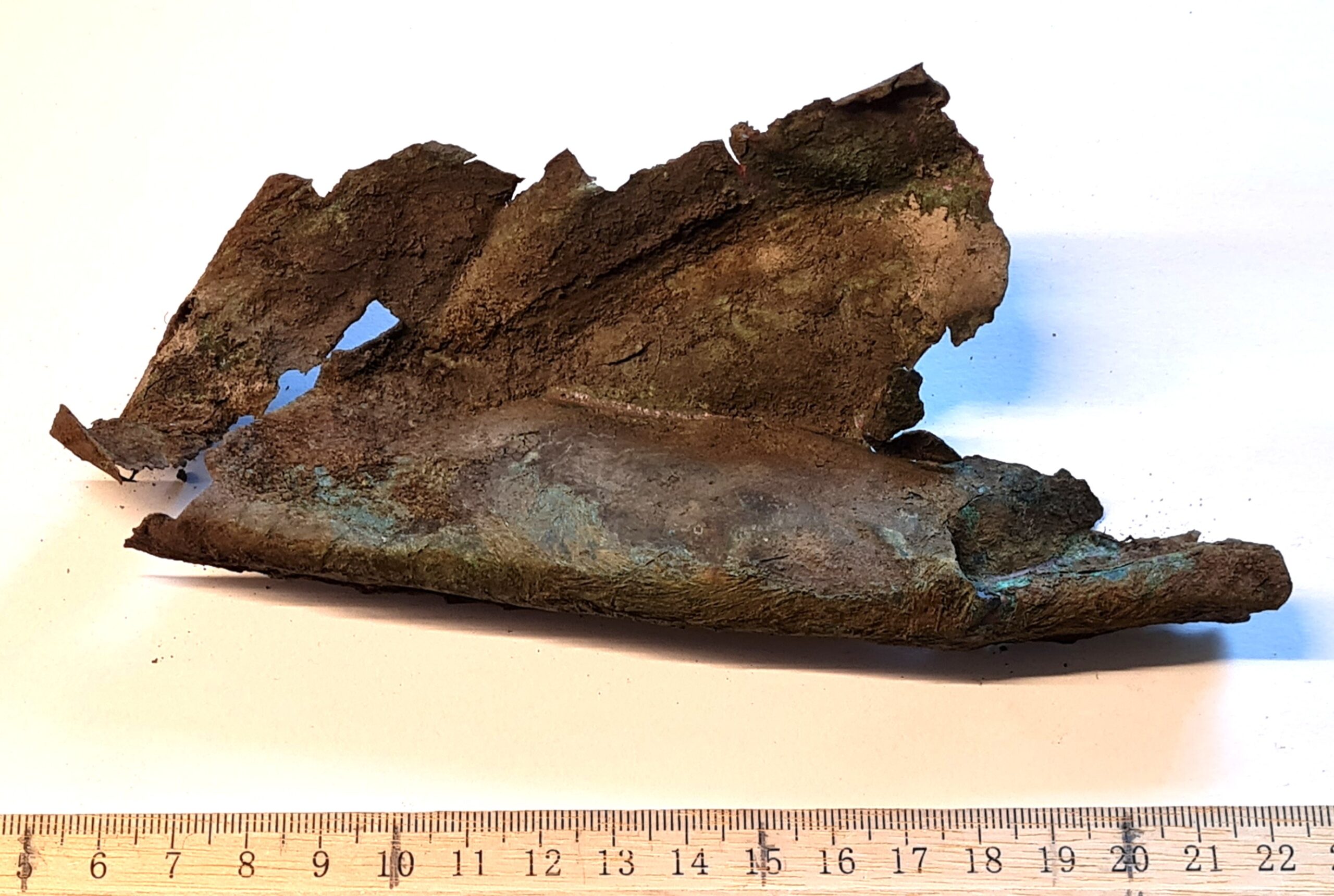
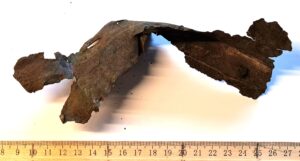
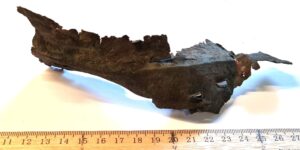
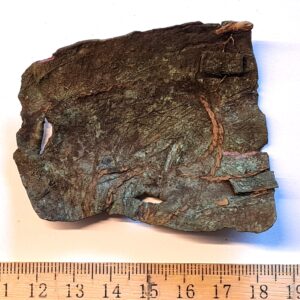
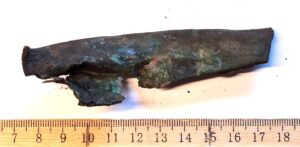
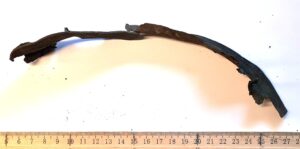
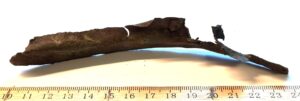
Metal fittings of a vessel, copper alloy. The vessel was probably made of wood or bark and edged with metal mounts. The find was recovered from beneath the plough layer and may therefore date to the end of prehistory or to the medieval period. A small fragment of cord has been preserved on the inner side. Reconstruction of the vessel and more precise dating would require a separate study. The image shows only some of the vessel fragments.
Muhu
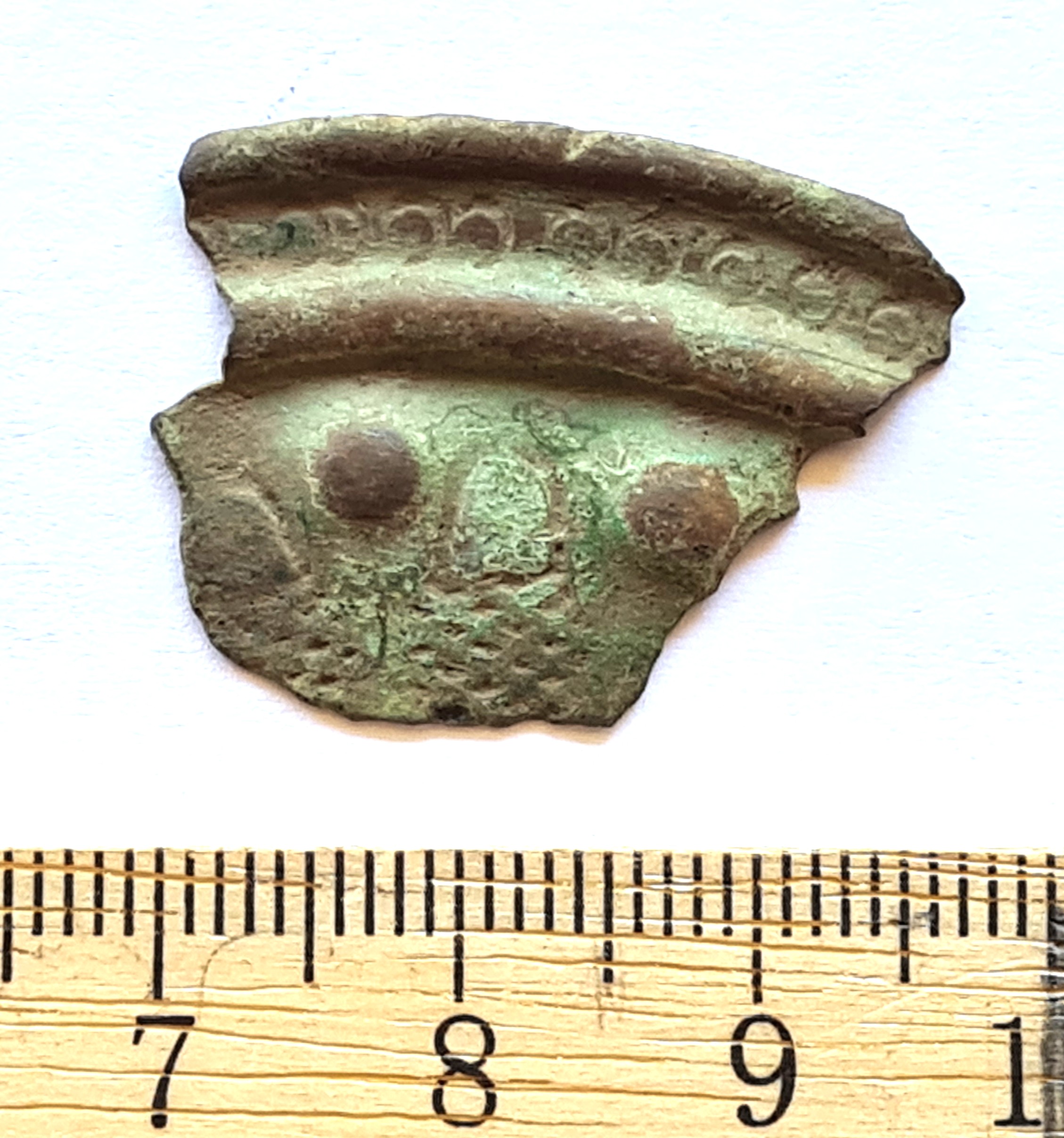
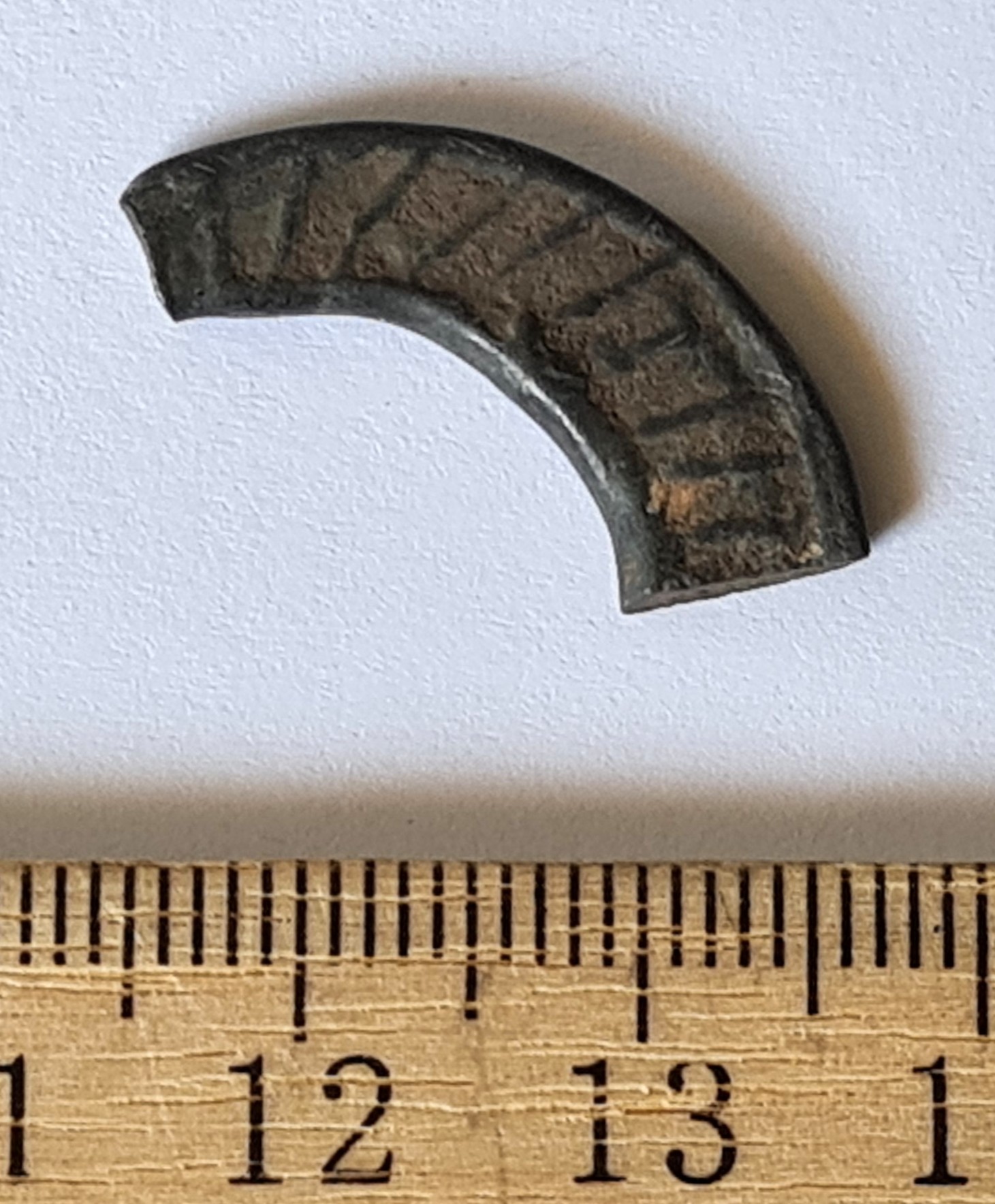
Fragment of round sheet pendant(?), copper alloy.
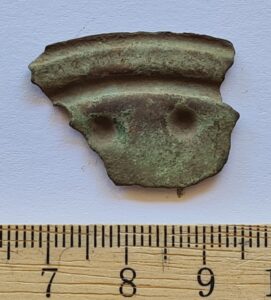
Fragment of round sheet pendant(?), copper alloy. Most likely Medieval.
Muhu
Fragment of buckle, copper alloy.
Fragment of buckle, copper alloy. Round-fronted female buckles. These were worn at both ends of the belt and fastened together, for example with an iron or bronze hook. They are characteristic primarily of 13th-century inhumation burials in Saaremaa and coastal Estonia (Mägi et al. 2019, 97; Lõhmus et al. 2018), but are only rarely found in stone graves with cremation burials.
Mägi, M., Malve, M. & Toome, T. 2019. Early Christian burials at Valjala churchyard, Saaremaa. – Archaeological Fieldwork in Estonia, 2018, 93–118.;Lõhmus, M., Jonuks, T. & Malve, M. 2011. Archaeological salvage excavations at Kukruse: A Modern Age road, cremation field and 12th–13th century inhumation cemetery. Preliminary results. – Archaeological Fieldwork in Estonia, 2010, 103–114.

