
Database
Viltina
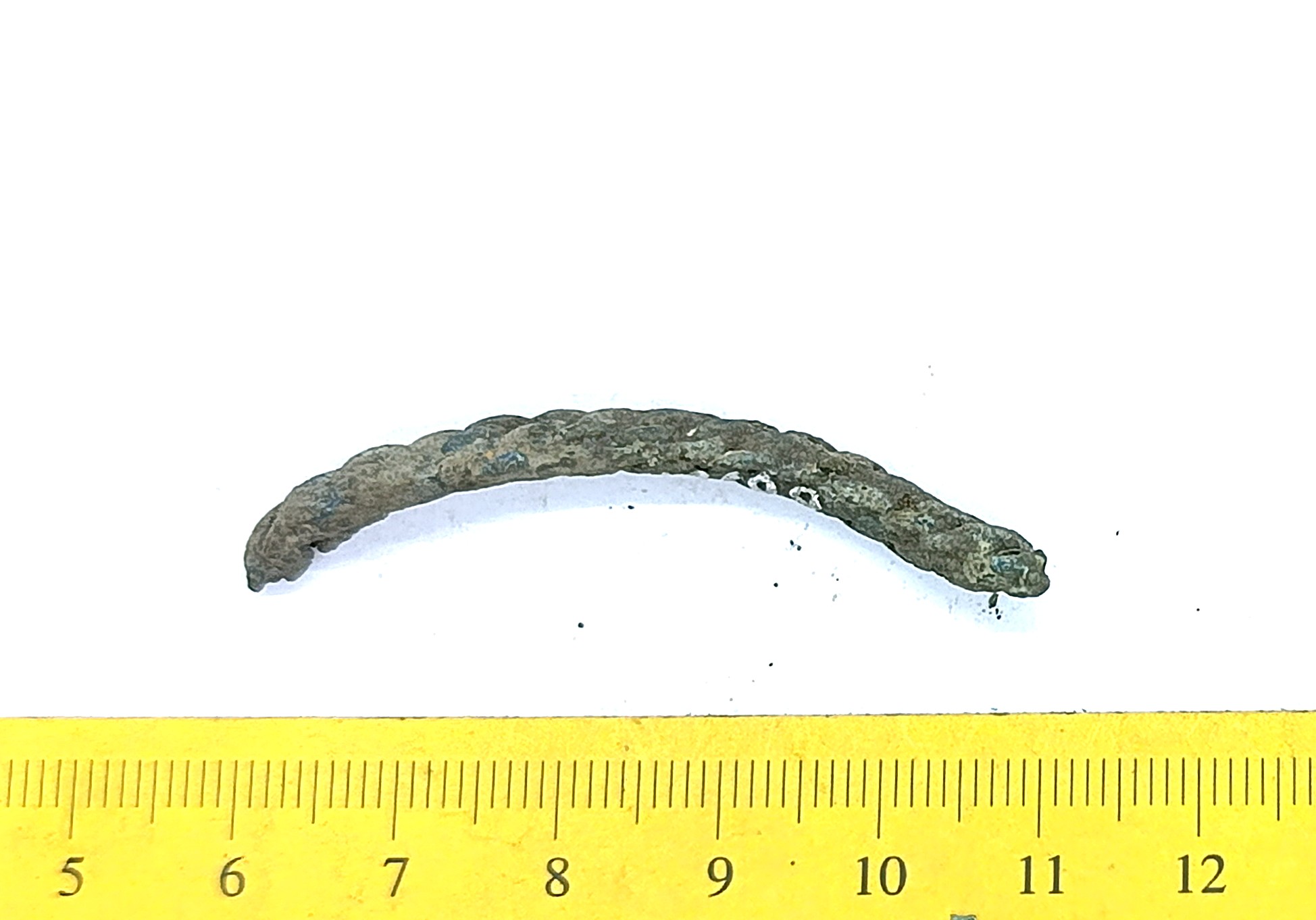
Fragment of a neck ring, copper alloy.
 Fragment of a neck ring, copper alloy. Fragments of neck rings made of several twisted wires are common finds in Saaremaa stone graves with cremations. Since it is normally not possible to determine the exact type of these neck-rings, they can be dated to the whole period from the 10th to the 13th century (see also: Mägi 2002, 107).
Mägi, M. 2002. At the Crossroads of Space and Time. Graves, Changing Society and Ideology on Saaremaa (Ösel), 9th–13th Centuries AD. (CCC Papers, 6.) Tallinn.
Viltina
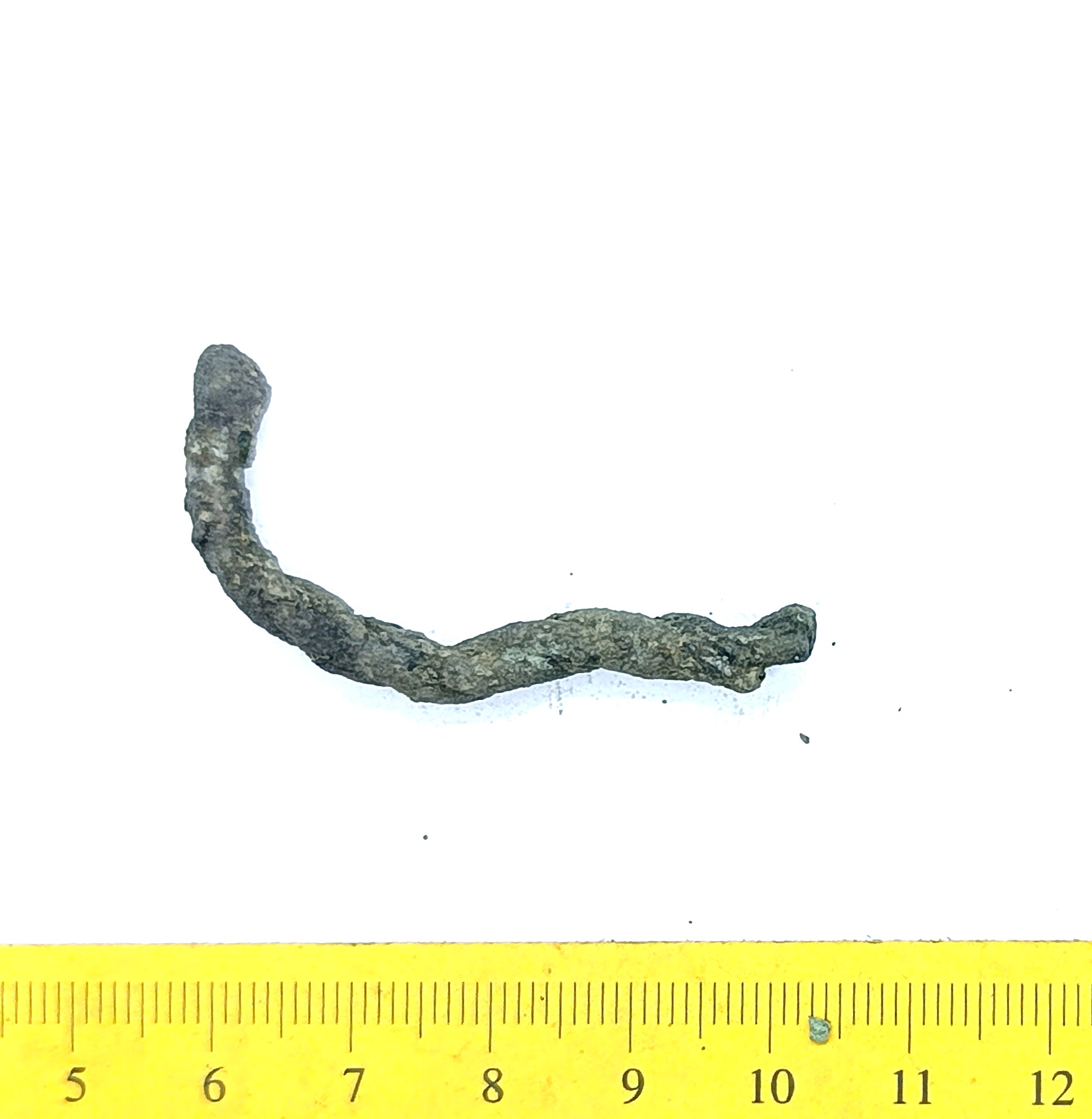
Fragment of a neck ring, copper alloy.
 Fragment of a neck ring, copper alloy. Fragments of neck rings made of several twisted wires are common finds in Saaremaa stone graves with cremations. Since it is normally not possible to determine the exact type of these neck-rings, they can be dated to the whole period from the 10th to the 13th century (see also: Mägi 2002, 107).
Mägi, M. 2002. At the Crossroads of Space and Time. Graves, Changing Society and Ideology on Saaremaa (Ösel), 9th–13th Centuries AD. (CCC Papers, 6.) Tallinn.
Viltina
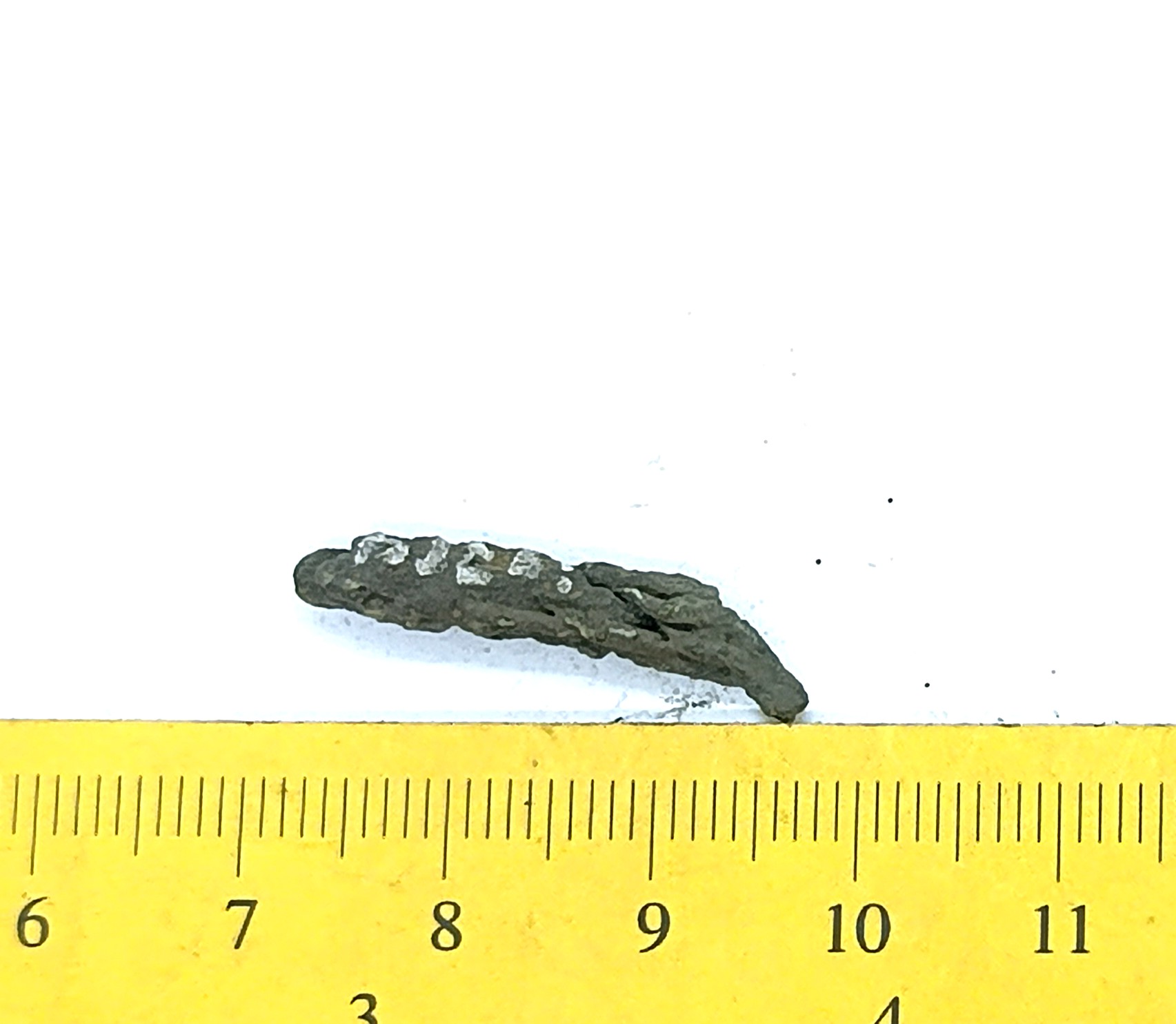
Fragment of the neck ring, copper alloy.
 Fragment of the neck ring, copper alloy. Neck rings made of several twisted wires date back to the 12th -13th century and are one of the most common types of neck rings in the archaeological material of Saaremaa (Mägi 2002, 107). In Latvia, especially eastern Latvia, neck rings made of several twisted wires that had looped ends were worn already during the 11th––12th century (Zarina 2006, 246).
Mägi, M. 2002. At the Crossroads of Space and Time. Graves, Changing Society and Ideology on Saaremaa (Ösel), 9th–13th Centuries AD. (CCC Papers, 6.) Tallinn.
Zariņa, A. 2006. Salaspils Laukskolas kapulauks 10.–13. gadsimts. Rīga: Latvijas Vēstures Institūta Apgāds.
Viltina
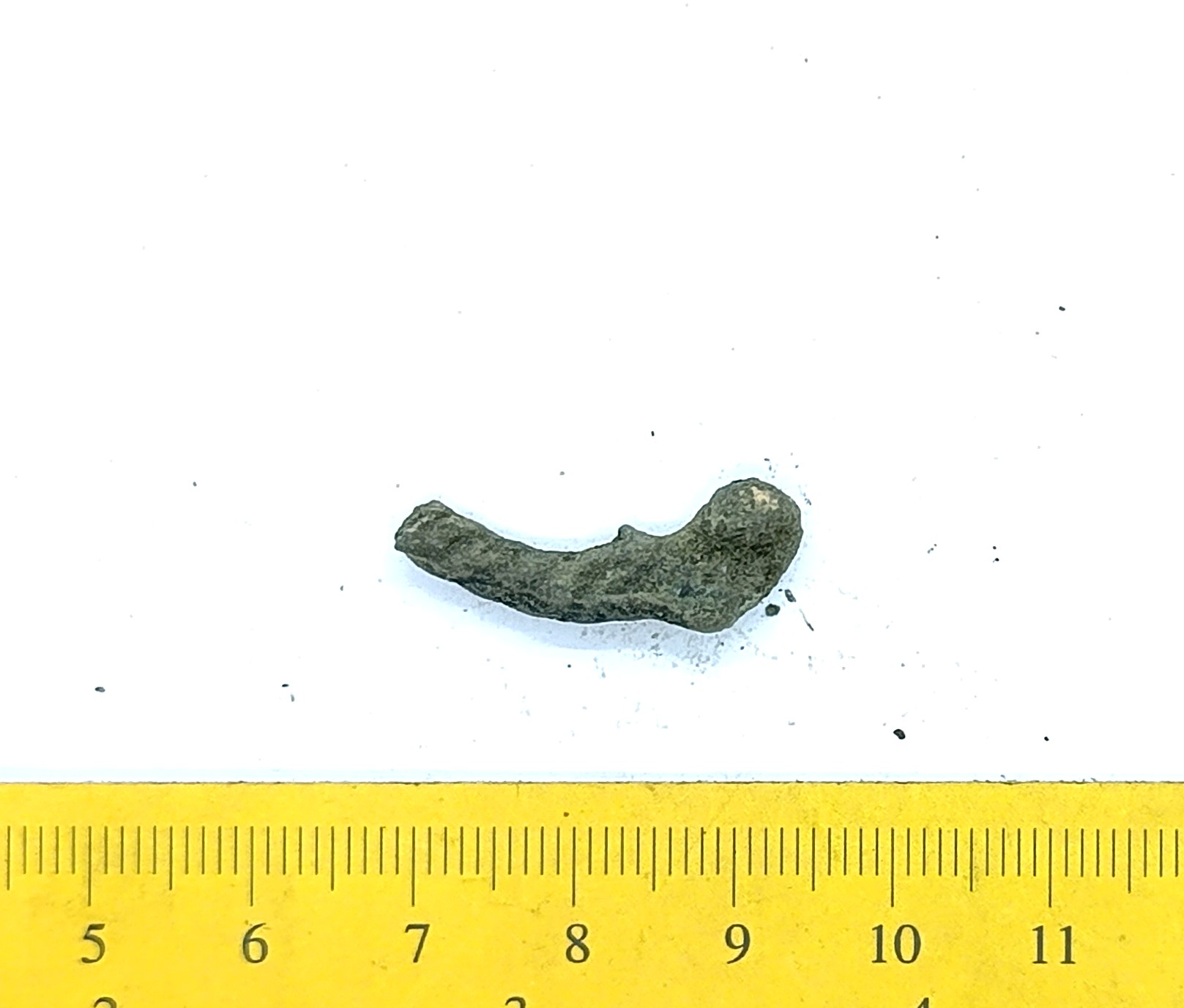
Fragment of a neck ring, copper alloy.
 Fragment of a neck ring, copper alloy. Fragments of neck rings made of several twisted wires are common finds in Saaremaa stone graves with cremations. Since it is normally not possible to determine the exact type of these neck-rings, they can be dated to the whole period from the 10th to the 13th century (see also: Mägi 2002, 107).
Mägi, M. 2002. At the Crossroads of Space and Time. Graves, Changing Society and Ideology on Saaremaa (Ösel), 9th–13th Centuries AD. (CCC Papers, 6.) Tallinn.
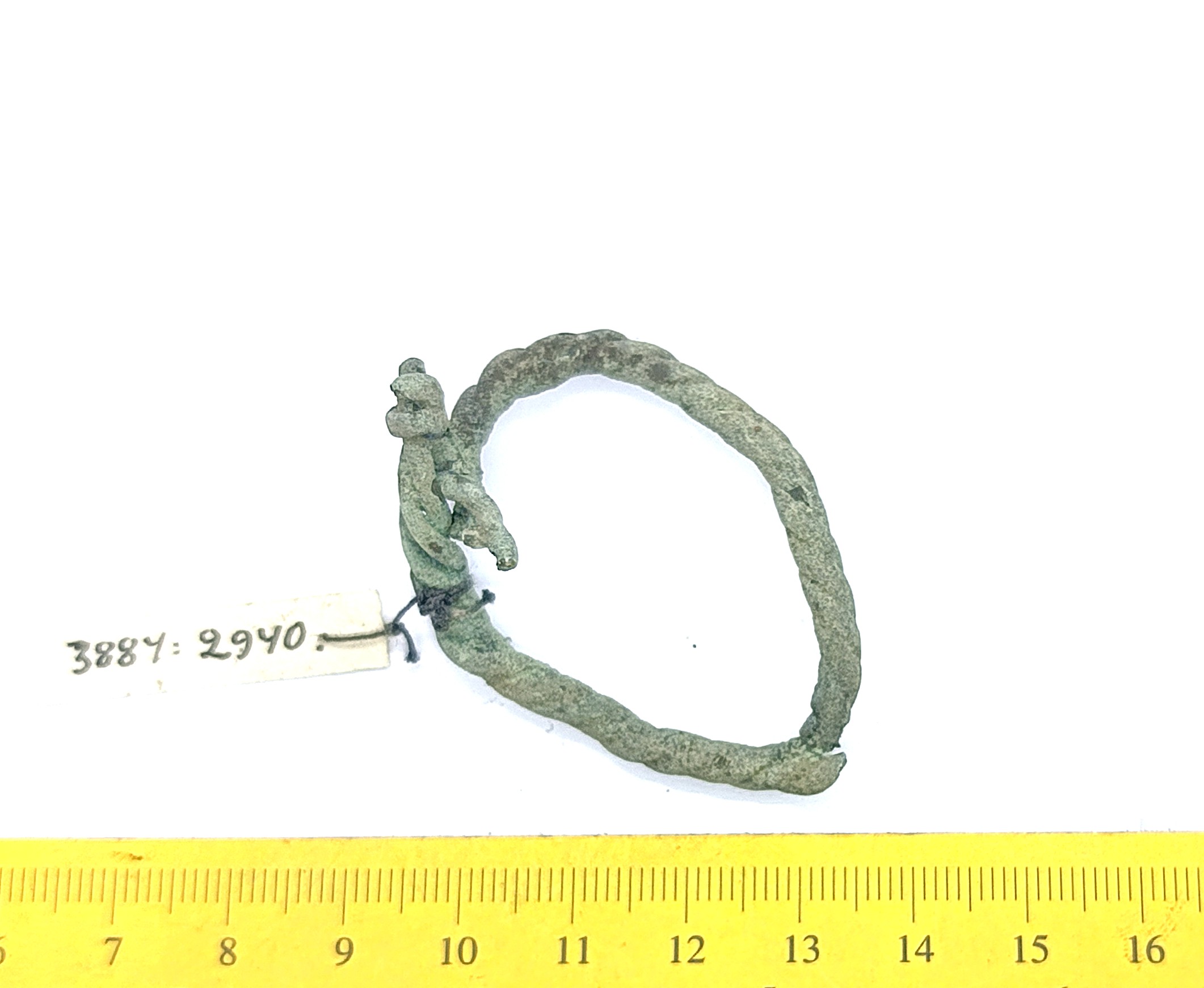
Viltina
Fragment of a neck ring, copper alloy.
 Fragment of a neck ring, copper alloy. Fragments of neck rings made of several twisted wires are common finds in Saaremaa stone graves with cremations. Since it is normally not possible to determine the exact type of these neck-rings, they can be dated to the whole period from the 10th to the 13th century (see also: Mägi 2002, 107).
Mägi, M. 2002. At the Crossroads of Space and Time. Graves, Changing Society and Ideology on Saaremaa (Ösel), 9th–13th Centuries AD. (CCC Papers, 6.) Tallinn.
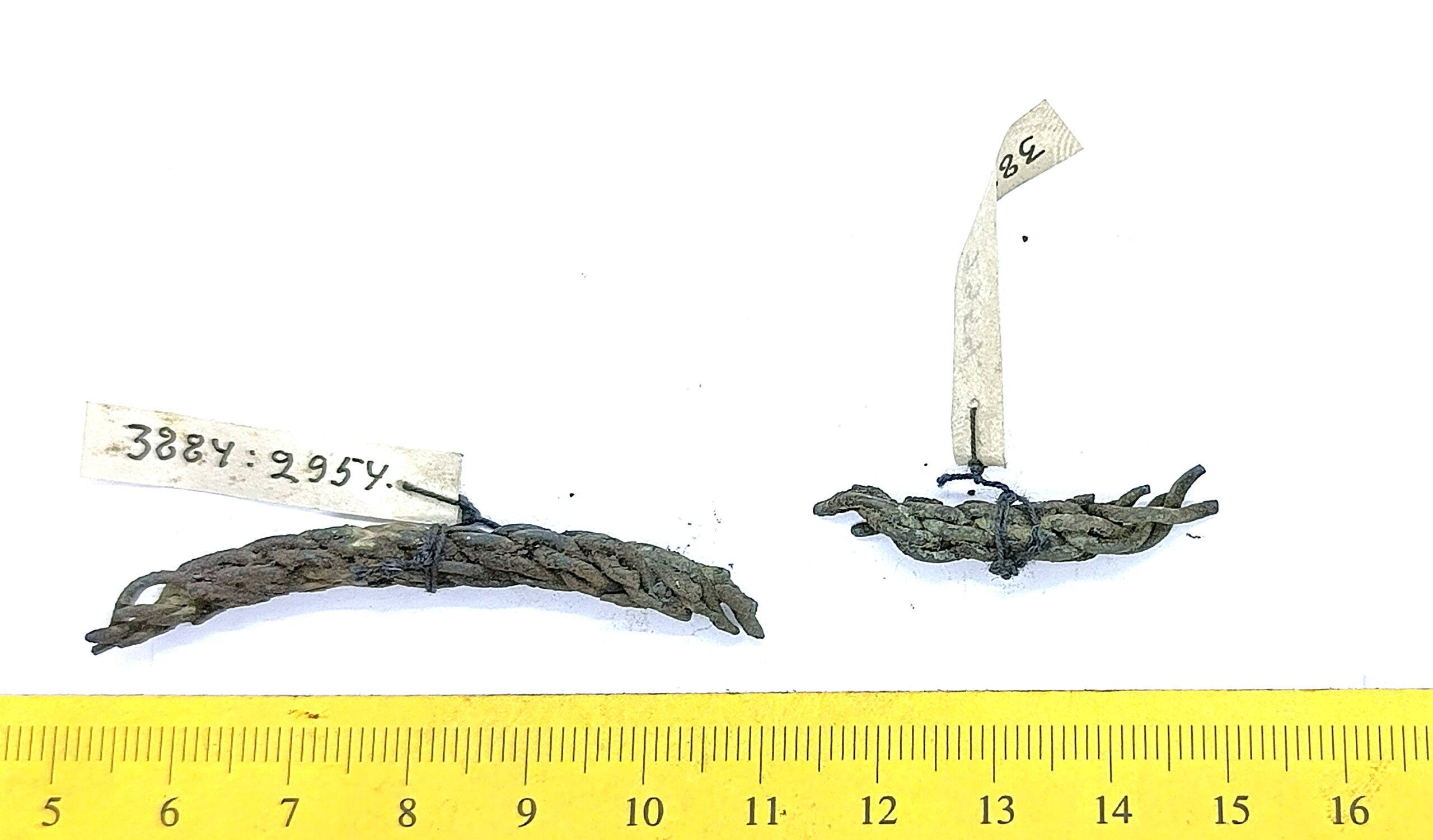
 Woven chain, copper alloy. Fragments of finely braided chains made of thin copper alloy wires have been compared to similar finds in Karelia (Ligi 1993, 50). In Latvia they appeared at the end of the 12th century and were still in use during the 13th century (Zariņa 2006, 276; Spirģis 2008, 175).
Ligi, P. 1993. Vadjapärased kalmed Kirde-Eestis (9.–16. sajandil). – Vadjapärased kalmed Eestis 9.–16. sajandil. / Votic-style graves in Estonia from the 9th to the 16th centuries. Eds. V. Lang. (Muinasaja Teadus, 2.) Tallinn, 7–175.
Spirģis, R. 2008. Bruņrupuču saktas ar krūšu važiņrotām un lībiešu kultūras attīstība Daugavas lejtecē 10.–13. gadsimtā. Latvijas Vēstures Institūta Apgāds, Rīga.
Zariņa, A. 2006. Salaspils Laukskolas kapulauks 10.–13. gadsimts. Latvijas Vēstures Institūta Apgāds, Rīga.
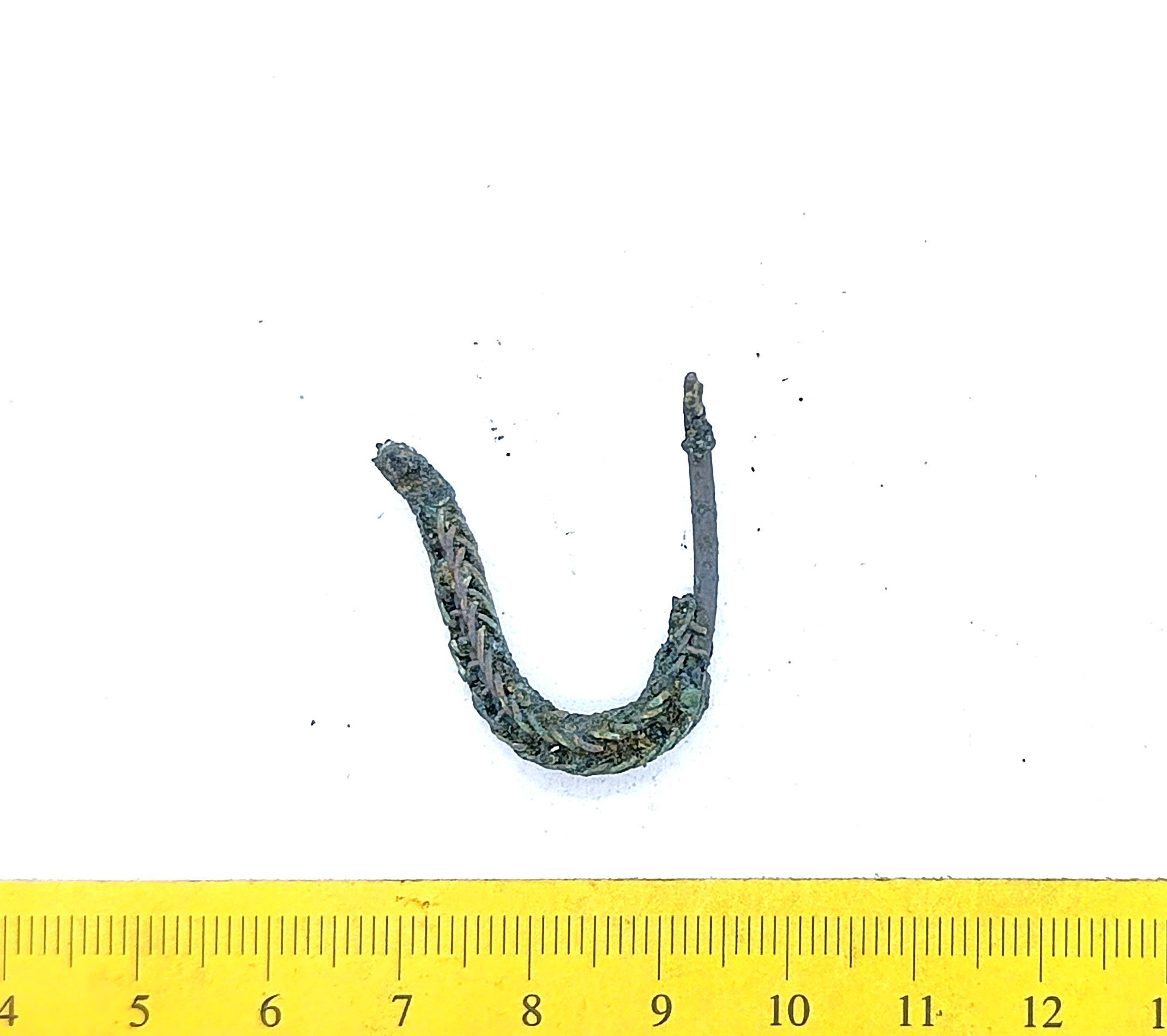
 Woven chain, copper alloy. Fragments of finely braided chains made of thin copper alloy wires have been compared to similar finds in Karelia (Ligi 1993, 50). In Latvia they appeared at the end of the 12th century and were still in use during the 13th century (Zariņa 2006, 276; Spirģis 2008, 175).
Ligi, P. 1993. Vadjapärased kalmed Kirde-Eestis (9.–16. sajandil). – Vadjapärased kalmed Eestis 9.–16. sajandil. / Votic-style graves in Estonia from the 9th to the 16th centuries. Eds. V. Lang. (Muinasaja Teadus, 2.) Tallinn, 7–175.
Spirģis, R. 2008. Bruņrupuču saktas ar krūšu važiņrotām un lībiešu kultūras attīstība Daugavas lejtecē 10.–13. gadsimtā. Latvijas Vēstures Institūta Apgāds, Rīga.
Zariņa, A. 2006. Salaspils Laukskolas kapulauks 10.–13. gadsimts. Latvijas Vēstures Institūta Apgāds, Rīga.
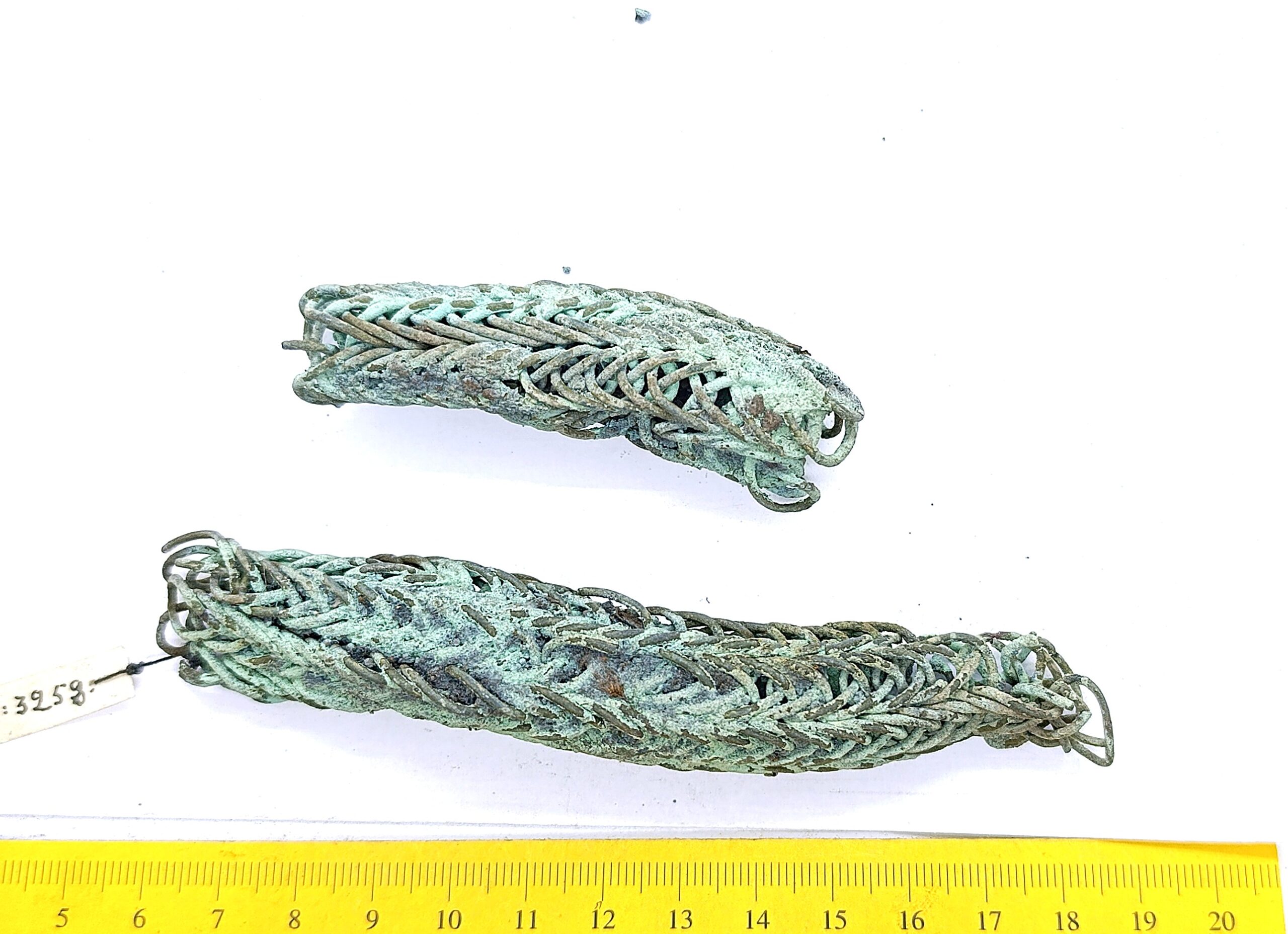
 Woven chain, copper alloy. Fragments of finely braided chains made of thin copper alloy wires have been compared to similar finds in Karelia (Ligi 1993, 50). In Latvia they appeared at the end of the 12th century and were still in use during the 13th century (Zariņa 2006, 276; Spirģis 2008, 175).
Ligi, P. 1993. Vadjapärased kalmed Kirde-Eestis (9.–16. sajandil). – Vadjapärased kalmed Eestis 9.–16. sajandil. / Votic-style graves in Estonia from the 9th to the 16th centuries. Eds. V. Lang. (Muinasaja Teadus, 2.) Tallinn, 7–175.
Spirģis, R. 2008. Bruņrupuču saktas ar krūšu važiņrotām un lībiešu kultūras attīstība Daugavas lejtecē 10.–13. gadsimtā. Latvijas Vēstures Institūta Apgāds, Rīga.
Zariņa, A. 2006. Salaspils Laukskolas kapulauks 10.–13. gadsimts. Latvijas Vēstures Institūta Apgāds, Rīga.
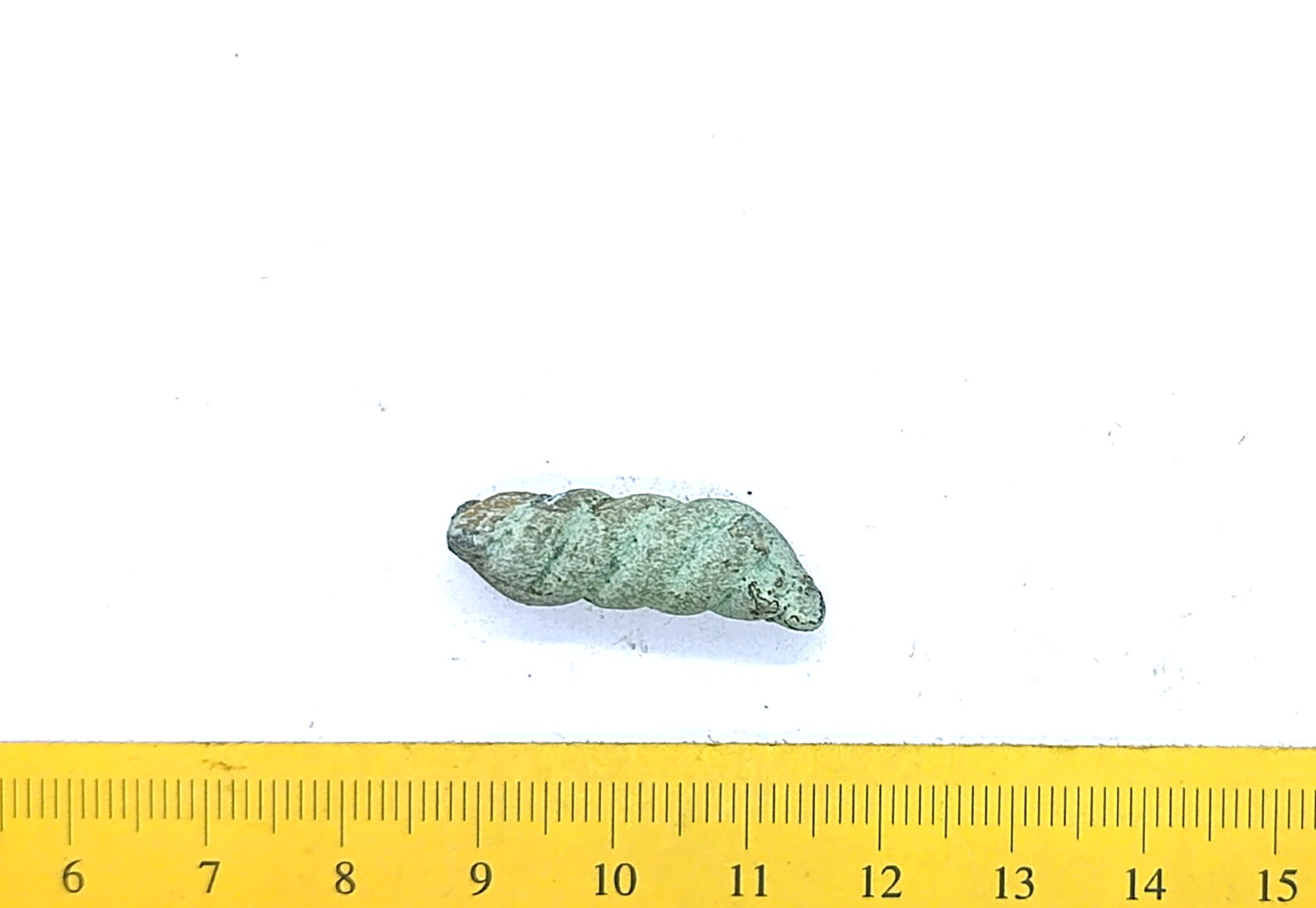
Viltina
Fragment of a neck ring, copper alloy.
 Fragment of a neck ring, copper alloy. Fragments of neck rings made of several twisted wires are common finds in Saaremaa stone graves with cremations. Since it is normally not possible to determine the exact type of these neck-rings, they can be dated to the whole period from the 10th to the 13th century (see also: Mägi 2002, 107).
Mägi, M. 2002. At the Crossroads of Space and Time. Graves, Changing Society and Ideology on Saaremaa (Ösel), 9th–13th Centuries AD. (CCC Papers, 6.) Tallinn.

