
Database
Bead, copper alloy. Bronze beads of this type have been found in stone graves with cremations (e.g. Mägi 2002, Pl. 13: 19–21) as well as inhumation burials dating to the 12th – 13th centuries (see Spirģis 2008, 421). In Estonia they are usually associated with belt ornaments.
Mägi, M. 2002. At the Crossroads of Space and Time. Graves, Changing Society and Ideology on Saaremaa (Ösel), 9th–13th Centuries AD. (CCC Papers, 6.) Tallinn.
Spirģis, R. 2008. Bruņrupuču saktas ar krūšu važiņrotām un lībiešu kultūras attīstība Daugavas lejtecē 10.–13. gadsimtā. Latvijas Vēstures Institūta apgāds, Rīga.
Viltina
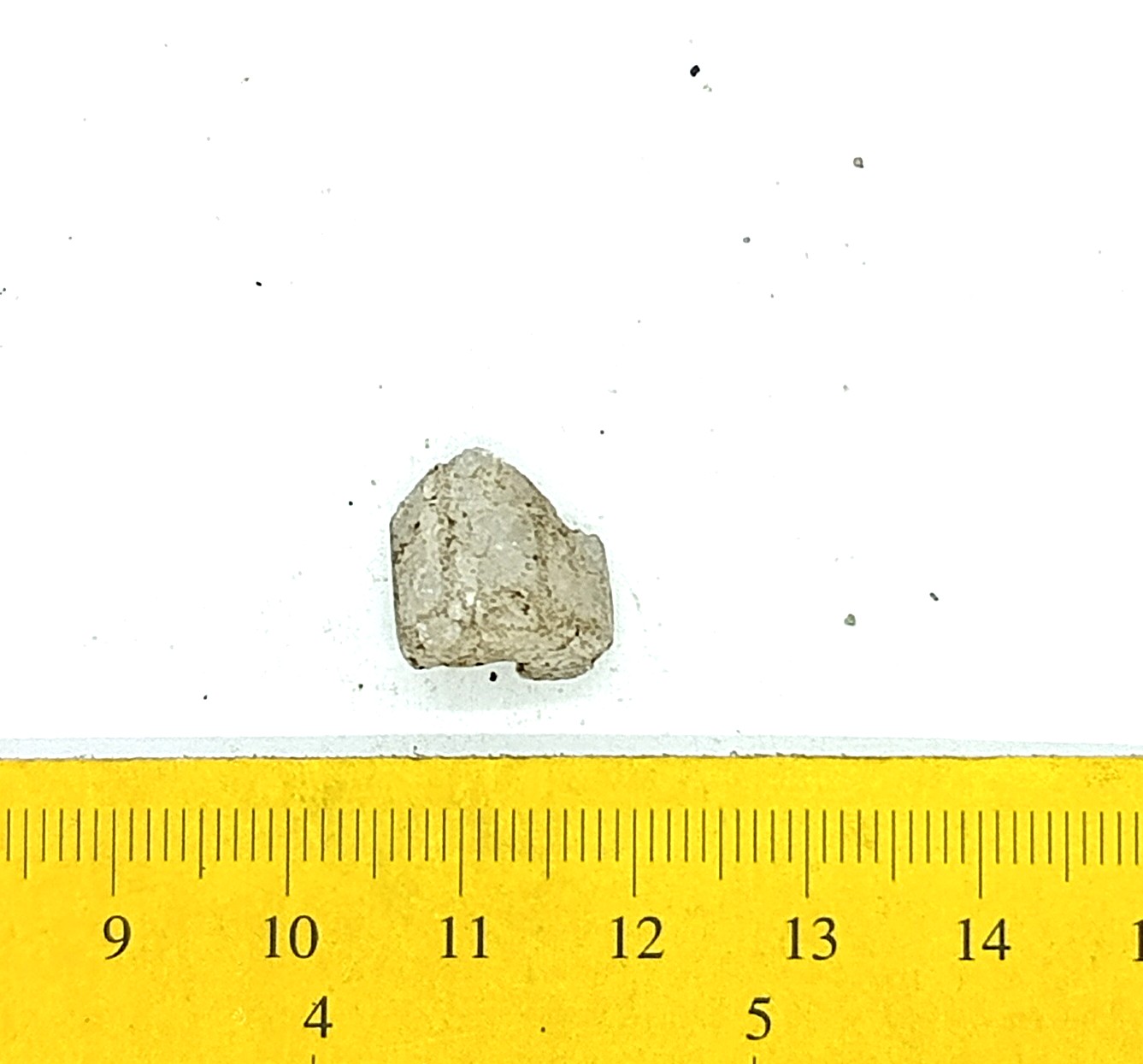
bead, glass
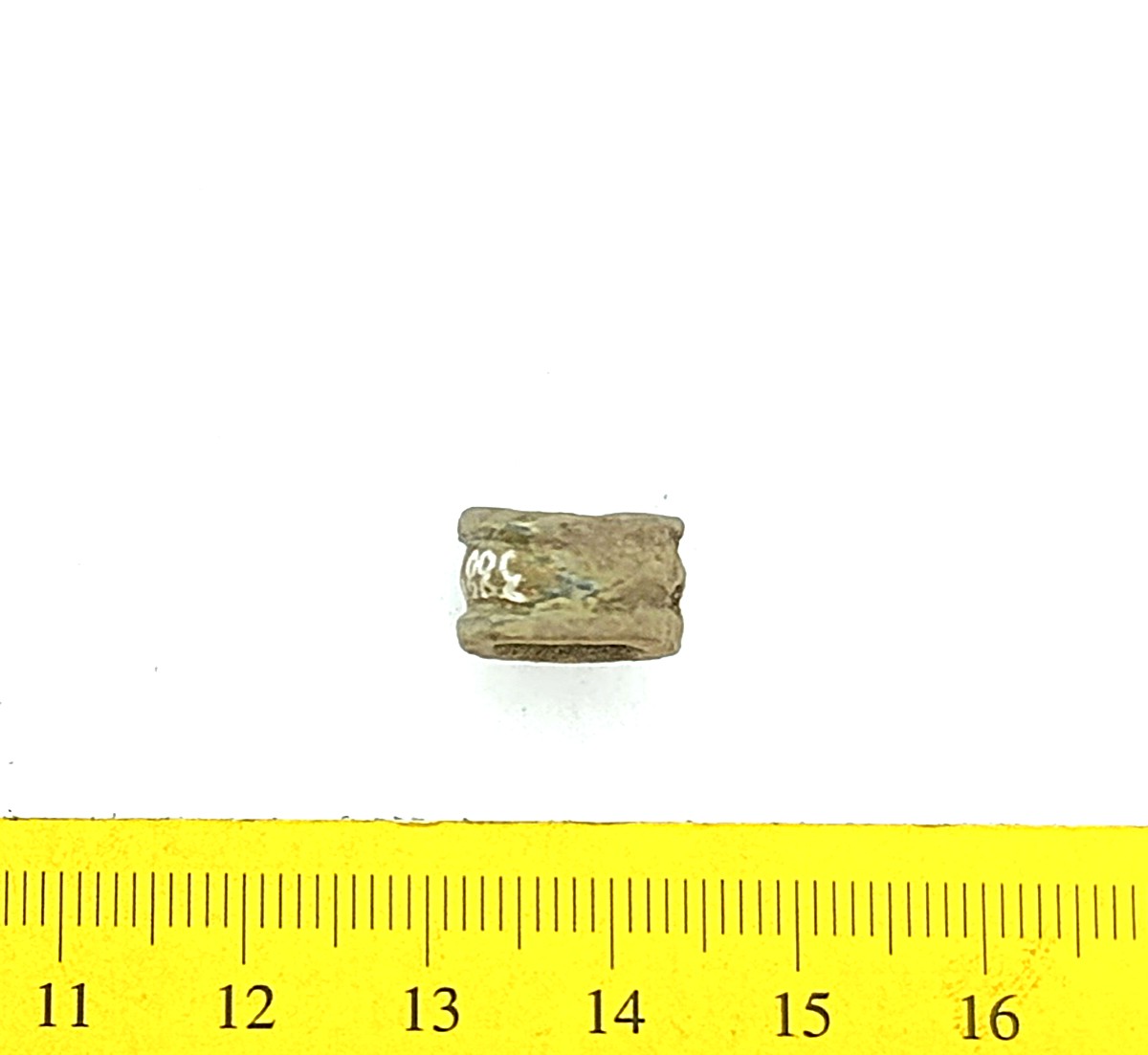
Bead, copper alloy. Bronze beads of this type have been found in stone graves with cremations (e.g. Mägi 2002, Pl. 13: 19–21) as well as inhumation burials dating to the 12th – 13th centuries (see Spirģis 2008, 421). In Estonia they are usually associated with belt ornaments.
Mägi, M. 2002. At the Crossroads of Space and Time. Graves, Changing Society and Ideology on Saaremaa (Ösel), 9th–13th Centuries AD. (CCC Papers, 6.) Tallinn.
Spirģis, R. 2008. Bruņrupuču saktas ar krūšu važiņrotām un lībiešu kultūras attīstība Daugavas lejtecē 10.–13. gadsimtā. Latvijas Vēstures Institūta apgāds, Rīga.
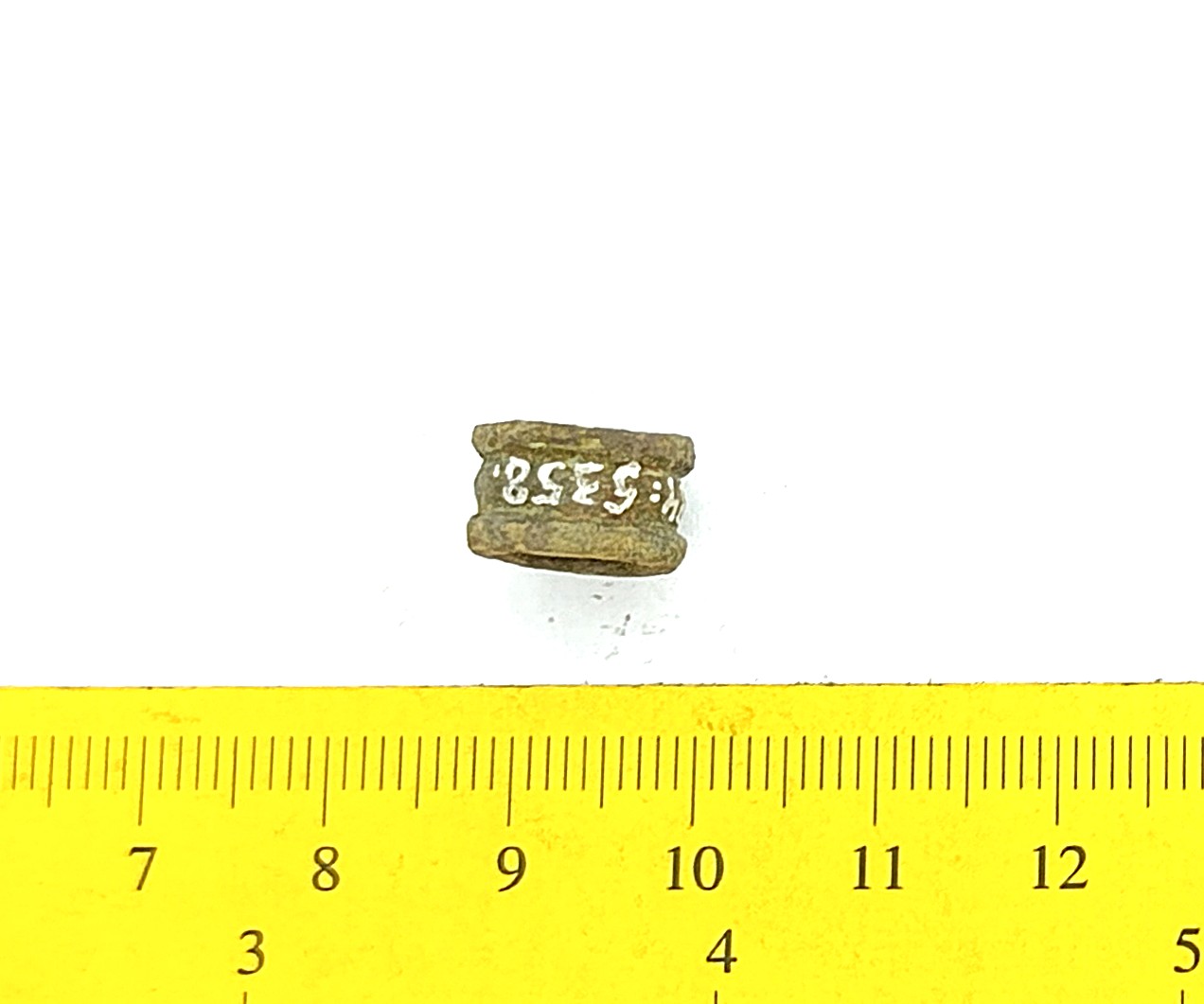
Bead, copper alloy. Bronze beads of this type have been found in stone graves with cremations (e.g. Mägi 2002, Pl. 13: 19–21) as well as inhumation burials dating to the 12th – 13th centuries (see Spirģis 2008, 421). In Estonia they are usually associated with belt ornaments.
Mägi, M. 2002. At the Crossroads of Space and Time. Graves, Changing Society and Ideology on Saaremaa (Ösel), 9th–13th Centuries AD. (CCC Papers, 6.) Tallinn.
Spirģis, R. 2008. Bruņrupuču saktas ar krūšu važiņrotām un lībiešu kultūras attīstība Daugavas lejtecē 10.–13. gadsimtā. Latvijas Vēstures Institūta apgāds, Rīga.
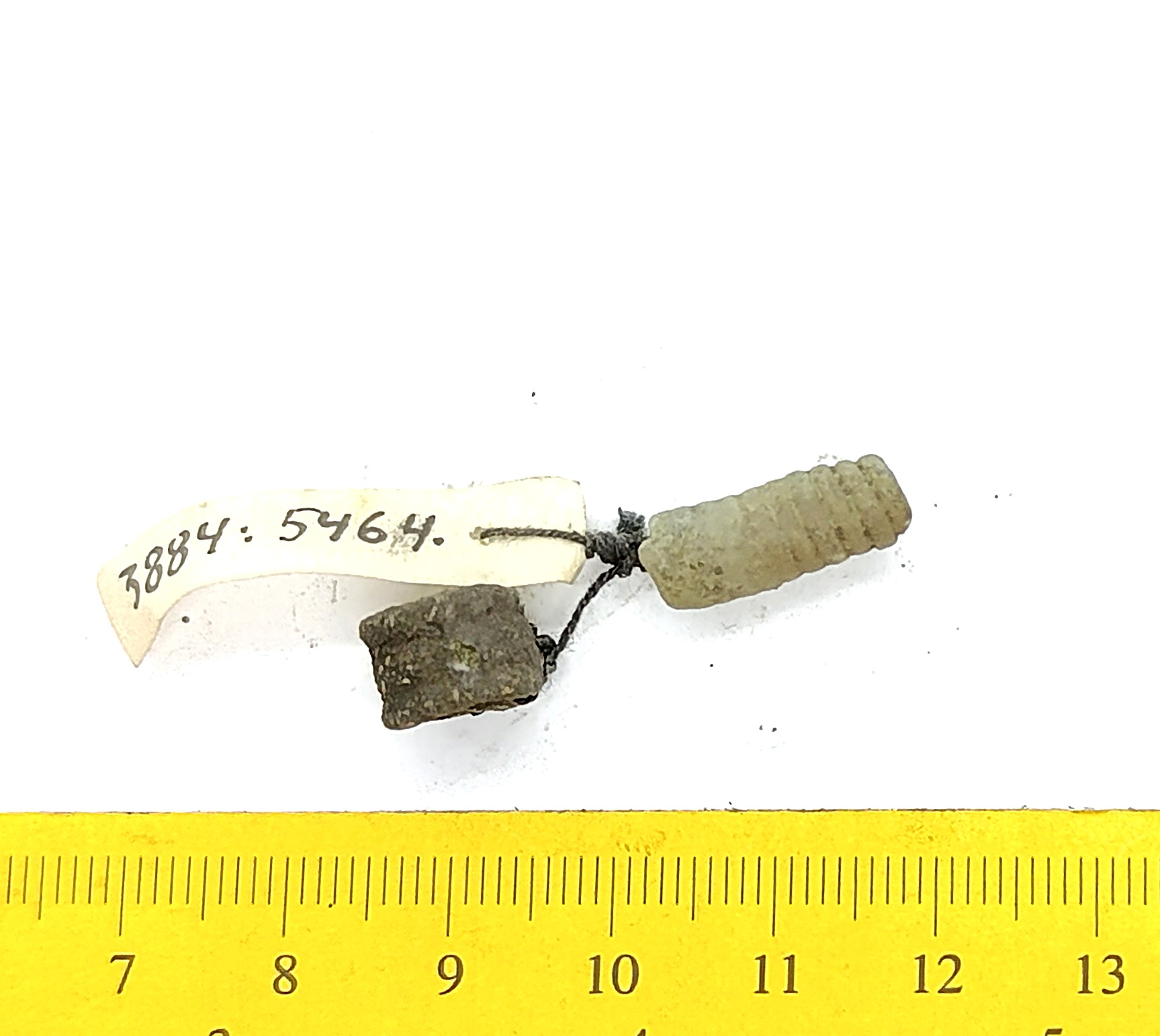
Bead, copper alloy. Bronze beads of this type have been found in stone graves with cremations (e.g. Mägi 2002, Pl. 13: 19–21) as well as inhumation burials dating to the 12th – 13th centuries (see Spirģis 2008, 421). In Estonia they are usually associated with belt ornaments.
Mägi, M. 2002. At the Crossroads of Space and Time. Graves, Changing Society and Ideology on Saaremaa (Ösel), 9th–13th Centuries AD. (CCC Papers, 6.) Tallinn.
Spirģis, R. 2008. Bruņrupuču saktas ar krūšu važiņrotām un lībiešu kultūras attīstība Daugavas lejtecē 10.–13. gadsimtā. Latvijas Vēstures Institūta apgāds, Rīga.
Viltina
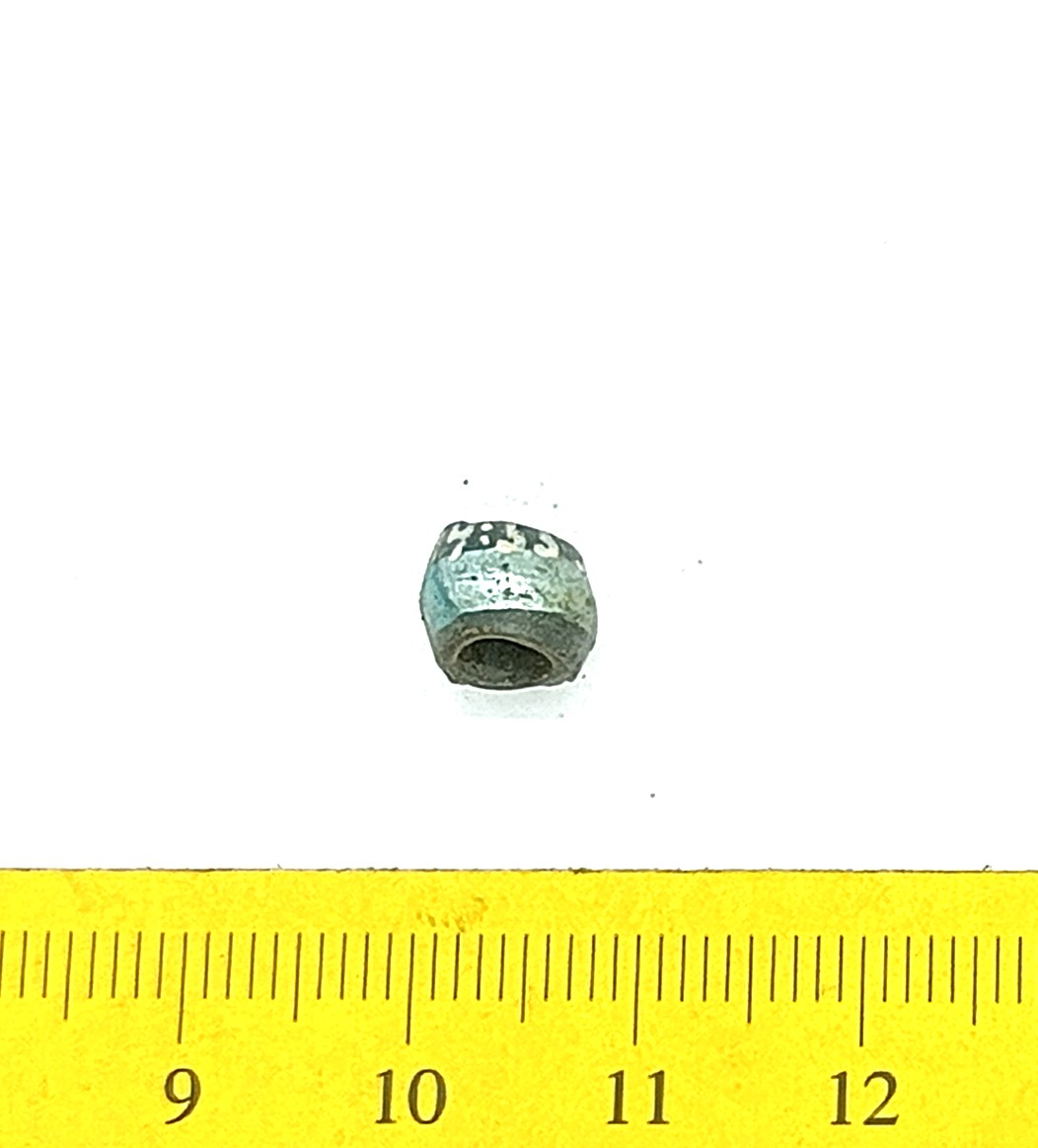
Bead with gold foil, glass.
Bead with gold foil, glass. This bead is unusual because gold foil was most commonly used with white or yellow transparent glass, whereas in this case bluish glass was used.
Viltina
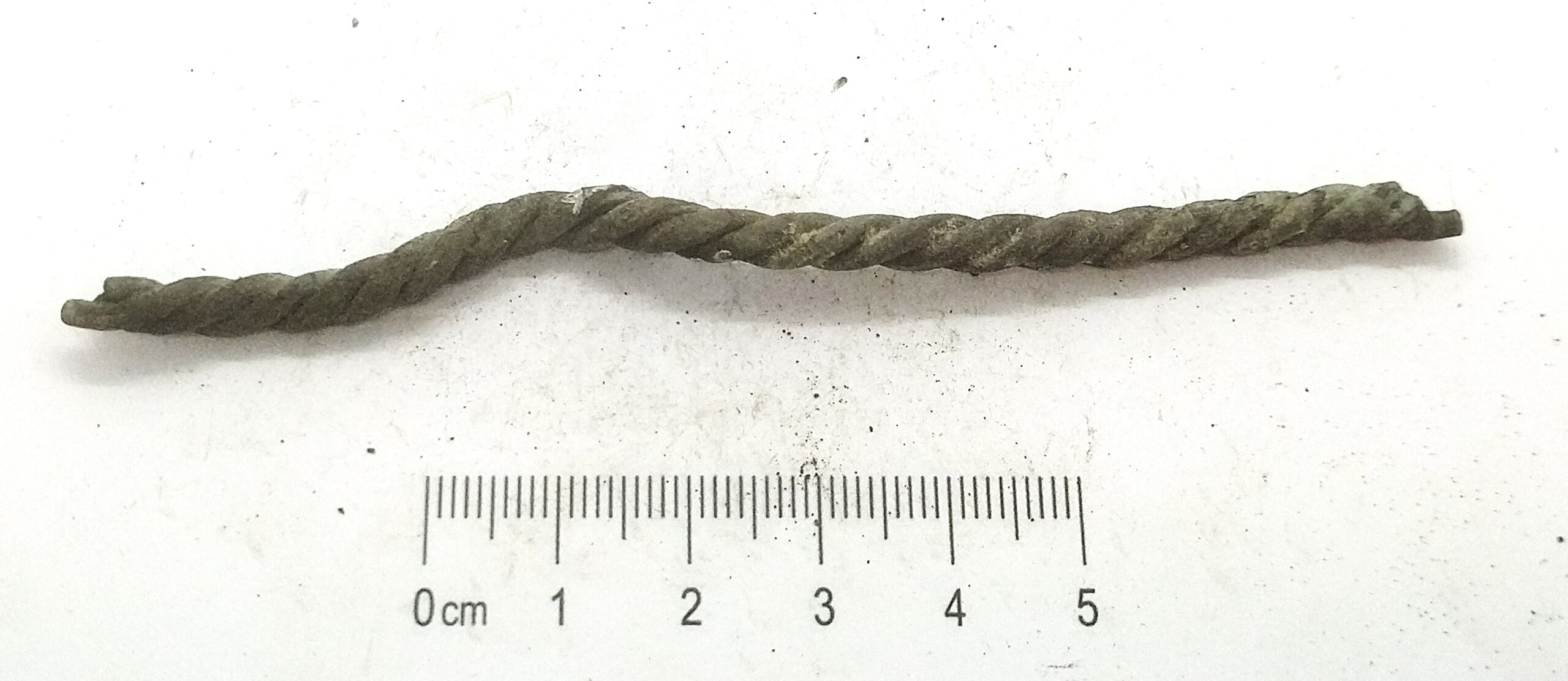
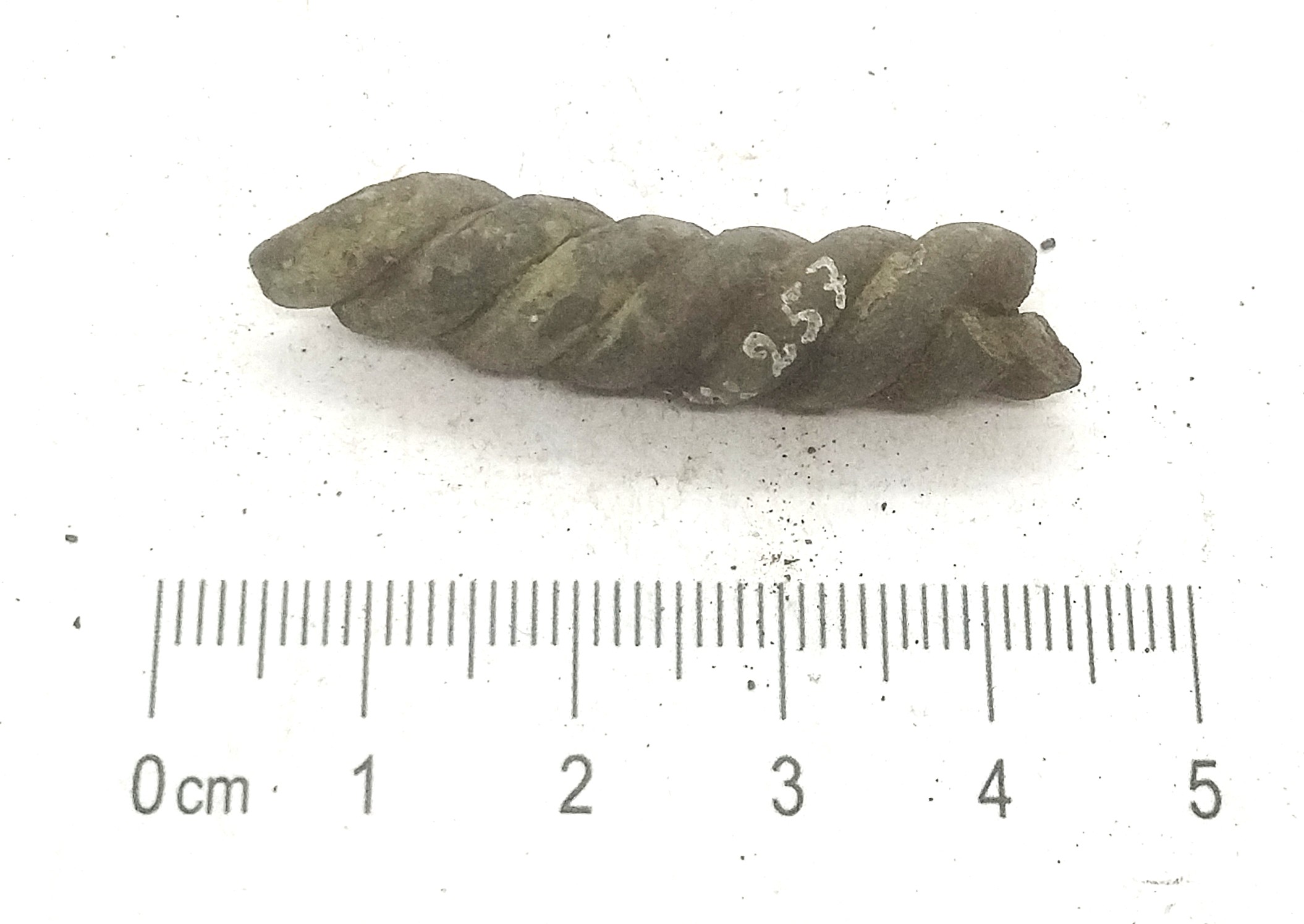
Fragment of a neck ring, copper alloy.
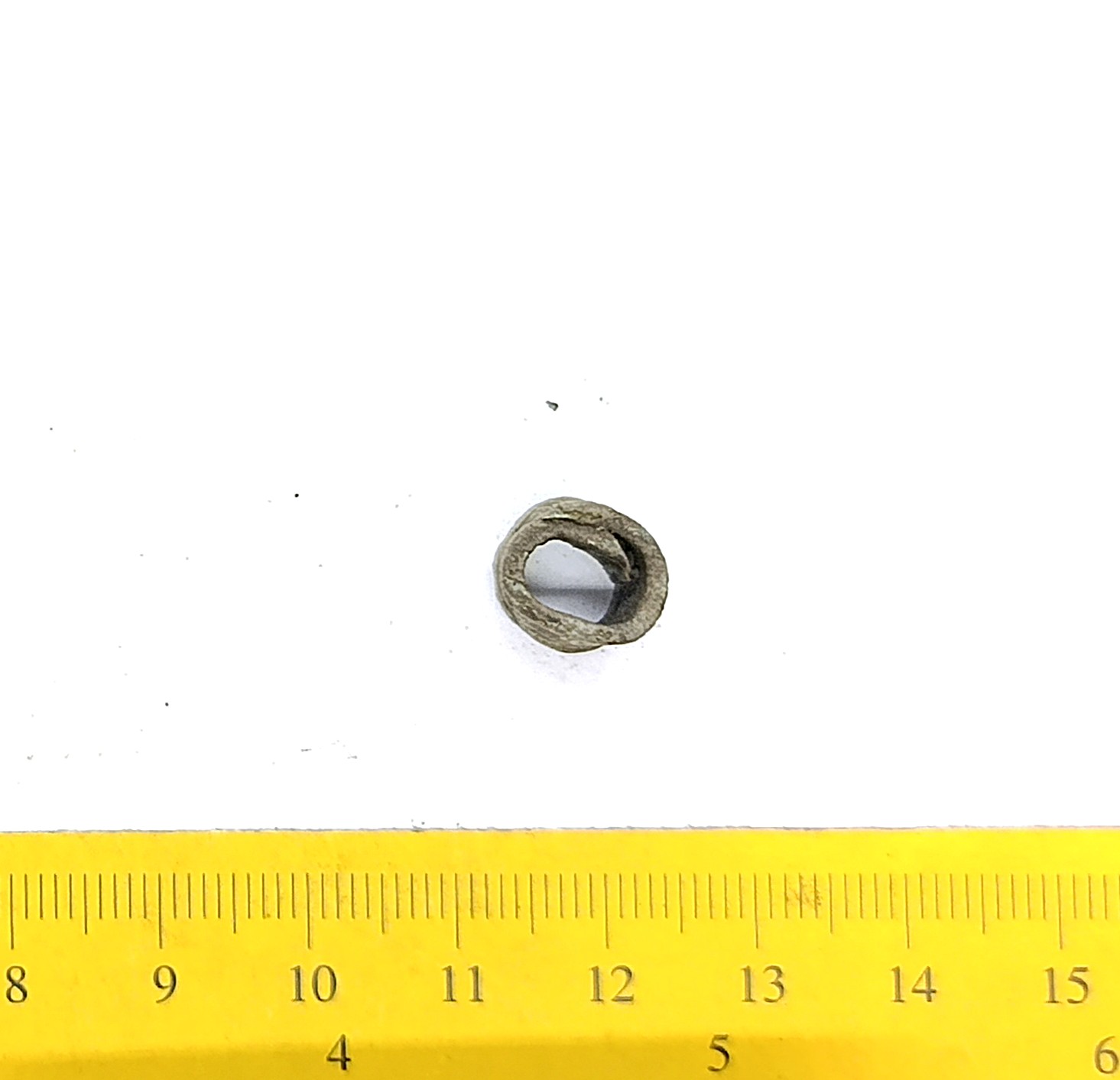
 Fragment of a neck ring, copper alloy. Fragments of neck rings made of several twisted wires are common finds in Saaremaa stone graves with cremations. Since it is normally not possible to determine the exact type of these neck-rings, they can be dated to the whole period from the 10th to the 13th century (see also: Mägi 2002, 107).
Mägi, M. 2002. At the Crossroads of Space and Time. Graves, Changing Society and Ideology on Saaremaa (Ösel), 9th–13th Centuries AD. (CCC Papers, 6.) Tallinn.
Viltina
Fragment of a neck ring, copper alloy.
 Fragment of a neck ring, copper alloy. Fragments of neck rings made of several twisted wires are common finds in Saaremaa stone graves with cremations. Since it is normally not possible to determine the exact type of these neck-rings, they can be dated to the whole period from the 10th to the 13th century (see also: Mägi 2002, 107).
Mägi, M. 2002. At the Crossroads of Space and Time. Graves, Changing Society and Ideology on Saaremaa (Ösel), 9th–13th Centuries AD. (CCC Papers, 6.) Tallinn.
Viltina
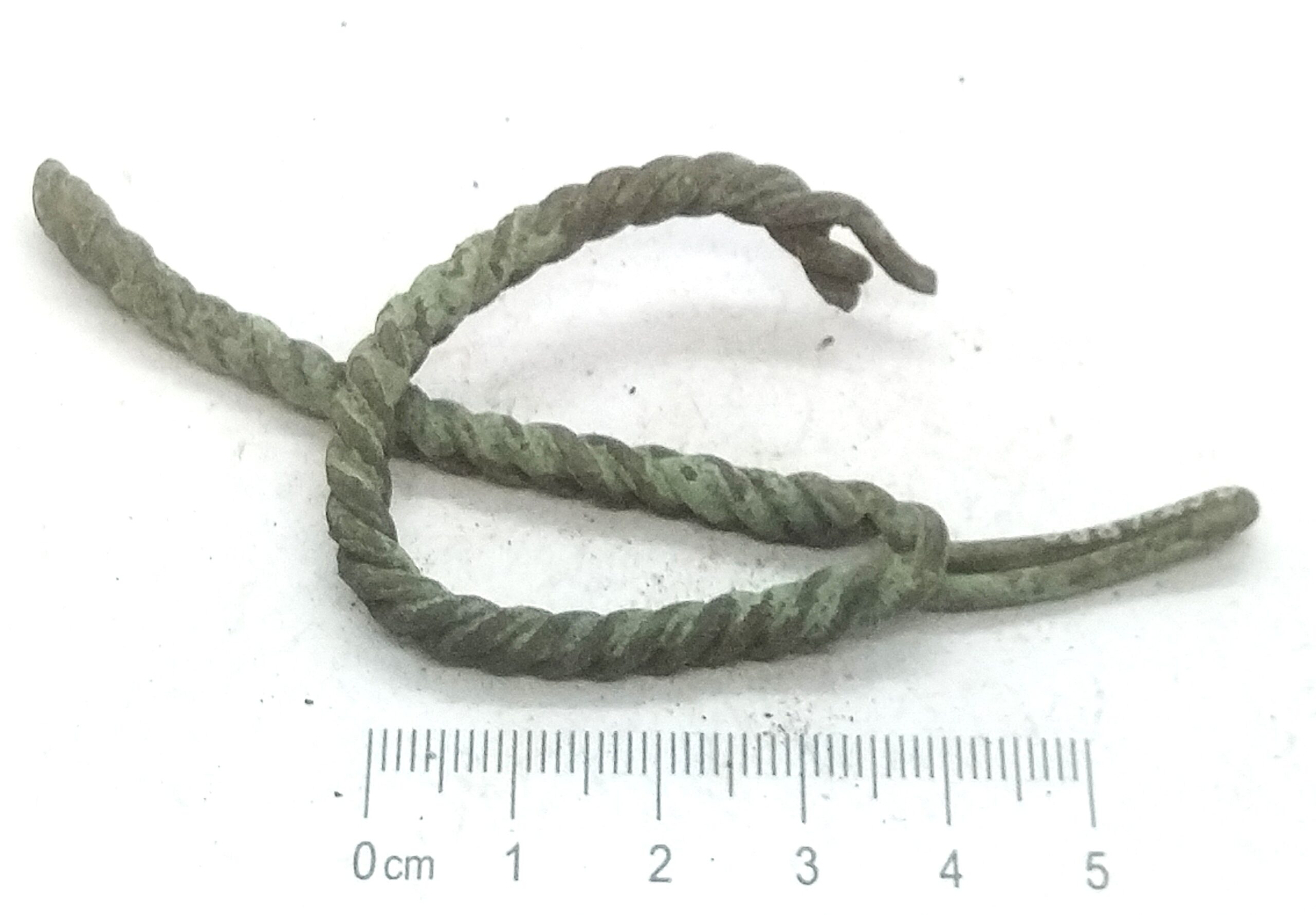
Neck ring fragment, with two twisted rings, connected with a hook and a loop, copper alloy.
 Neck ring, with two twisted rings, connected with a hook and a loop, copper alloy. Such neck-rings have been found in inhumation graves (e.g. in Loona, Valjala; Mägi 2002, Pl. 98: 1; Mägi et al 2019, 97), but also in 13th-century hoards and deposits (e. g. Muhu, Lõhavere). Fragments of perhaps similar neck-rings have been also recorded in stone graves with cremations. Presumably appeared in the end of the 12th century.
Mägi, M. 2002. At the Crossroads of Space and Time. Graves, Changing Society and Ideology on Saaremaa (Ösel), 9th–13th Centuries AD. (CCC Papers, 6.) Tallinn.

