
Database
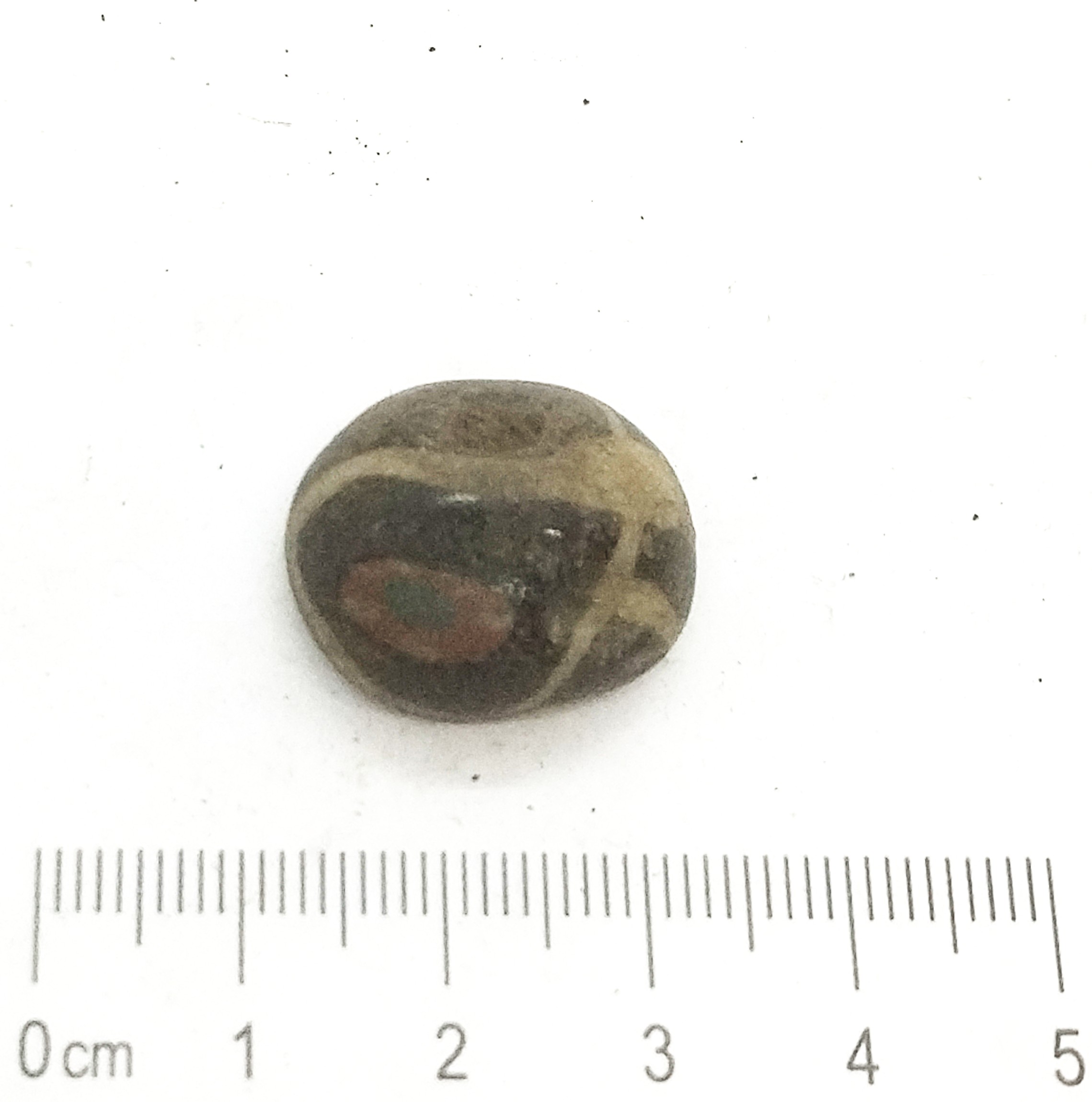
Bead, glass. According to Callmer’s classification, it belongs to group B h (1977, p. 85, plates 6 and 7). The bead has ‘eyes’ depicted in red and yellow on a black background, surrounded by interlacing lines. Such beads are dated to the late 10th century and the early 11th century.
Callmer, J. 1977. Trade Beads and Bead Trade in Scandinavia ca 800–1000 A.D. (Acta Archaeologia Lundensia. Series in 4, No. 11.) Bonn / Lund.
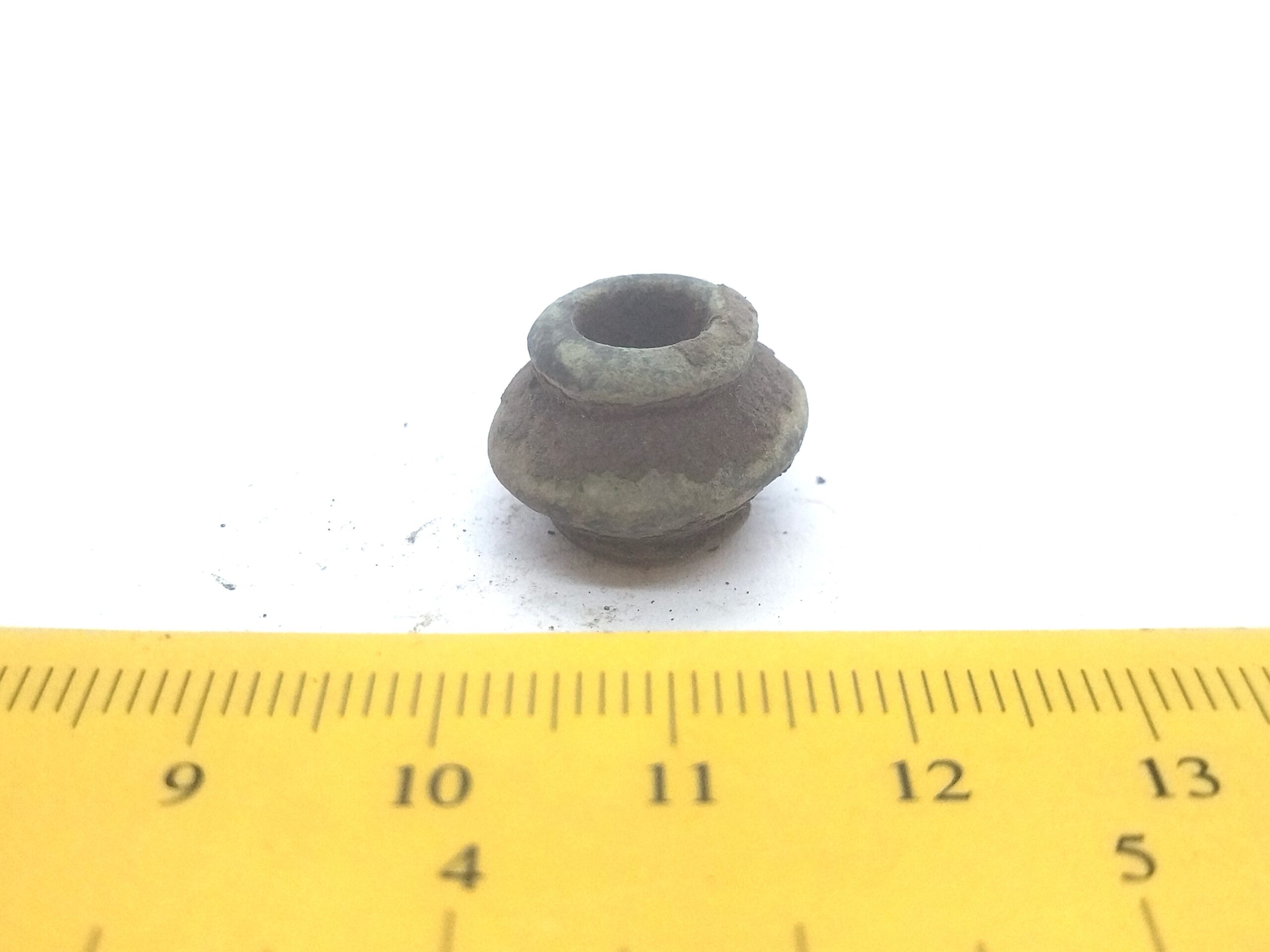
Bead, copper alloy. Bronze beads of this type have been found in stone graves with cremations (e.g. Mägi 2002, Pl. 13: 19–21) as well as inhumation burials dating to the 12th – 13th centuries (see Spirģis 2008, 421). In Estonia they are usually associated with belt ornaments.
Mägi, M. 2002. At the Crossroads of Space and Time. Graves, Changing Society and Ideology on Saaremaa (Ösel), 9th–13th Centuries AD. (CCC Papers, 6.) Tallinn.
Spirģis, R. 2008. Bruņrupuču saktas ar krūšu važiņrotām un lībiešu kultūras attīstība Daugavas lejtecē 10.–13. gadsimtā. Latvijas Vēstures Institūta apgāds, Rīga.
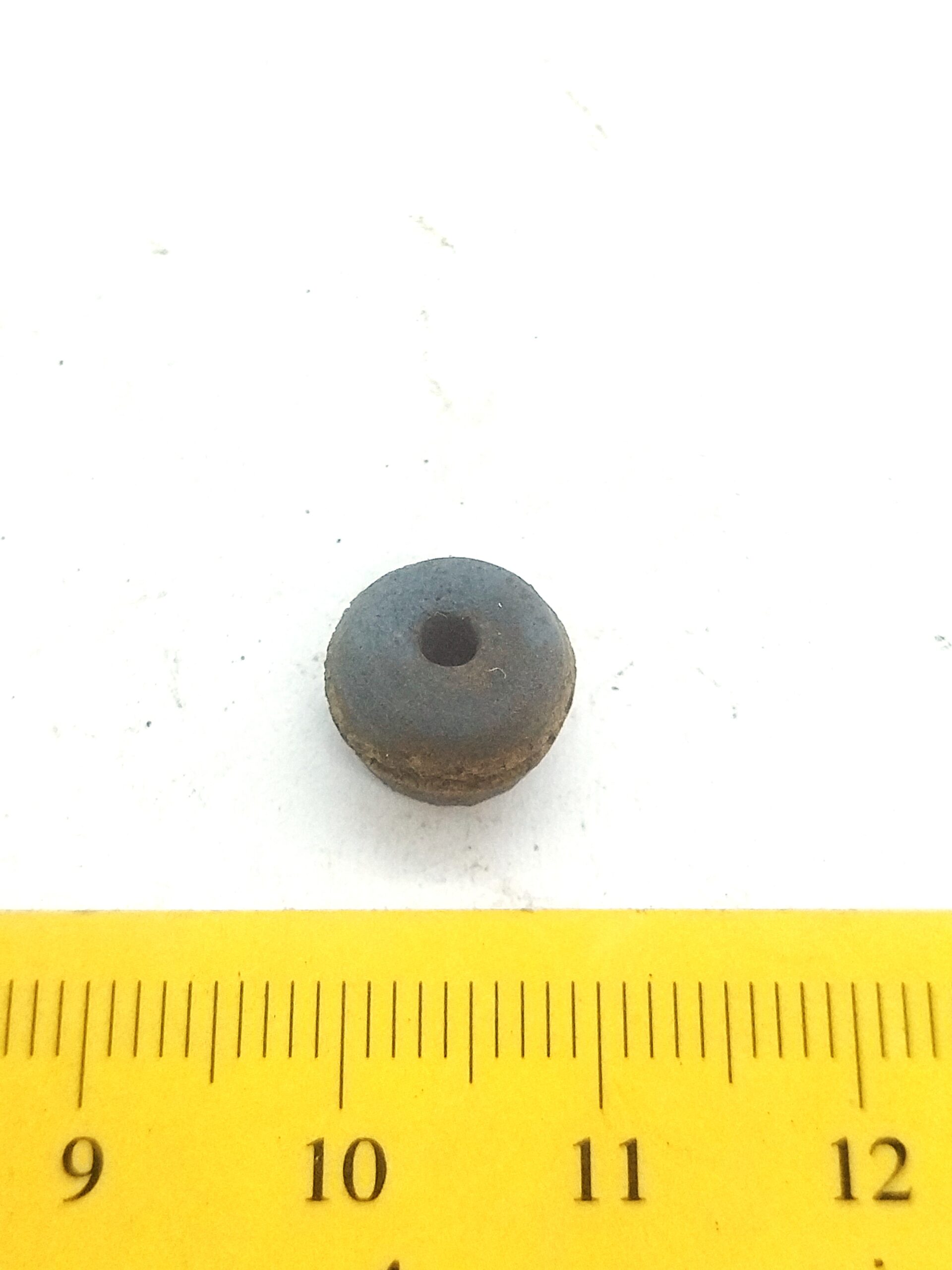
Bead, glass. According to Callmer’s classification, it belongs to group B b (1977, p. 82). The bead is blue, with a straight yellow line running through its centre. These are dated rather to the first half of the Viking Age, to the 9th–10th centuries.
Callmer, J. 1977. Trade Beads and Bead Trade in Scandinavia ca 800–1000 A.D. (Acta Archaeologia Lundensia. Series in 4, No. 11.) Bonn / Lund.
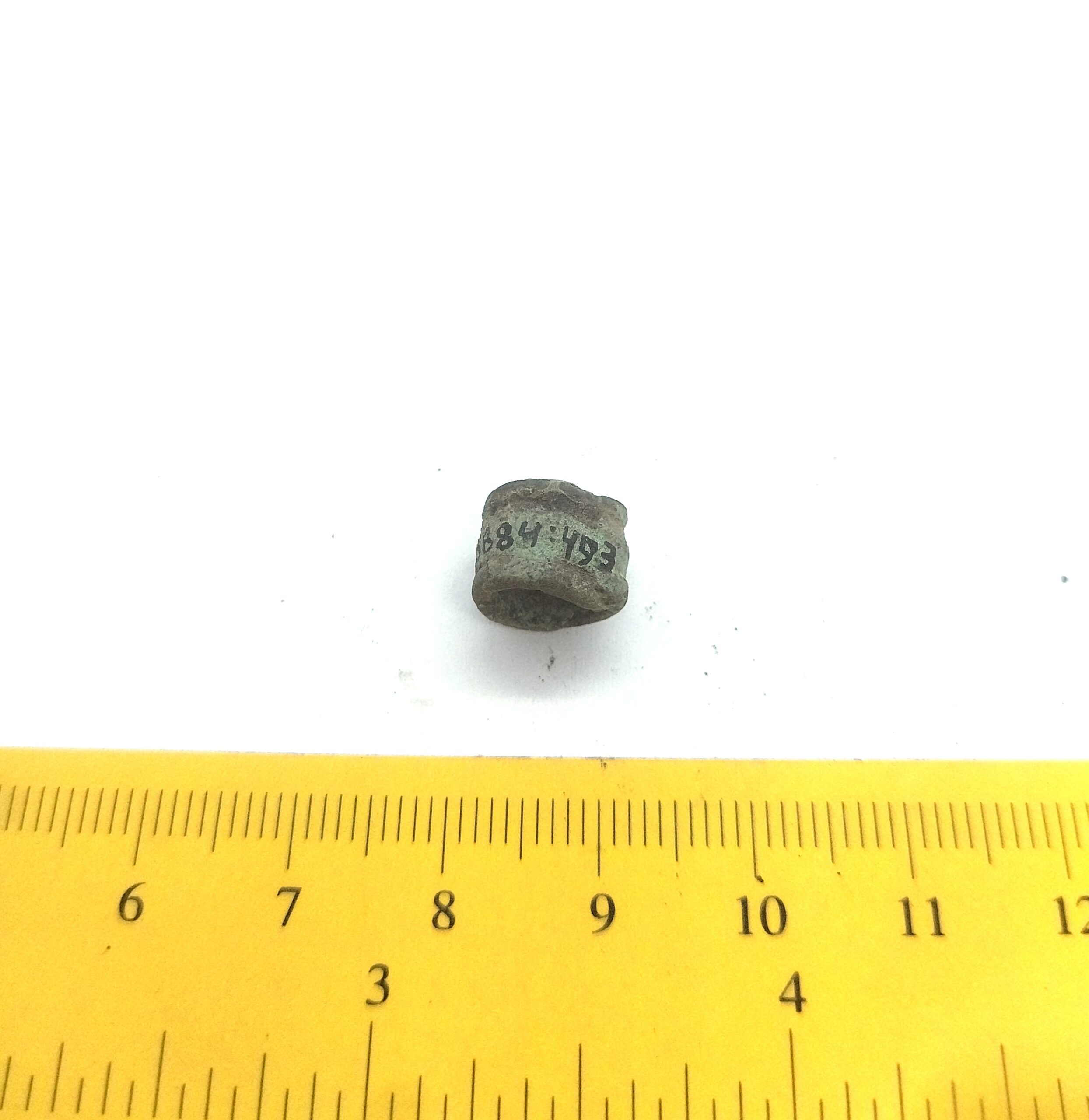
Bead, copper alloy. Bronze beads of this type have been found in stone graves with cremations (e.g. Mägi 2002, Pl. 13: 19–21) as well as inhumation burials dating to the 12th – 13th centuries (see Spirģis 2008, 421). In Estonia they are usually associated with belt ornaments.
Mägi, M. 2002. At the Crossroads of Space and Time. Graves, Changing Society and Ideology on Saaremaa (Ösel), 9th–13th Centuries AD. (CCC Papers, 6.) Tallinn.
Spirģis, R. 2008. Bruņrupuču saktas ar krūšu važiņrotām un lībiešu kultūras attīstība Daugavas lejtecē 10.–13. gadsimtā. Latvijas Vēstures Institūta apgāds, Rīga.
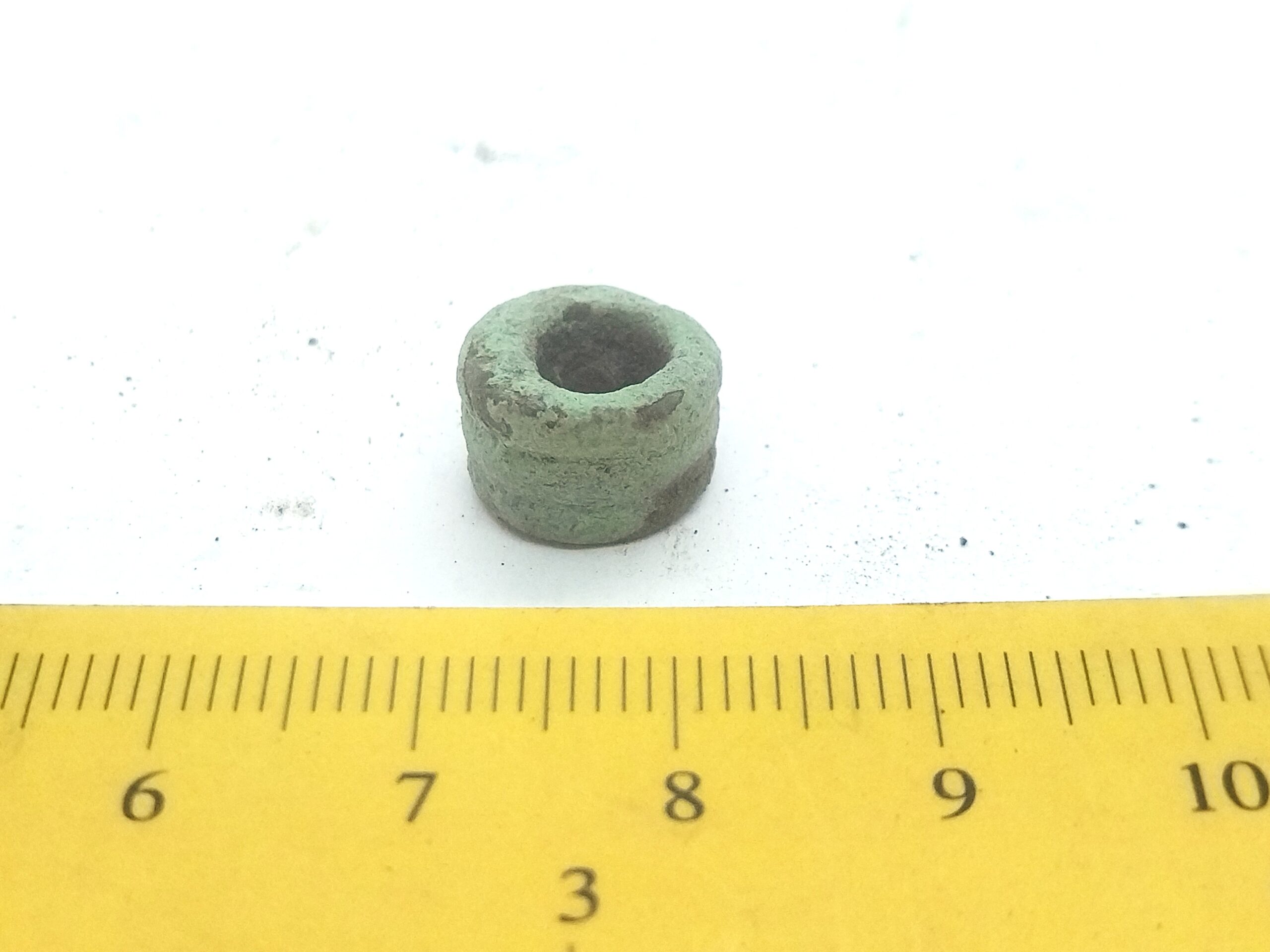
Bead, copper alloy. Bronze beads of this type have been found in stone graves with cremations (e.g. Mägi 2002, Pl. 13: 19–21) as well as inhumation burials dating to the 12th – 13th centuries (see Spirģis 2008, 421). In Estonia they are usually associated with belt ornaments.
Mägi, M. 2002. At the Crossroads of Space and Time. Graves, Changing Society and Ideology on Saaremaa (Ösel), 9th–13th Centuries AD. (CCC Papers, 6.) Tallinn.
Spirģis, R. 2008. Bruņrupuču saktas ar krūšu važiņrotām un lībiešu kultūras attīstība Daugavas lejtecē 10.–13. gadsimtā. Latvijas Vēstures Institūta apgāds, Rīga.
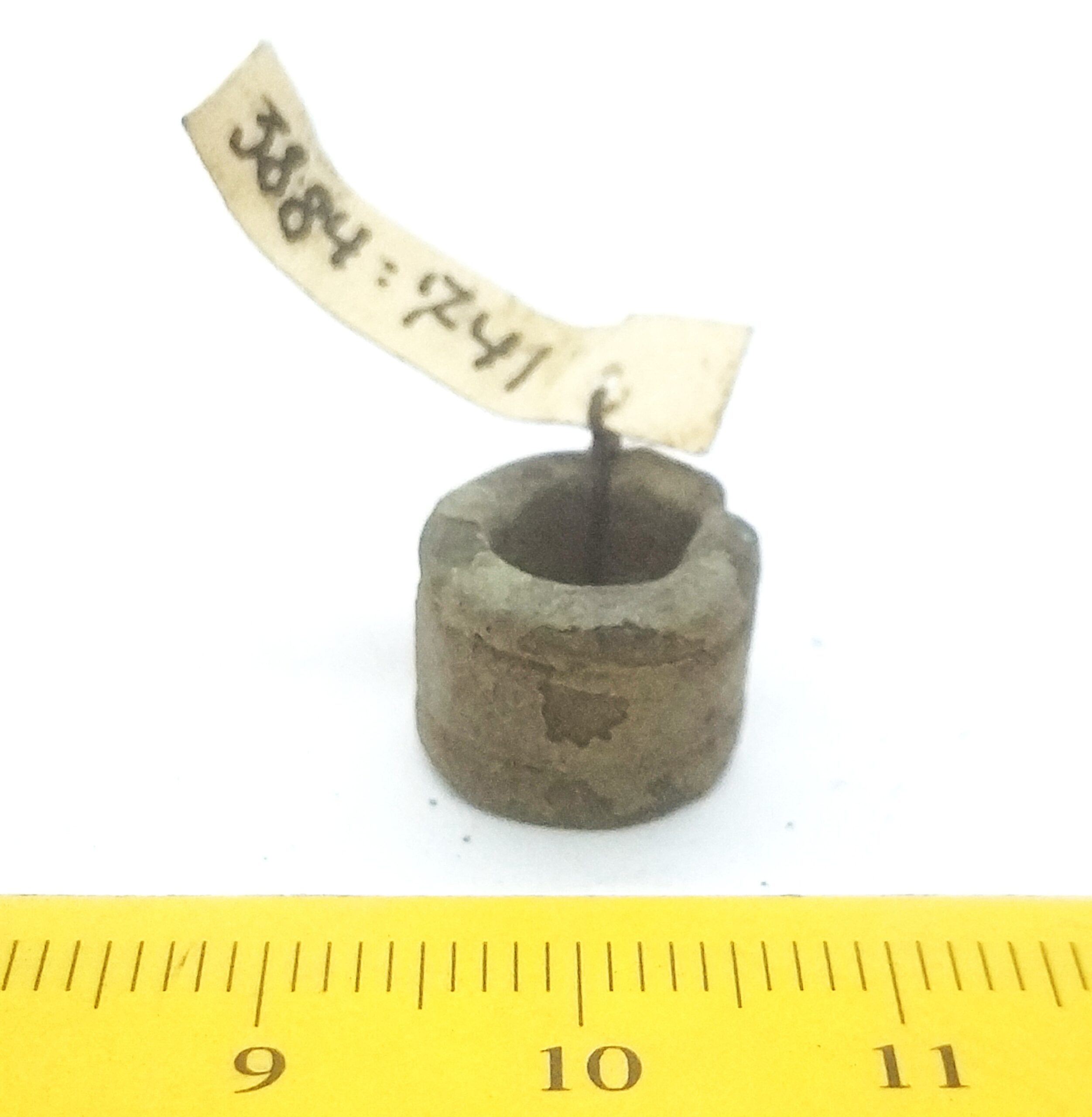
Bead, copper alloy. Bronze beads of this type have been found in stone graves with cremations (e.g. Mägi 2002, Pl. 13: 19–21) as well as inhumation burials dating to the 12th – 13th centuries (see Spirģis 2008, 421). In Estonia they are usually associated with belt ornaments.
Mägi, M. 2002. At the Crossroads of Space and Time. Graves, Changing Society and Ideology on Saaremaa (Ösel), 9th–13th Centuries AD. (CCC Papers, 6.) Tallinn.
Spirģis, R. 2008. Bruņrupuču saktas ar krūšu važiņrotām un lībiešu kultūras attīstība Daugavas lejtecē 10.–13. gadsimtā. Latvijas Vēstures Institūta apgāds, Rīga.
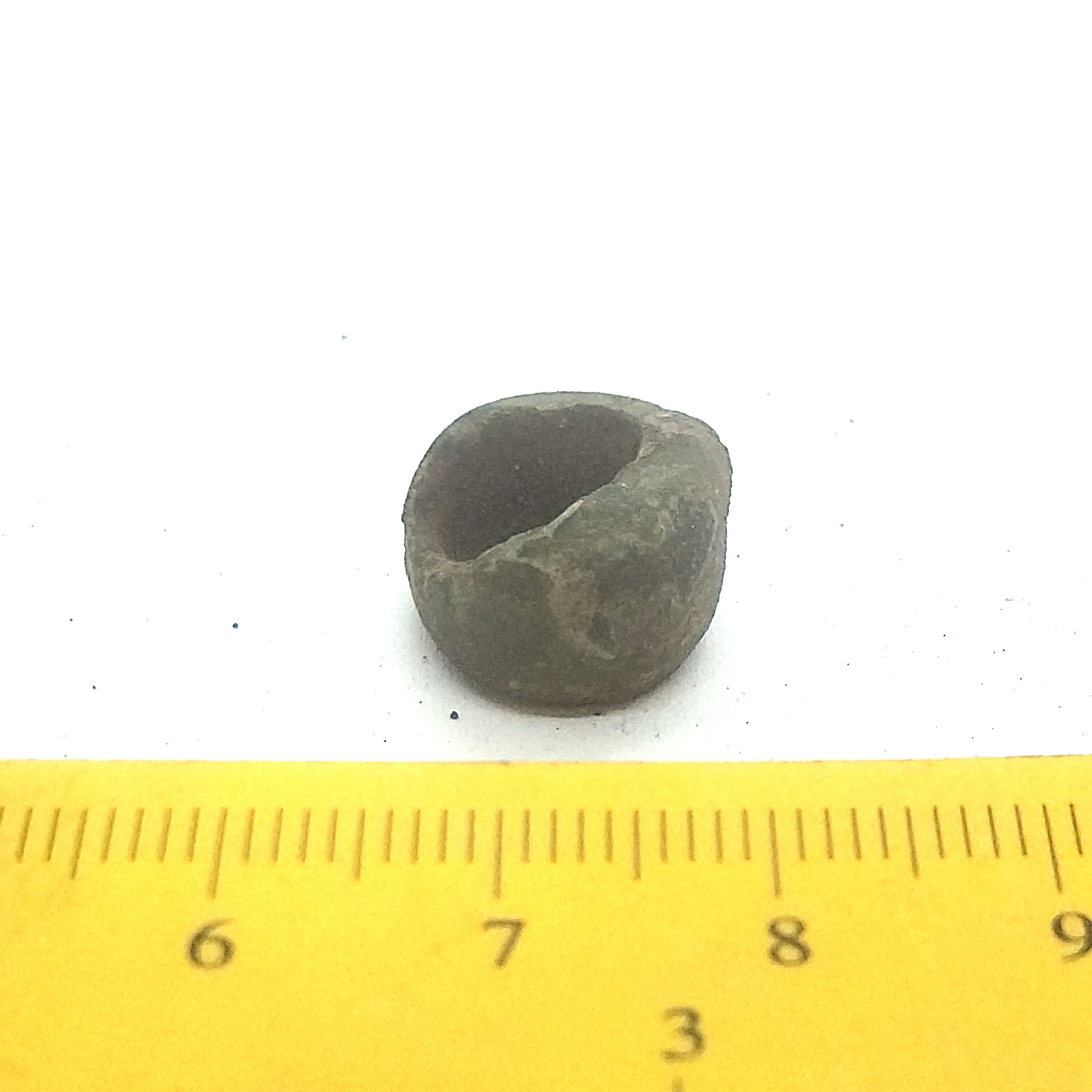
Viltina
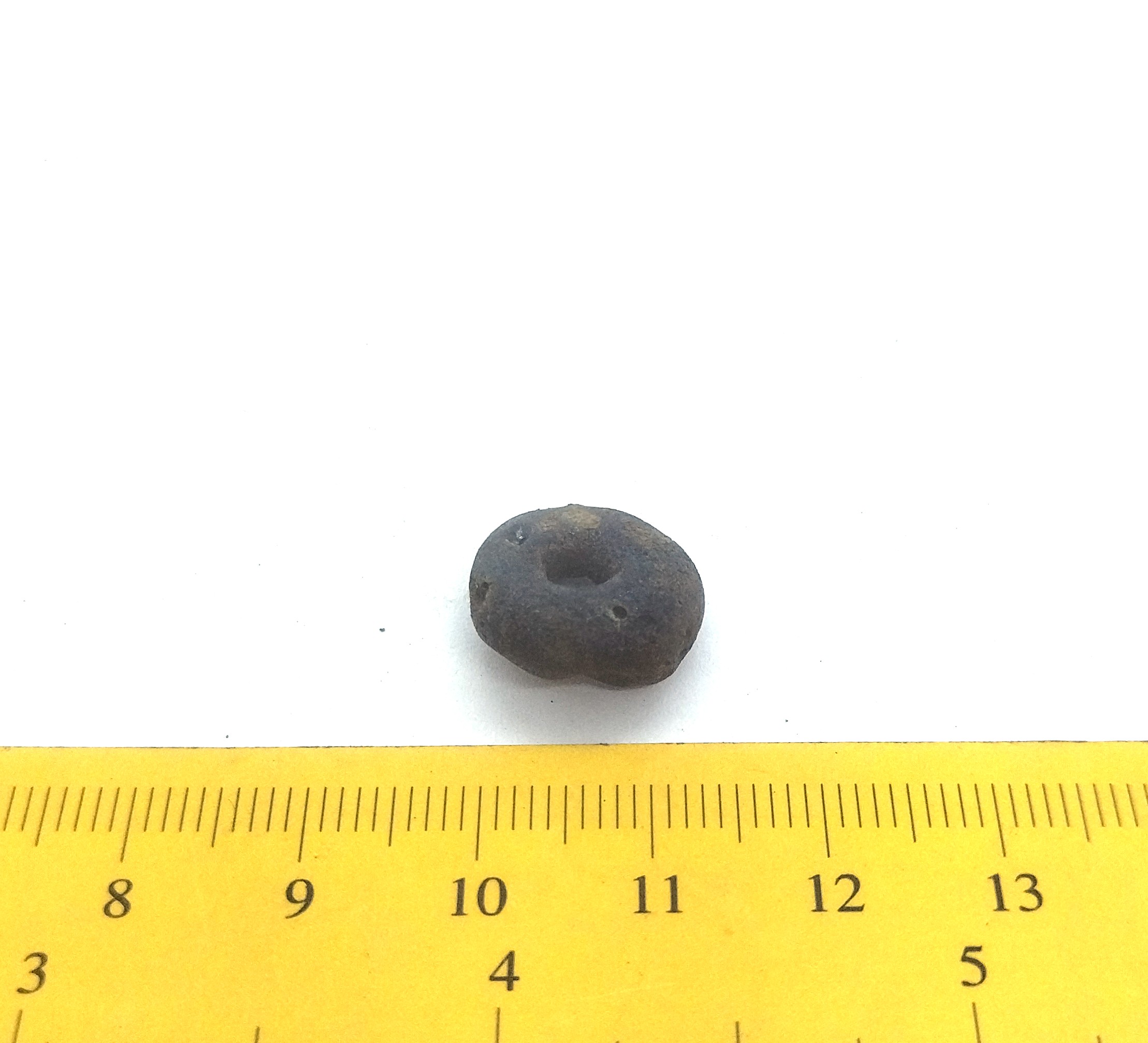
Bead, dark blue glass.
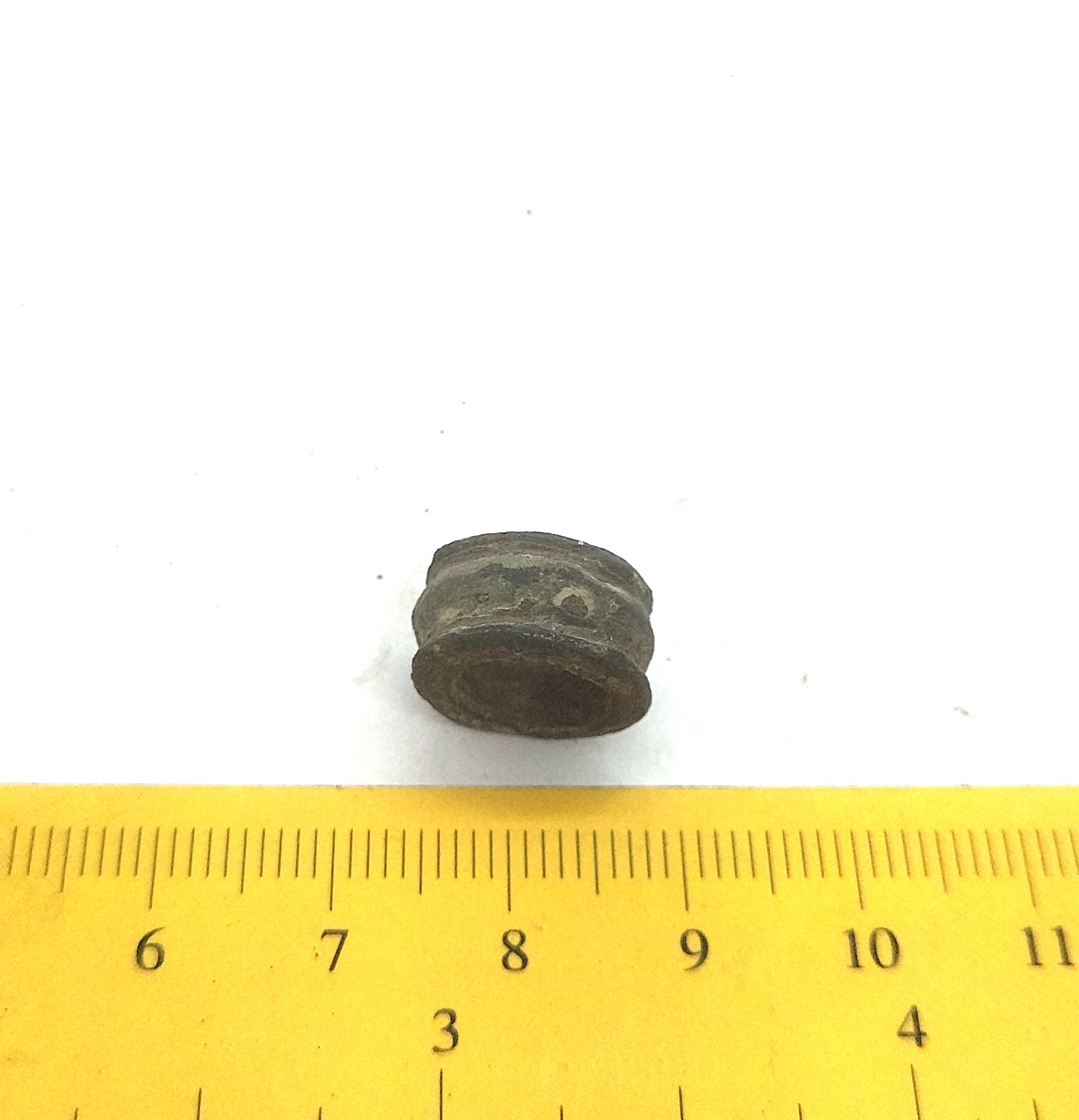
Bead, copper alloy. Bronze beads of this type have been found in stone graves with cremations (e.g. Mägi 2002, Pl. 13: 19–21) as well as inhumation burials dating to the 12th – 13th centuries (see Spirģis 2008, 421). In Estonia they are usually associated with belt ornaments.
Mägi, M. 2002. At the Crossroads of Space and Time. Graves, Changing Society and Ideology on Saaremaa (Ösel), 9th–13th Centuries AD. (CCC Papers, 6.) Tallinn.
Spirģis, R. 2008. Bruņrupuču saktas ar krūšu važiņrotām un lībiešu kultūras attīstība Daugavas lejtecē 10.–13. gadsimtā. Latvijas Vēstures Institūta apgāds, Rīga.
Viltina
Bead, dark blue glass.

